 Indietro
Acids and Bases: Central to Understanding Organic Chemistry
Guida di studio - Note intelligenti
 Appunti personalizzati basati sui tuoi materiali, ampliati con definizioni chiave, esempi e contesto.
Chapter 2: Acids and Bases
Introduction to Acids and Bases
Acids and bases are fundamental concepts in organic chemistry, influencing molecular reactivity, stability, and equilibrium. Understanding their definitions, strengths, and the factors affecting their behavior is essential for predicting reaction outcomes and designing synthetic pathways.
Acid: A species that donates a proton (H+).
Base: A species that accepts a proton.
Brønsted-Lowry definition: Acid donates a proton; base accepts a proton.
Lewis definition: Acid accepts an electron pair; base donates an electron pair.
Arrhenius definition: Acids ionize to H+ in solution; bases ionize to release OH- in solution (limited use).
Recognizing Acids and Bases
Acids typically contain ionizable hydrogen atoms, while bases often contain hydroxide ions or can be identified by their chemical reactions.
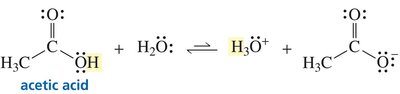
Acids: Provide H+ in aqueous solution. Examples: CH3CO2H (acetic acid), HCl.
Bases: Provide OH- in aqueous solution. Examples: NaOH, KOH.
Strong and Weak Acids and Bases
The strength of acids and bases is determined by their ability to ionize in solution. Strong acids and bases ionize completely, while weak acids and bases ionize partially.
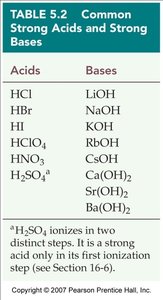
Strong acids: HCl, HBr, HI, HClO4, HNO3, H2SO4 (first ionization step).
Strong bases: LiOH, NaOH, KOH, RbOH, CsOH, Ca(OH)2, Sr(OH)2, Ba(OH)2.
Acids | Bases |
|---|---|
HCl | LiOH |
HBr | NaOH |
HI | KOH |
HClO4 | RbOH |
HNO3 | CsOH |
H2SO4a | Ca(OH)2 |
Sr(OH)2 | |
Ba(OH)2 |
Additional info: H2SO4 is a strong acid only in its first ionization step.
Acid-Base Reactions and Equilibrium
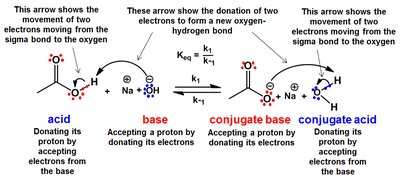
Acid-base reactions involve the transfer of a proton from the acid to the base. The equilibrium favors the formation of the weaker acid-base pair.
Conjugate acid: The species formed when a base gains a proton.
Conjugate base: The species formed when an acid loses a proton.
Equilibrium direction: Reaction proceeds toward the weaker acid/base pair.

pKa and pH: Quantifying Acid and Base Strength
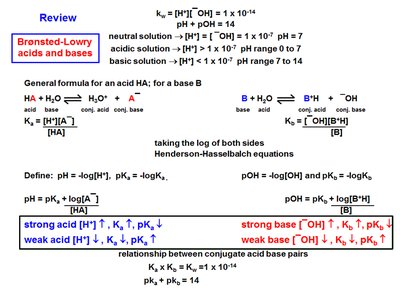
The strength of an acid is measured by its acid dissociation constant (Ka) and pKa. The lower the pKa, the stronger the acid. pH quantifies the acidity of a solution.
pKa:
pH:
Acid strength: Lower pKa = stronger acid; lower pH = more acidic solution.
Common Organic Acids and Bases
Carboxylic acids are the most common organic acids, while amines can act as both acids and bases. Alcohols and water are weaker acids.
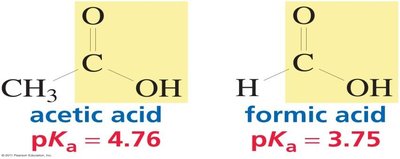
Carboxylic acids: Acetic acid (pKa = 4.76), formic acid (pKa = 3.75).
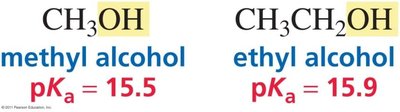
Alcohols: Methyl alcohol (pKa = 15.5), ethyl alcohol (pKa = 15.9).
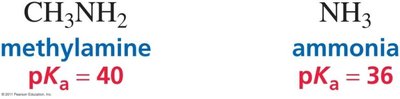
Amines: Methylamine (pKa = 40), ammonia (pKa = 36).
Predicting Reaction Direction Using pKa
The direction of acid-base reactions can be predicted by comparing the pKa values of the acids involved. The reaction proceeds toward the formation of the weaker acid (higher pKa).
Example: Ethanol (pKa = 16) and HCN (pKa = 9.31): Reaction proceeds toward the formation of ethanol and CN-.
Factors Determining Acid Strength
The strength of an acid depends on the stability of its conjugate base. Several structural factors influence this stability:
Electronegativity: More electronegative atoms stabilize negative charge better, increasing acid strength.
Size: Larger atoms disperse negative charge over a greater volume, stabilizing the conjugate base.
Hybridization: Atoms with more s-character (sp > sp2 > sp3) stabilize negative charge better.
Inductive effects: Electronegative substituents withdraw electron density, stabilizing the conjugate base.
Electron delocalization: Resonance stabilization increases conjugate base stability.
Electronegativity
Electronegativity is the ability of an atom to attract electrons. Acids with more electronegative atoms attached to the proton are stronger.
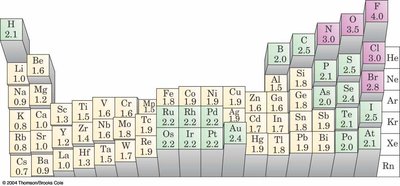
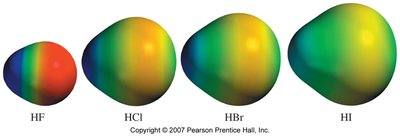
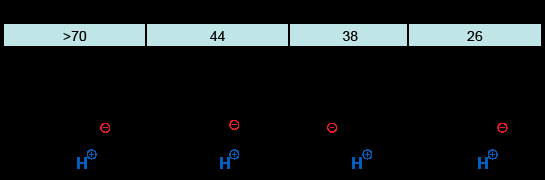
Size of Atom Bonded to Proton
Within a group, larger atoms stabilize negative charge better, making the acid stronger.
Hybridization
Hybridization affects acidity: sp-hybridized atoms are more electronegative and stabilize negative charge better than sp2 or sp3.

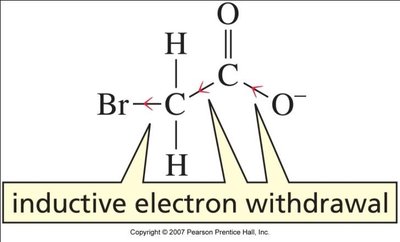
Inductive Effects
Inductive electron withdrawal by electronegative substituents increases acidity by stabilizing the conjugate base.
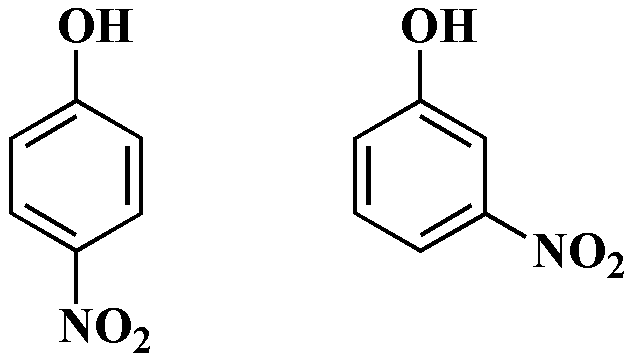
Electron Delocalization (Resonance)
Resonance stabilization of the conjugate base increases acid strength. Delocalization of negative charge onto electronegative atoms (e.g., oxygen) is especially stabilizing.

Summary Table: Factors Affecting Acid Strength
Factor | Effect on Acid Strength |
|---|---|
Size | Larger atom stabilizes negative charge, increases acid strength |
Electronegativity | More electronegative atom stabilizes negative charge, increases acid strength |
Hybridization | More s-character (sp) increases acid strength |
Inductive Effect | Electron-withdrawing groups increase acid strength |
Electron Delocalization | Resonance stabilization increases acid strength |
Key Concepts
Acid: Donates a proton; Lewis acid: Accepts an electron pair.
Base: Accepts a proton; Lewis base: Donates an electron pair.
Acid dissociation constant (Ka): Measures acid strength; related to pKa.
Equilibrium: Favors formation of weaker acid/base pair.
pKa and pH: Quantify acid and base strength; direction of equilibrium can be predicted.
Structure affects pKa: Electronegativity, size, hybridization, inductive effects, and resonance all influence acid strength.
Stronger acid = more stable conjugate base.
Hybridization order: sp > sp2 > sp3.
Inductive electron withdrawal: More electronegative and closer substituents increase acidity.
Electron delocalization: Resonance increases conjugate base stability and acid strength.
Additional info: These concepts are foundational for understanding organic reaction mechanisms, predicting product formation, and designing synthetic strategies.
