 Indietro
Acids and Bases: Definitions, Strength, and Structure in Organic Chemistry
Guida di studio - Note intelligenti
 Appunti personalizzati basati sui tuoi materiali, ampliati con definizioni chiave, esempi e contesto.
Acids and Bases in Organic Chemistry
Classical and Modern Definitions of Acids and Bases
Understanding acids and bases is fundamental in organic chemistry. Several definitions exist, each broadening the scope of what constitutes an acid or a base.
Arrhenius Definition: An acid increases the concentration of H+ ions in aqueous solution, while a base increases the concentration of OH- ions. This definition is limited to aqueous solutions and does not account for the instability of free protons in water.
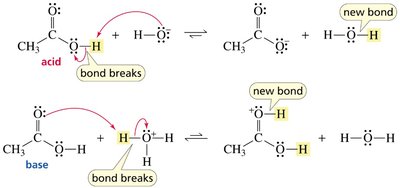
Brønsted-Lowry Definition: An acid is a proton (H+) donor, and a base is a proton acceptor. This definition is more general and applies to a wider range of reactions.
Lewis Definition: An acid is an electron pair acceptor, and a base is an electron pair donor. This is the broadest definition and includes many reactions not covered by the other two.
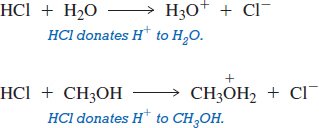
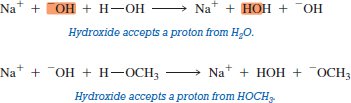
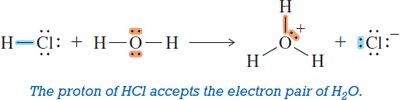
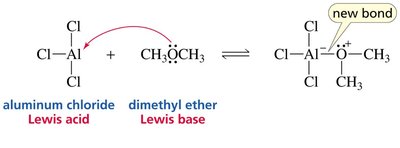
Arrow Pushing and Acid-Base Mechanisms
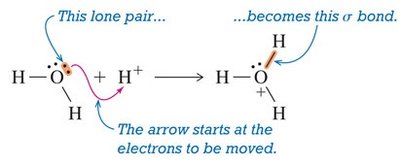
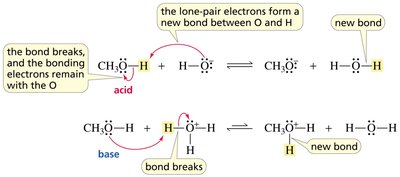
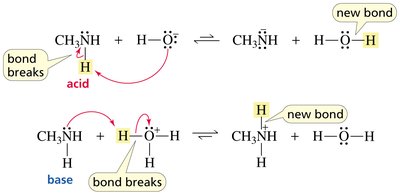
Arrow pushing is a technique used to illustrate the movement of electrons during chemical reactions, especially in acid-base chemistry. Curved arrows show the flow of electron pairs from bases (electron donors) to acids (electron acceptors).
Acid and Base Strength
pKa and Relative Strength
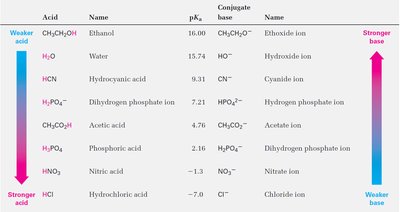
The strength of an acid is commonly measured by its pKa value. The lower the pKa, the stronger the acid. The strength of a conjugate base is inversely related to the strength of its acid.
pKa: The negative logarithm of the acid dissociation constant (Ka).
Relationship: Strong acids have weak conjugate bases, and vice versa.
The Henderson-Hasselbalch Equation
This equation relates the pH of a solution to the pKa and the ratio of the concentrations of the conjugate base and acid:
If pH < pKa, the compound exists mainly in its acidic (protonated) form.
If pH > pKa, the compound exists mainly in its basic (deprotonated) form.
Application: Separation of Acids and Bases
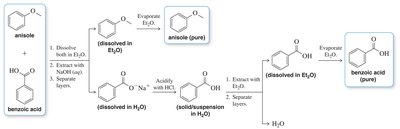
Acid-base properties can be used to separate compounds in the laboratory, such as separating anisole and benzoic acid by exploiting their differing solubilities in acidic and basic solutions.
Structural Effects on Acid Strength
Electronegativity
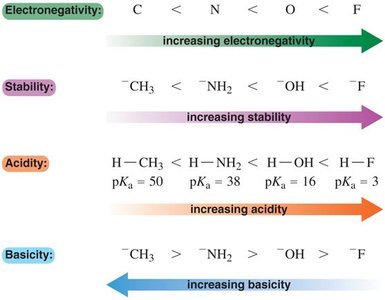
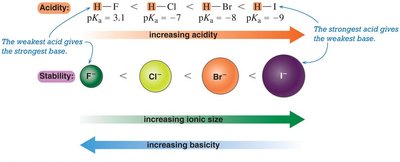
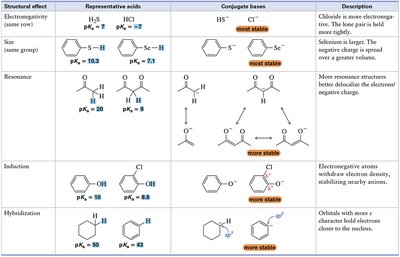
Acidity increases with the electronegativity of the atom bonded to hydrogen. More electronegative atoms stabilize the negative charge on the conjugate base better, making the acid stronger.
Size (Atomic Radius)
As the size of the atom bearing the negative charge increases (down a group), acidity increases because the charge is spread over a larger volume, stabilizing the conjugate base.
Hybridization
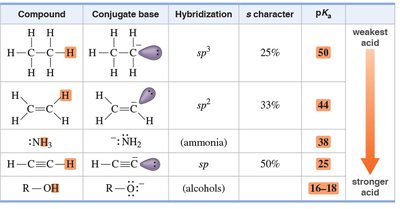
Acidity increases with the percentage of s-character in the hybrid orbital holding the acidic hydrogen. For example, sp-hybridized carbons (50% s-character) are more acidic than sp2 (33%) or sp3 (25%).
Inductive Electron Withdrawal
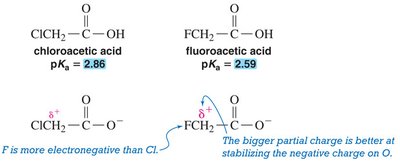
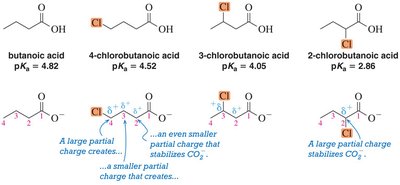
Electron-withdrawing groups (EWGs) near the acidic hydrogen increase acidity by stabilizing the conjugate base through the inductive effect. The closer and more electronegative the EWG, the greater the effect.
Electron Delocalization (Resonance)
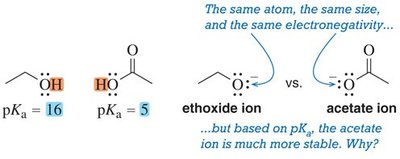
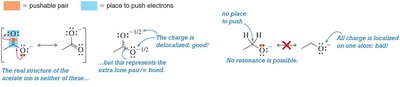
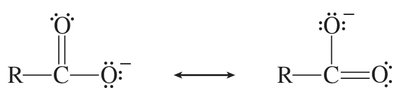
Delocalization of the negative charge on the conjugate base via resonance increases acid strength. Resonance stabilization makes the conjugate base less reactive and more stable.
Common Organic Acids and Bases
Carboxylic Acids
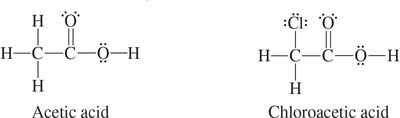
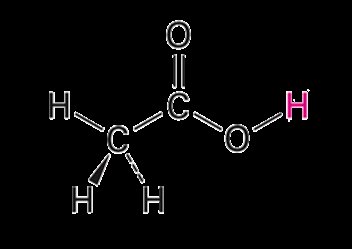
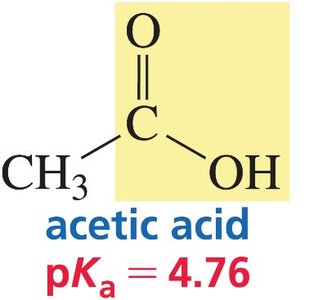
Carboxylic acids (R–COOH) are the most common organic acids, with pKa values typically between 3 and 5. Their acidity is influenced by the R group, which can stabilize or destabilize the conjugate base via inductive or resonance effects.
Alcohols
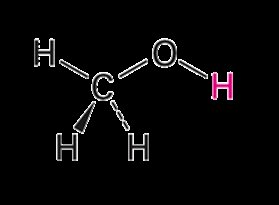
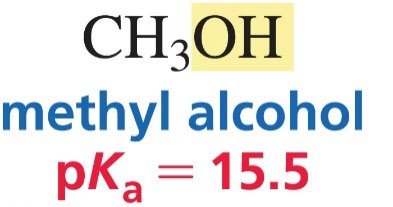
Alcohols (R–OH) are weaker acids than carboxylic acids, with pKa values around 15–16. They lack resonance stabilization and strong inductive effects, making their conjugate bases less stable.
Amines
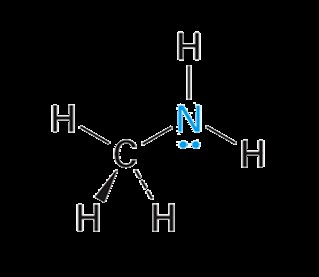
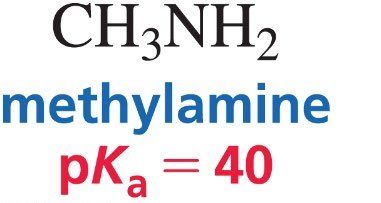
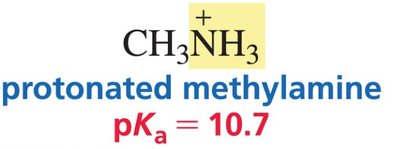
Amines (R–NH2) are typically weak acids but are the most common organic bases. Their conjugate acids have high pKa values (30–40), reflecting their weak acidity.
Protonated Compounds
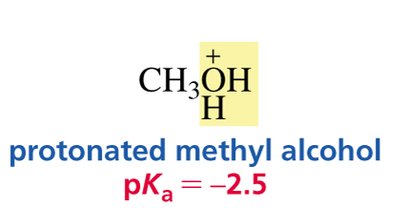
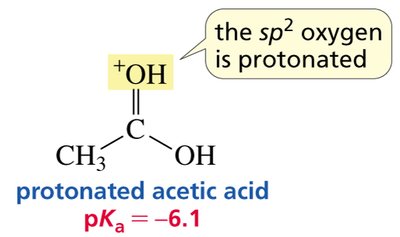
Protonated compounds (e.g., R–NH3+, R–OH2+) are much stronger acids than their neutral counterparts, with pKa values typically less than 1.
Conjugate Acid-Base Pairs and Reaction Direction
Conjugate Pairs
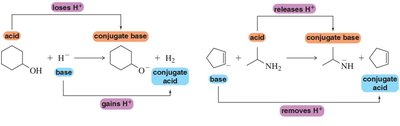
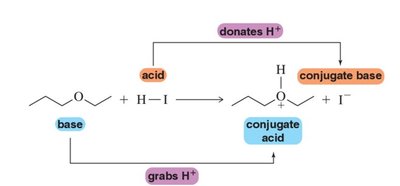
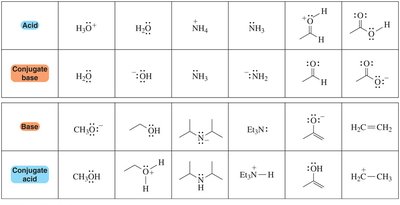
In every acid-base reaction, an acid donates a proton to a base, forming a conjugate base and a conjugate acid. The direction of equilibrium favors the formation of the weaker acid and base (the more stable pair).
Conjugate Acid: The species formed when a base gains a proton.
Conjugate Base: The species formed when an acid loses a proton.
Examples and Practice
Identify the conjugate base of HSO4−: SO42−
Identify the conjugate acid of HCO3−: H2CO3
Additional info: The concepts above are foundational for understanding acid-base equilibria, reaction mechanisms, and the behavior of organic molecules in various chemical environments. Mastery of these principles is essential for advanced study in organic chemistry.
