 Indietro
Acids and Bases in Organic Chemistry: Concepts, Equilibria, and Factors Affecting Strength
Guida di studio - Note intelligenti
 Appunti personalizzati basati sui tuoi materiali, ampliati con definizioni chiave, esempi e contesto.
Acids and Bases: Central to Understanding Organic Chemistry
Definitions and Fundamental Concepts
Acids and bases are foundational concepts in organic chemistry, governing many reaction mechanisms and molecular behaviors. Understanding their properties and interactions is essential for predicting chemical reactivity.
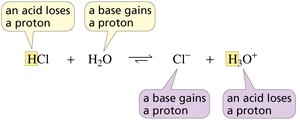
Acid: A species that can lose a proton (H+).
Base: A species that can gain a proton.
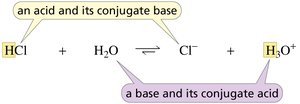
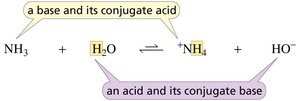
Conjugate Acid/Base: When an acid loses a proton, it forms its conjugate base; when a base gains a proton, it forms its conjugate acid.
Acid–Base Reactions and Equilibrium
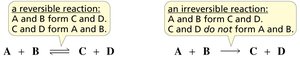
Most acid–base reactions are reversible, and the position of equilibrium depends on the relative strengths of acids and bases involved.
Reversible Reaction: Both forward and reverse reactions occur.
Irreversible Reaction: Only the forward reaction occurs; products do not revert to reactants.
Equilibrium Arrows: The longer half-arrow indicates which side (products or reactants) predominates at equilibrium.

Acid Strength and Dissociation Constants
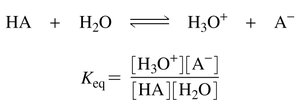
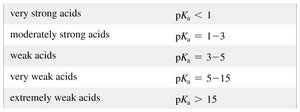
Acids vary in strength, which is quantitatively described by their dissociation constants. Strong acids favor product formation at equilibrium, while weak acids favor reactants.
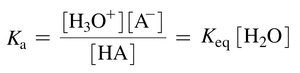
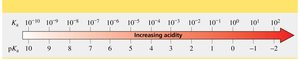
Acid Dissociation Constant (Ka): Indicates the extent of acid dissociation in water.
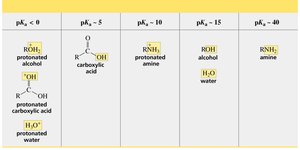
pKa: The negative logarithm of Ka; lower pKa means stronger acid.
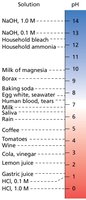
Common Organic Acids and Bases
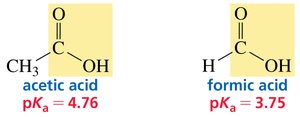
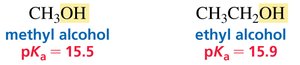
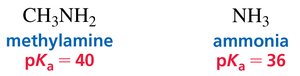
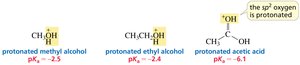
Organic acids and bases include carboxylic acids, alcohols, and amines. Their acid strengths are compared using pKa values.
Carboxylic Acids: Most common organic acids; typically stronger than alcohols and amines.
Alcohols: Can act as acids or bases; generally weaker acids than carboxylic acids.
Amines: Can act as acids or bases; typically weaker acids than alcohols.

Acid–Base Reaction Mechanisms
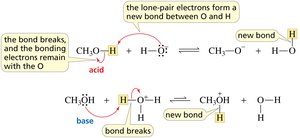
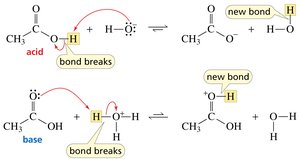
Acid–base reactions involve the transfer of protons, often illustrated with curved arrows showing electron movement from donor to acceptor.
Alcohols, Carboxylic Acids, and Amines: Can behave as acids or bases depending on the reaction context.
Curved Arrow Notation: Indicates electron flow during proton transfer.
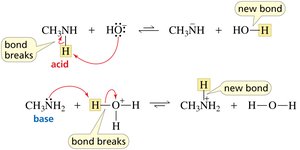
Determining Acid and Base in a Reaction
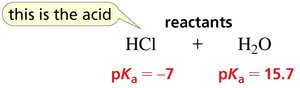
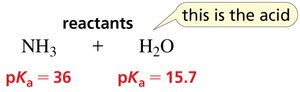
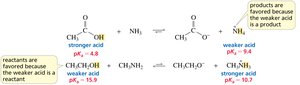
The stronger acid in a reaction acts as the acid, and the equilibrium favors formation of the weaker acid.
Position of Equilibrium: Determined by relative acid strengths (pKa values).
Equilibrium Constant Calculation: Based on the difference in pKa values of acids involved.
Factors Affecting Acid Strength
Several structural and electronic factors influence the strength of an acid in organic chemistry.
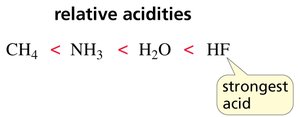
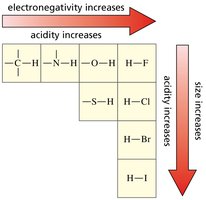
Electronegativity: Acidity increases with the electronegativity of the atom bonded to the proton.
Atomic Size: Larger atoms stabilize negative charge better, increasing acidity.
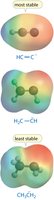
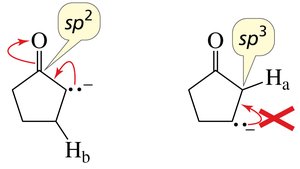
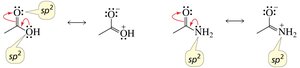
Hybridization: More s-character (sp, sp2) increases acidity.
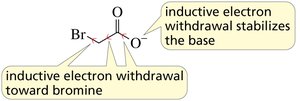
Inductive Electron Withdrawal: Electronegative substituents stabilize the conjugate base, increasing acidity.
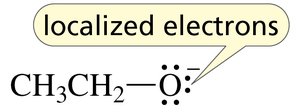
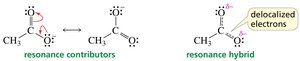
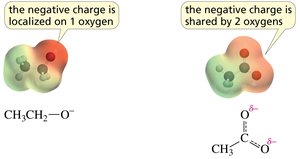
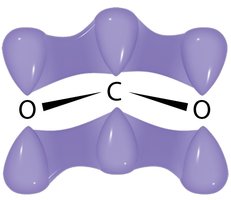
Electron Delocalization: Resonance stabilization of the conjugate base increases acidity.



The Henderson–Hasselbalch Equation and Buffer Solutions
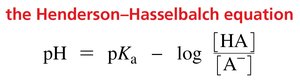
The Henderson–Hasselbalch equation relates pH, pKa, and the ratio of acid to conjugate base, allowing prediction of a compound's form at a given pH. Buffer solutions maintain constant pH by containing both an acid and its conjugate base.
Henderson–Hasselbalch Equation:
Buffer Solution: Contains an acid and its conjugate base; resists changes in pH.

Lewis Acids and Bases
Lewis acids and bases expand the definition beyond proton transfer, focusing on electron pair sharing.
Lewis Acid: Accepts a share in an electron pair.
Lewis Base: Donates a share in an electron pair.
All Brønsted acids are Lewis acids; all Brønsted bases are Lewis bases.
Summary Table: Factors Affecting Acid Strength
Factor | Effect on Acidity |
|---|---|
Electronegativity | Higher electronegativity increases acidity |
Atomic Size | Larger atom increases acidity |
Hybridization | More s-character increases acidity |
Inductive Electron Withdrawal | Electronegative substituents increase acidity |
Electron Delocalization | Resonance stabilization increases acidity |
Learning Objectives
Predict relative acidities and basicities.
Use pKa values to determine equilibrium position of acid–base reactions.
Describe how hybridization affects acidity.
Identify factors that affect acid strength.
Show how pH affects the structure of an acid.
Identify buffer solution components and select appropriate buffers for a given pH.
Identify delocalized electrons and draw resonance contributors.
Additional info: Academic context was added to clarify definitions, mechanisms, and the importance of acid/base concepts in organic chemistry. All included images directly reinforce the explanations adjacent to their placement.
