 Indietro
Alcohols and Phenols: Structure, Properties, and Synthesis
Guida di studio - Note intelligenti
 Appunti personalizzati basati sui tuoi materiali, ampliati con definizioni chiave, esempi e contesto.
Alcohols and Phenols
Introduction to Alcohols and Phenols
Alcohols and phenols are important classes of organic compounds characterized by the presence of a hydroxyl (OH) functional group. Alcohols have the OH group attached to a saturated carbon atom, while phenols have the OH group directly bonded to an aromatic benzene ring. Both are found in numerous natural compounds and play significant roles in biological and chemical processes.
Alcohols: Compounds with an OH group attached to an sp3 hybridized carbon.
Phenols: Compounds with an OH group attached to a benzene ring.
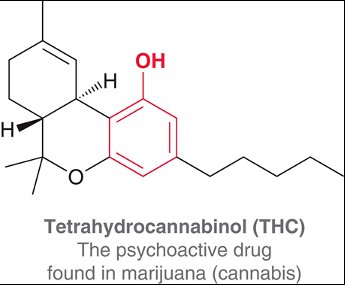
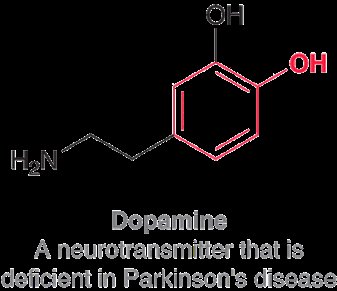
Examples: Many biologically active molecules, such as tetrahydrocannabinol (THC) and dopamine, contain phenolic groups.
Nomenclature of Alcohols and Phenols
The nomenclature of alcohols and phenols follows IUPAC rules, similar to other organic compounds. The parent chain is chosen to include the carbon bonded to the hydroxyl group, and the suffix '-ol' is used for alcohols, while 'phenol' is used for aromatic compounds with an OH group.
Alcohols: Name the longest chain containing the OH group, number the chain to give the OH group the lowest possible number, and add the suffix '-ol'.
Phenols: The base name is 'phenol', with substituents named and numbered accordingly.
Example: 2-propanol, methylphenol.
Acidity of Alcohols and Phenols
Acidity and Conjugate Bases
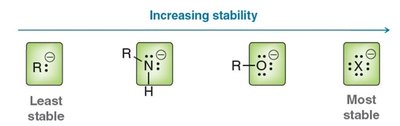
The acidity of alcohols and phenols is determined by the stability of their conjugate bases. The conjugate base of an alcohol is called an alkoxide, while that of a phenol is called a phenoxide. Phenols are generally more acidic than alcohols due to resonance stabilization of the phenoxide ion.
Alcohols: pKa typically around 16-18.
Phenols: pKa typically around 10, making them more acidic than alcohols.
Reason: Phenoxide ion is stabilized by resonance, while alkoxide ion is not.
Classification of Alcohols
Primary, Secondary, and Tertiary Alcohols
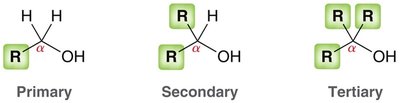
Aliphatic (non-aromatic) alcohols are classified based on the number of carbon atoms attached to the carbon bearing the hydroxyl group. This classification affects their reactivity and the products of certain reactions.
Primary Alcohols: The carbon with the OH group is attached to one other carbon.
Secondary Alcohols: The carbon with the OH group is attached to two other carbons.
Tertiary Alcohols: The carbon with the OH group is attached to three other carbons.
Preparation of Alcohols
Substitution Reactions
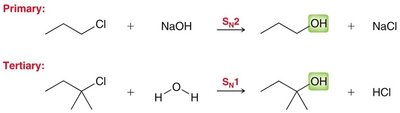
Alcohols can be synthesized via substitution reactions, where an alkyl halide reacts with a nucleophile such as hydroxide ion. The mechanism depends on the structure of the alkyl halide.
Primary Alkyl Halides: Undergo SN2 mechanism.
Tertiary Alkyl Halides: Undergo SN1 mechanism.
Addition Reactions of Alkenes
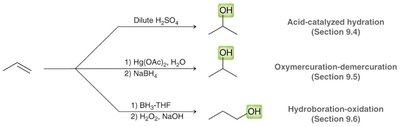
Alcohols can also be prepared by the addition of water to alkenes. The regioselectivity and stereoselectivity of the reaction depend on the method used.
Acid-catalyzed hydration: Follows Markovnikov's rule.
Oxymercuration-demercuration: Also Markovnikov, avoids rearrangements.
Hydroboration-oxidation: Anti-Markovnikov, syn addition.
Preparation of Alcohols by Reduction
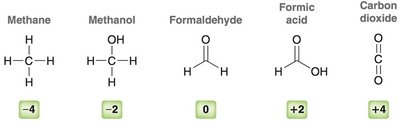
Reduction of carbonyl compounds is a major method for synthesizing alcohols. The oxidation state of carbon changes as hydrogen is added or oxygen is removed.
Ketones: Reduce to secondary alcohols under all reduction conditions.
Aldehydes: Reduce to primary alcohols under some conditions.
Oxidation states: Carbon's oxidation state increases as it is oxidized, decreases as it is reduced.
Catalytic Hydrogenation
Catalytic hydrogenation uses hydrogen gas and metal catalysts (Pt, Pd, Ni) to reduce carbonyl compounds to alcohols. The carbonyl carbon becomes an OH group, and if the product is chiral, a pair of enantiomers is formed.
Regioselectivity: Carbonyl carbon becomes alcohol.
Stereoselectivity: Both enantiomers are formed if a chiral center is produced.
Sodium Borohydride Reduction
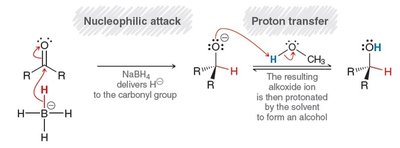
Sodium borohydride (NaBH4) is a mild hydride reducing agent that only reduces aldehydes and ketones, not alkenes or other carbonyl groups. The product is often a racemic mixture if a chiral center is formed.
Mechanism: Nucleophilic attack by hydride, followed by proton transfer.
Product: Alcohol, often racemic.
Lithium Aluminum Hydride Reduction
Lithium aluminum hydride (LiAlH4) is a powerful reducing agent that can reduce a wide range of carbonyl-containing functional groups, including esters, carboxylic acids, amides, and nitriles, to alcohols or amines. It does not reduce alkenes or alkynes.
Reduces: Esters, carboxylic acids, amides, nitriles, aldehydes, ketones.
Does not reduce: Alkenes, alkynes.
Can produce: Multiple alcohols if two carbonyl groups are present in the same molecule.
Other Ways to Make Diols
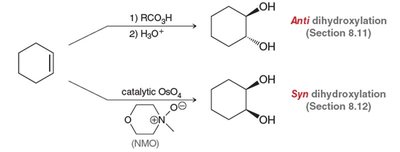
Diols (compounds with two OH groups) can be synthesized by dihydroxylation of alkenes. The stereochemistry of the addition can be anti or syn, depending on the reagents used.
Anti dihydroxylation: Uses peroxy acids (e.g., mCPBA) followed by hydrolysis.
Syn dihydroxylation: Uses osmium tetroxide (OsO4) with a co-oxidant.
Preparation of Alcohols: Grignard Reagents
Grignard Reagents and Their Reactivity
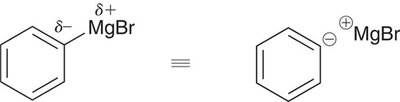
Grignard reagents are powerful carbon-based nucleophiles used to form new C–C bonds. They are also strong bases and cannot be used in the presence of acidic protons (e.g., water, alcohols, carboxylic acids, thiols). Grignards are synthesized from alkyl halides and magnesium in ether.
Structure: Carbon-magnesium bond, represented as R–MgBr.
Reactivity: Reacts with carbonyl compounds to form alcohols.
Limitation: Cannot be used with compounds containing acidic protons.
Grignard Reactions with Carbonyl Compounds
Grignard reagents react with aldehydes and ketones to form alcohols. Aldehydes yield secondary alcohols, while ketones yield tertiary alcohols. The carbon chain of the Grignard reagent is added to the carbonyl carbon. If a chiral center is produced, both enantiomers are formed.
Aldehydes: Produce secondary alcohols.
Ketones: Produce tertiary alcohols.
Esters: React with two equivalents of Grignard to produce tertiary alcohols (no chiral center).
Mechanism: Nucleophilic addition followed by protonation.
Note: The reaction must be carried out in anhydrous conditions, with acid/water added in a second step to protonate the alcohol.
Summary Table: Alcohol and Phenol Synthesis Methods
Method | Starting Material | Product | Key Features |
|---|---|---|---|
Substitution (SN2/SN1) | Alkyl halide | Alcohol | SN2 for primary, SN1 for tertiary |
Addition to Alkene | Alkene | Alcohol | Regioselectivity and stereoselectivity depend on method |
Reduction (NaBH4, LiAlH4) | Carbonyl compounds | Alcohol | NaBH4 for aldehydes/ketones, LiAlH4 for wider range |
Grignard Reaction | Carbonyl compounds | Alcohol | Forms new C–C bonds, sensitive to acidic protons |
Dihydroxylation | Alkene | Diol | Anti or syn addition |
