 Indietro
Chapter 1: Remembering General Chemistry – Electronic Structure and Bonding
Guida di studio - Note intelligenti
 Appunti personalizzati basati sui tuoi materiali, ampliati con definizioni chiave, esempi e contesto.
What Is Organic Chemistry?
Definition and Historical Context
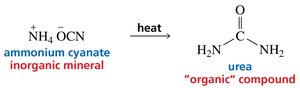
Organic chemistry is the study of compounds primarily based on carbon. Historically, organic compounds were thought to originate only from living organisms, possessing a 'vital force,' while inorganic compounds were derived from minerals. Modern definitions focus on carbon-based compounds, regardless of their origin.
Early definition: Organic compounds from living organisms; inorganic from minerals.
Current definition: Organic compounds are carbon-based.
Example: The synthesis of urea from ammonium cyanate demonstrated that organic compounds can be synthesized from inorganic sources.
What Makes Carbon So Special?
Carbon's Unique Electron Sharing
Carbon is unique among elements because it shares electrons rather than losing or gaining them, allowing it to form stable covalent bonds and a vast array of compounds.
Atoms left of carbon: Tend to lose electrons.
Atoms right of carbon: Tend to gain electrons.
Carbon: Shares electrons, forming covalent bonds.
The Structure of an Atom
Atomic Components and Atomic Number
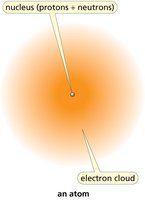
An atom consists of a nucleus (protons and neutrons) and an electron cloud. The atomic number is the number of protons in the nucleus and determines the element's identity.
Protons: Positively charged.
Neutrons: No charge.
Electrons: Negatively charged.
Example: Carbon has atomic number 6, so neutral carbon has 6 protons and 6 electrons.
Isotopes
Atomic Number vs. Mass Number
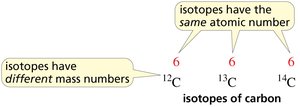
Isotopes are atoms of the same element (same atomic number) with different mass numbers due to varying numbers of neutrons.
Example: Carbon-12, Carbon-13, and Carbon-14 are isotopes of carbon.
The Distribution of Electrons in an Atom
Electron Shells and Energy Levels
Electrons occupy shells around the nucleus. The closer the shell, the lower its energy. Within shells, electrons fill orbitals according to specific rules.
Aufbau principle: Electrons fill the lowest energy orbitals first.
Pauli exclusion principle: Maximum two electrons per orbital.
Hund’s rule: Electrons fill empty degenerate orbitals before pairing.
Electron Transfer and Ion Formation
Atoms Losing or Gaining Electrons
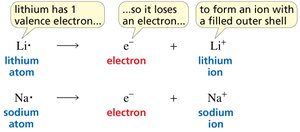
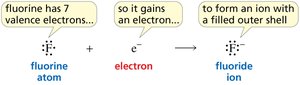
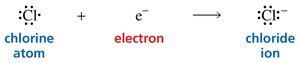
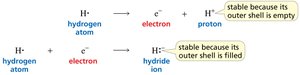
Atoms achieve stable electron configurations by losing or gaining electrons, forming ions.
First column elements (e.g., Li, Na): Lose electrons to form cations.
Right side elements (e.g., F, Cl): Gain electrons to form anions.
Hydrogen: Can lose or gain an electron, forming H+ or H-.
Covalent Bond Formation
Electron Sharing and Covalent Bonds
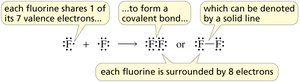
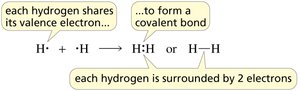
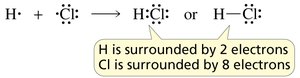
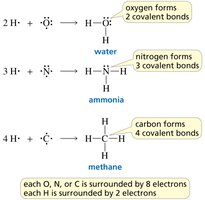
Atoms can achieve filled outer shells by sharing electrons, forming covalent bonds. This is the basis for molecular formation in organic chemistry.
Covalent bond: Formed by sharing electrons between atoms.
Example: Formation of F2, H2, HCl, H2O, NH3, CH4.
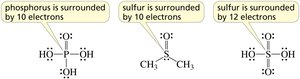
Phosphorus and Sulfur Atoms
Expanded Octet
Phosphorus and sulfur can have more than eight electrons in their outer shell due to the presence of d orbitals, allowing for expanded octets.
Phosphorus: Can be surrounded by 10 electrons.
Sulfur: Can be surrounded by 10 or 12 electrons.
Bond Polarity and Electronegativity
Nonpolar vs. Polar Covalent Bonds
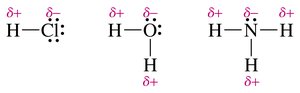
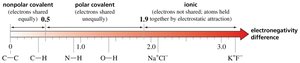
Bond polarity depends on the difference in electronegativity between bonded atoms. Nonpolar bonds have similar electronegativities, while polar bonds have significant differences.
Nonpolar covalent bond: Electrons shared equally.
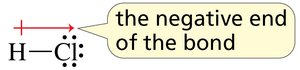
Polar covalent bond: Electrons shared unequally.
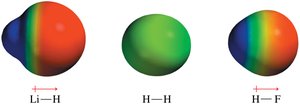
Direction of polarity: Indicated by an arrow pointing toward the more electronegative atom.

Dipole Moments and Electrostatic Potential
Bond Dipoles and Molecular Polarity
The dipole moment of a bond increases with greater electronegativity difference. Electrostatic potential maps visualize electron distribution and molecular polarity.
Dipole moment: Quantifies bond polarity.
Electrostatic potential map: Shows regions of electron density.

Lewis Structures and Formal Charge
Representing Molecules
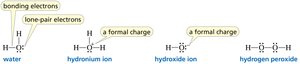
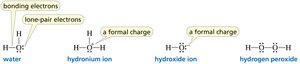
Lewis structures show atom connectivity, lone pairs, and formal charges. Formal charge is calculated to determine the charge distribution within a molecule.
Lewis structure: Shows bonds, lone pairs, and formal charges.
Formal charge: Calculated as:
Example: Water, hydronium ion, hydroxide ion, hydrogen peroxide.
Bonding Patterns of Common Elements
Carbon, Nitrogen, Oxygen, Halogens, and Hydrogen
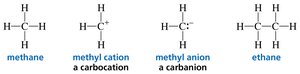
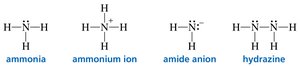
Each element forms a characteristic number of bonds and lone pairs. Deviations from these patterns result in formal charges.
Carbon: Forms 4 bonds.
Nitrogen: Forms 3 bonds, 1 lone pair.
Oxygen: Forms 2 bonds, 2 lone pairs.
Halogens: Form 1 bond, 3 lone pairs.
Hydrogen: Forms 1 bond.


Drawing Lewis Structures
Steps and Considerations
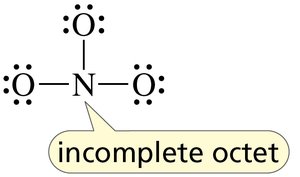
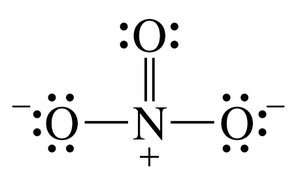
To draw a Lewis structure, determine the total number of valence electrons, arrange atoms to satisfy octet rules, and check for formal charges.
Step 1: Count valence electrons.
Step 2: Arrange atoms and bonds.
Step 3: Complete octets and assign lone pairs.
Step 4: Check for formal charges and avoid unstable bonds (e.g., O–O).
Molecular Representations
Kekulé, Condensed, and Skeletal Structures
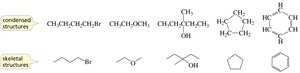
Organic molecules can be represented in various ways: Kekulé structures show all bonds, condensed structures omit some bonds, and skeletal structures show only carbon-carbon bonds as lines.
Kekulé structure: Shows all bonds, omits lone pairs.
Condensed structure: Omits some or all bonds.
Skeletal structure: Shows carbon-carbon bonds as lines, omits carbons and hydrogens bonded to carbons.


Atomic Orbitals and Electron Behavior
s and p Orbitals, Standing Waves
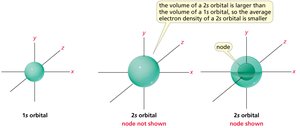
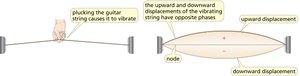
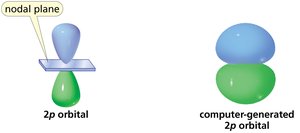
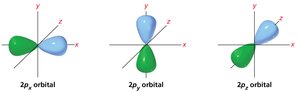
Atomic orbitals are regions where electrons are likely to be found. Electrons behave as standing waves, and orbitals have distinct shapes and phases.
s orbital: Spherical shape.
p orbital: Dumbbell shape, two lobes with opposite phases.
Standing wave: Electrons exhibit wave-like behavior.
Molecular Orbitals and Bond Formation
Sigma and Pi Bonds
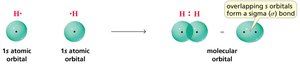
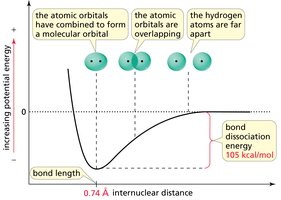
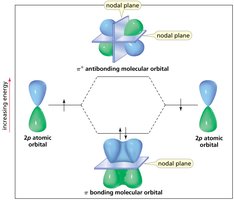
Atomic orbitals combine to form molecular orbitals. End-on overlap forms sigma (σ) bonds, while side-to-side overlap of p orbitals forms pi (π) bonds.
Sigma bond: Formed by end-on overlap.
Pi bond: Formed by side-to-side overlap of p orbitals.
Hybridization and Molecular Geometry
sp3, sp2, and sp Hybridization
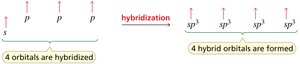
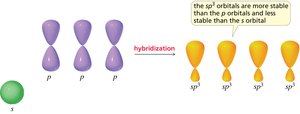
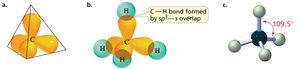
Hybridization is the mixing of atomic orbitals to form new hybrid orbitals, determining molecular geometry and bond angles.
sp3 hybridization: Tetrahedral geometry, bond angle ≈ 109.5°.
sp2 hybridization: Trigonal planar geometry, bond angle ≈ 120°.
sp hybridization: Linear geometry, bond angle ≈ 180°.
Bond Strength, Length, and Order
Relationship Between Bond Properties
The strength and length of a bond depend on bond order and hybridization. More bonds (higher bond order) result in stronger and shorter bonds. More s character in hybrid orbitals also leads to stronger, shorter bonds and larger bond angles.
Bond order: Single, double, triple bonds.
Bond strength: Increases with bond order.
Bond length: Decreases with bond order and s character.
Dipole Moments of Molecules
Molecular Polarity and Symmetry
The overall dipole moment of a molecule depends on the magnitude and direction of individual bond dipoles. Symmetrical molecules do not have a net dipole moment.
Dipole moment: Vector sum of bond dipoles.
Symmetry: Cancels dipole moments in symmetrical molecules.
Summary Table: Electronic Configurations of the First 11 Elements
Comparison of Electron Configurations
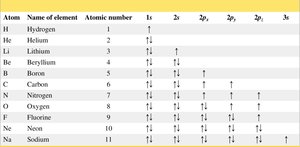
This table summarizes the electronic configurations for hydrogen through sodium, illustrating the filling of s and p orbitals.
Atom | Name of element | Atomic number | 1s | 2s | 2px | 2py | 2pz | 3s |
|---|---|---|---|---|---|---|---|---|
H | Hydrogen | 1 | ↑ | |||||
He | Helium | 2 | ↑↓ | |||||
Li | Lithium | 3 | ↑↓ | ↑ | ||||
Be | Beryllium | 4 | ↑↓ | ↑↓ | ||||
B | Boron | 5 | ↑↓ | ↑↓ | ↑ | |||
C | Carbon | 6 | ↑↓ | ↑↓ | ↑ | ↑ | ||
N | Nitrogen | 7 | ↑↓ | ↑↓ | ↑ | ↑ | ↑ | |
O | Oxygen | 8 | ↑↓ | ↑↓ | ↑↓ | ↑ | ↑ | |
F | Fluorine | 9 | ↑↓ | ↑↓ | ↑↓ | ↑↓ | ↑ | |
Ne | Neon | 10 | ↑↓ | ↑↓ | ↑↓ | ↑↓ | ↑↓ | |
Na | Sodium | 11 | ↑↓ | ↑↓ | ↑↓ | ↑↓ | ↑↓ | ↑ |
Learning Objectives
Key Skills for Organic Chemistry
Write ground-state electronic configurations for elements hydrogen through calcium.
Describe relative polarity of bonds and determine dipole directions.
Represent organic compounds using Lewis, Kekulé, condensed, and skeletal structures.
Assign lone pairs and calculate formal charges.
Determine hybridization of carbon, oxygen, or nitrogen atoms from molecular formula.
Describe how molecular geometry is determined by hybridization.
Explain how hybridization affects sigma bond strength and length.
Describe how bond order affects bond length and strength.
