 Indietro
Chapter 3: Alkanes and Cycloalkanes – Structure, Nomenclature, and Properties
Guida di studio - Note intelligenti
 Appunti personalizzati basati sui tuoi materiali, ampliati con definizioni chiave, esempi e contesto.
Alkanes and Cycloalkanes
Introduction to Functional Groups
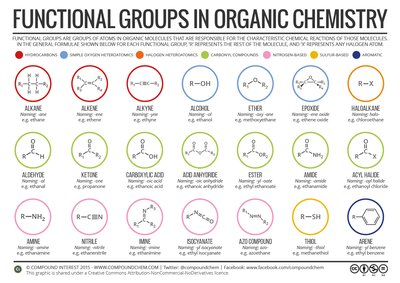
Functional groups are specific groups of atoms within molecules that are responsible for the characteristic chemical reactions of those molecules. They behave consistently across different molecules, allowing chemists to predict reactivity and properties.
Definition: A functional group is a collection of atoms at a site that have a characteristic behavior in all molecules where they occur.
Importance: Functional groups determine the chemical and physical properties of organic compounds.
Examples: Alkanes, alkenes, alkynes, alcohols, ethers, halides, etc.
Representations of Organic Molecules
Lewis, Kekulé, Condensed, and Skeletal Structures
Organic molecules can be represented in several ways, each with varying levels of detail. Understanding these representations is essential for interpreting and drawing organic structures.
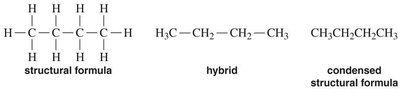
Lewis Structures: Show all atoms, bonds, and lone pairs.
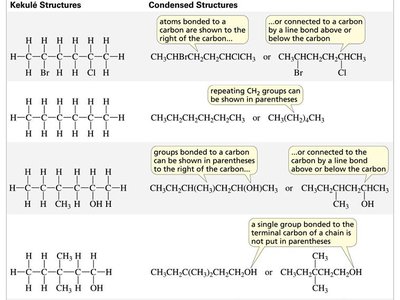
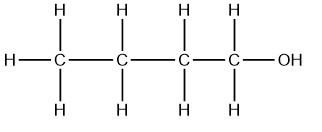
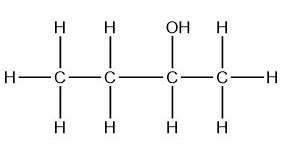
Kekulé Structures: Similar to Lewis but typically omit lone pairs on heteroatoms.
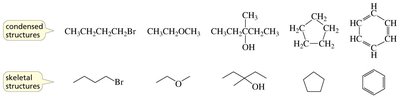
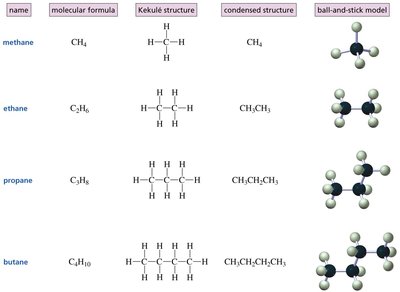
Condensed Structures: Bonds are not shown; atoms are listed in order, with subscripts for multiples.
Skeletal (Line-Angle) Structures: Only carbon-carbon bonds are shown as lines; hydrogens on carbons are implied.

Practice: Converting Between Structures
Being able to convert between different structural representations is a key skill in organic chemistry.
Example: Convert CH3(CH2)3CHO to a Kekulé structure.
Example: Convert CH2CHOCH2CH3 to a skeletal structure.
Hydrocarbons: Classification and Structure
Types of Hydrocarbons
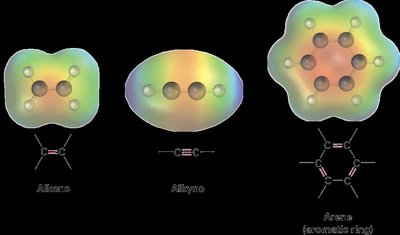
Hydrocarbons are organic compounds composed solely of carbon and hydrogen. They are classified based on the types of bonds present:
Alkanes: Only single bonds (saturated hydrocarbons).
Alkenes: At least one double bond (unsaturated).
Alkynes: At least one triple bond (unsaturated).
Arenes (Aromatic): Alternating single and double bonds in a ring structure.
Alkanes: Structure and Properties
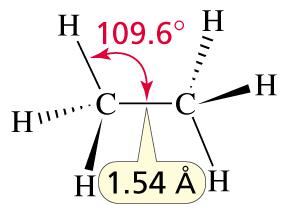
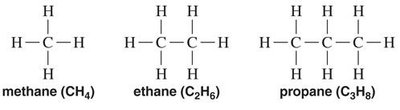
Alkanes are the simplest hydrocarbons, consisting only of single bonds. They can be straight-chained (normal) or branched, and are sometimes called aliphatic hydrocarbons.
General Formula:
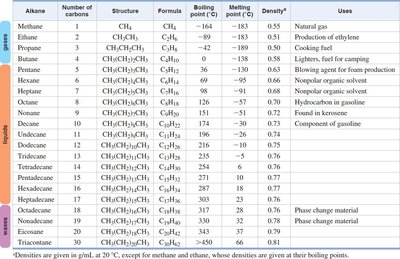
Physical Properties: Nonpolar, low reactivity, insoluble in water.
Examples: Methane (CH4), Ethane (C2H6), Propane (C3H8).
Isomerism in Alkanes
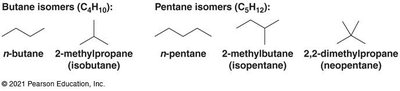
Isomers are compounds with the same molecular formula but different structures. Constitutional isomers differ in the connectivity of their atoms.
Example: Butane (C4H10) has two isomers: n-butane and isobutane.
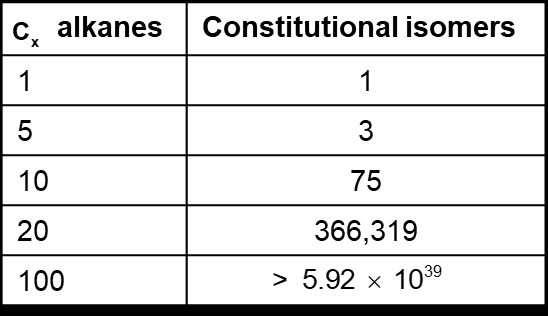
Number of Isomers: Increases rapidly with the number of carbon atoms.
Nomenclature of Alkanes and Cycloalkanes
Basic Principles of IUPAC Nomenclature
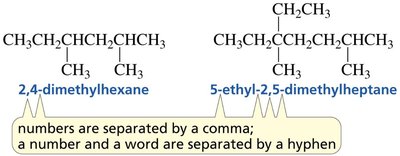
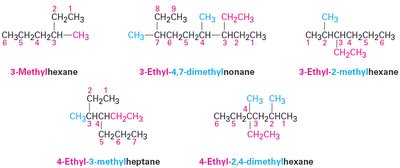
The International Union of Pure and Applied Chemistry (IUPAC) provides systematic rules for naming organic compounds. The name reflects the structure, including the parent chain, substituents, and functional groups.
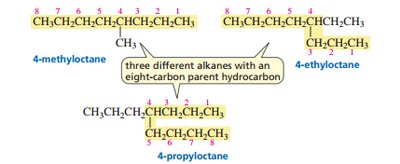
Parent Chain: Longest continuous chain of carbon atoms.
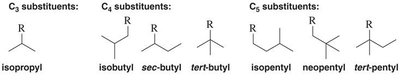
Substituents: Groups attached to the parent chain.
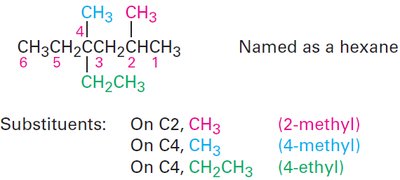
Numbering: Number the chain to give the lowest possible numbers to substituents.
Prefixes: di-, tri-, tetra- for multiple identical substituents.
Alphabetical Order: Substituents are listed alphabetically in the name.


Cycloalkanes: Structure and Nomenclature
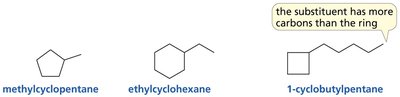
Cycloalkanes are saturated hydrocarbons with carbon atoms arranged in a ring. Their nomenclature is similar to alkanes, with the prefix 'cyclo-'.
Examples: Cyclopropane, cyclobutane, cyclopentane, cyclohexane.
Substituents: Numbering starts at a substituent and proceeds to give the lowest numbers.
Parent Chain: The ring is the parent unless a substituent has more carbons.


Nomenclature with Functional Groups
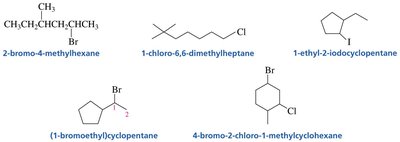
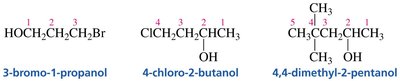
The presence of functional groups affects the naming of organic compounds. Functional groups are given the lowest possible number and may alter the suffix or prefix of the name.
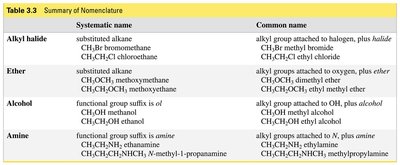
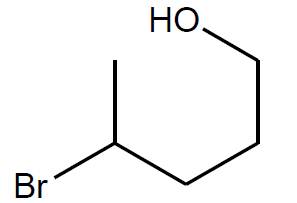
Halides: Use prefixes like fluoro-, chloro-, bromo-, iodo-.
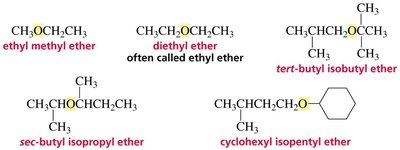
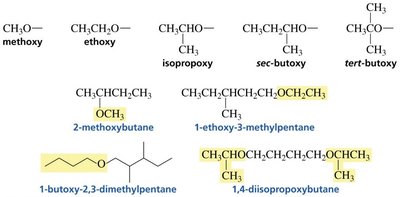
Ethers: Use the suffix -oxy or common names.
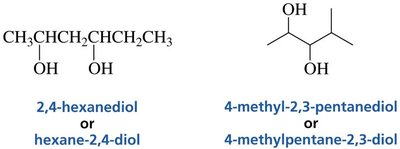
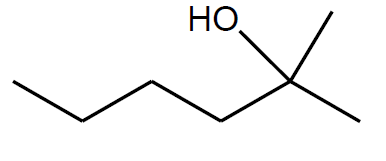
Alcohols: Use the suffix -ol.
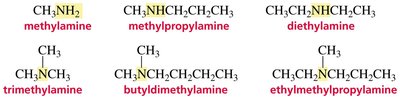
Amines: Use the suffix -amine.


Noncovalent Interactions (Intermolecular Forces)
Types of Noncovalent Interactions
Noncovalent interactions are forces that occur between molecules, influencing physical properties such as boiling point, melting point, and solubility.
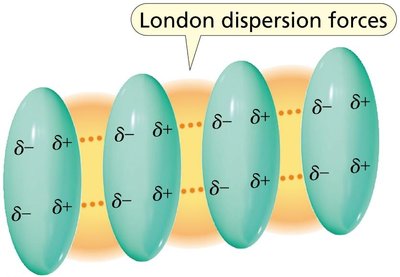
London Dispersion Forces: Weakest, present in all molecules due to temporary dipoles.
Dipole-Dipole Interactions: Occur between polar molecules with permanent dipoles.
Hydrogen Bonding: Strongest noncovalent interaction, occurs when H is bonded to N, O, or F.
Physical Properties Influenced by Intermolecular Forces
The strength and type of intermolecular forces directly affect boiling points, melting points, and solubility.
Boiling Point: Higher with stronger intermolecular forces and greater molecular weight; branching lowers boiling point.
Melting Point: Depends on molecular packing and intermolecular forces; even-numbered alkanes pack better and melt at higher temperatures.
Solubility: "Like dissolves like"—polar molecules dissolve in polar solvents, nonpolar in nonpolar solvents.
Stereochemistry and Conformational Analysis
Conformers and Newman Projections
Stereochemistry examines the three-dimensional arrangement of atoms in molecules. Conformers are different spatial arrangements due to rotation around single bonds (sigma bonds).
Staggered Conformer: Most stable, lowest energy due to minimized electron repulsion (hyperconjugation).
Eclipsed Conformer: Higher energy due to increased electron repulsion.
Newman Projections: Visualize conformers by looking down the axis of a C–C bond.
Butane Example: Anti (lowest energy), gauche (higher due to steric strain), eclipsed, and totally eclipsed (highest energy).
Conformers of Cycloalkanes
Cycloalkanes can adopt different conformations to minimize angle and torsional strain. Cyclohexane is the most stable due to its ability to form a chair conformation.
Chair Conformation: Most stable, minimizes both angle and torsional strain.
Ring Flip: Interconverts axial and equatorial positions.
Substituent Position: Equatorial is more stable due to less steric strain.
Cis/Trans Isomerism: Substituents on the same side (cis) or opposite sides (trans) of the ring.
Practice Problems
Convert between Kekulé, condensed, and skeletal structures for given molecules.
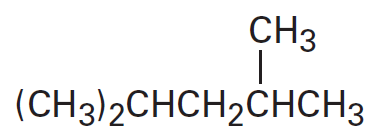
Provide IUPAC names for complex branched and cyclic alkanes.
Draw Newman projections for the most stable conformers of substituted alkanes.
Identify and compare the physical properties of alkanes based on their structure and intermolecular forces.
