 Indietro
Core Concepts in Organic Reaction Mechanisms and Functional Groups
Guida di studio - Note intelligenti
 Appunti personalizzati basati sui tuoi materiali, ampliati con definizioni chiave, esempi e contesto.
Organic Reaction Mechanisms and Classes
Overview of Organic Reaction Classes
Organic chemistry reactions can be broadly categorized into three main classes: addition, substitution, and elimination. Understanding these classes is essential for predicting and rationalizing the outcomes of organic reactions.
Addition Reactions: Involve the conversion of a π bond (double or triple bond) into two new single bonds. Common in alkenes and alkynes.
Substitution Reactions: One functional group is replaced by another, often involving the loss of a leaving group and the introduction of a nucleophile.
Elimination Reactions: Two single bonds are converted into a π bond, typically resulting in the loss of a small molecule such as H2O or HX.
Example: The reaction of an alkyl bromide with NaOH can proceed via substitution (to give an alcohol) or elimination (to give an alkene), depending on the conditions.
Key Reaction Vocabulary and Arrow Notation
Organic chemists use specific arrows to indicate the movement of electrons and the direction of reactions:
Reaction Arrow (→): Indicates the direction from reactants to products.
Equilibrium Arrow (⇌): Shows reversible reactions.
Curved Arrow: Represents the movement of an electron pair.
Curved Half Arrow: Represents the movement of a single electron (radical reactions).
Resonance Arrow (↔): Indicates resonance structures.
Definitions: Nucleophile, Electrophile, and Leaving Group
Nucleophile (Nu or Nuc): An electron-rich species that donates a pair of electrons to an electron-poor atom (electrophile). Look for negative charges, lone pairs, or π bonds. Example: OH-, NH3.
Electrophile (E+): An electron-poor species that accepts a pair of electrons from a nucleophile. Look for positive charges or atoms attached to good leaving groups. Example: Carbocations, carbonyl carbons.
Leaving Group (LG): An atom or group that can depart with an electron pair, stabilizing the negative charge. Good leaving groups are weak bases and stable as ions. Example: Br-, H2O.
Basic Mechanisms for Organic Reactions
Most organic reactions follow a stepwise mechanism involving nucleophilic attack, bond formation, and bond cleavage. The general steps are:
Identify the nucleophile and electrophile.
Draw a curved arrow from the nucleophile to the electrophile.
Check for octet violations and adjust with additional arrows if necessary.
Draw the product, indicating bonds broken and formed.
Acids and Bases in Organic Chemistry
Brønsted-Lowry and Lewis Definitions
Brønsted-Lowry Acid: Proton (H+) donor.
Brønsted-Lowry Base: Proton acceptor.
Lewis Acid: Electron pair acceptor.
Lewis Base: Electron pair donor.
All Brønsted-Lowry acids/bases are also Lewis acids/bases, but not all Lewis acids/bases are Brønsted-Lowry acids/bases.
pKa and Acid Strength
The strength of an acid is measured by its acid dissociation constant (Ka) and its logarithmic counterpart, pKa:
Lower pKa values indicate stronger acids. Acid strength is influenced by several factors:
Charge: Negative charge on the conjugate base stabilizes it, increasing acid strength.
Atom: Larger atoms (down a group) and more electronegative atoms (across a period) stabilize negative charge better.
Resonance: Delocalization of charge increases stability.
Inductive Effects: Electron-withdrawing groups stabilize the conjugate base.
Hybridization: Greater s-character (e.g., sp > sp2 > sp3) stabilizes negative charge.
Examples of Inductive and Hybridization Effects
Inductive effects are observed when electronegative atoms (e.g., Cl) are closer to the acidic proton, increasing acid strength. Hybridization effects show that sp-hybridized carbons (as in alkynes) are more acidic than sp2 (alkenes) or sp3 (alkanes).
Important pKa Values
Compound | pKa |
|---|---|
Alkanes | ~55 |
Alkenes | ~44 |
Alkynes | ~25 |
Alcohols | ~16 |
Water | ~14 |
Phenol | ~10 |
Carboxylic Acid | ~5 |
HCl | -7 |
H2SO4 | -11 |

Functional Groups in Organic Chemistry
Overview of Functional Groups
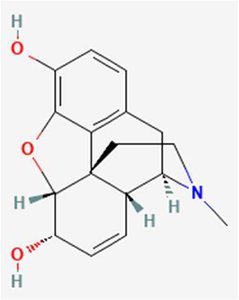
Functional groups are specific groupings of atoms within molecules that have characteristic properties and reactivity. Recognizing functional groups is essential for predicting chemical behavior.
Hydrocarbons: Alkanes (C–C single bonds), Alkenes (C=C double bonds), Alkynes (C≡C triple bonds), Aromatics (benzene rings).
C–O Single Bonds: Alcohols (–OH), Ethers (–O–).
Carbonyl Compounds: Aldehydes, Ketones, Carboxylic Acids, Esters.
Nitrogen and Sulfur Groups: Amines, Imines, Nitriles, Amides, Thiols, Thioethers.
Halogen Groups: Haloalkanes, Acid Halides (X = F, Cl, Br, I).
Summary Table: Reaction Classes and Mechanistic Features
Reaction Class | Key Feature | Example |
|---|---|---|
Addition | π bond to two single bonds | Alkene + HBr → Alkyl bromide |
Substitution | One group replaced by another | R–Br + NaOH → R–OH + NaBr |
Elimination | Two single bonds to π bond | Alcohol dehydration to alkene |
Practice and Application
Label reactions as substitution, elimination, or addition.
Identify nucleophilic, electrophilic, and leaving group atoms in given reactions.
Additional info: The notes above integrate content from chapters on acids and bases, functional groups, and reaction mechanisms, as outlined in the provided lecture material. The tables and images included are directly relevant to the explanation of acid/base strength and functional group identification.
