 Indietro
Molecular Representations and Resonance in Organic Chemistry
Guida di studio - Note intelligenti
 Appunti personalizzati basati sui tuoi materiali, ampliati con definizioni chiave, esempi e contesto.
Chapter 2: Molecular Representations
2.1 Molecular Representations
Organic molecules can be represented in several ways, each providing different levels of detail and clarity. Common representations include Lewis structures, condensed formulas, bond-line (skeletal) structures, and three-dimensional models. Mastery of these conventions is essential for clear communication in organic chemistry.
Lewis Structures: Show all atoms, bonds, and lone pairs explicitly.
Condensed Structural Formulas: Group atoms together, omitting some bonds for brevity.
Bond-Line Structures: Simplify organic molecules by representing carbon atoms as vertices and lines as bonds; hydrogens attached to carbons are usually omitted.
Three-Dimensional Models: Use wedges and dashes to indicate bonds coming out of or going into the plane of the page.
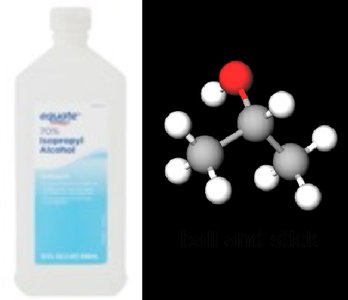
Example: Isopropanol (isopropyl alcohol) can be represented as a bottle (macroscopic), a ball-and-stick model (molecular), or a bond-line structure (structural).
2.2 Drawing Bond-Line Structures
Bond-line structures are the most common way to represent organic molecules. Each vertex and line ending represents a carbon atom, and hydrogens attached to carbons are implied. Heteroatoms (atoms other than carbon and hydrogen) and hydrogens attached to them must be shown explicitly.
Carbons are at the ends and bends of lines.
Hydrogens on carbons are not shown; all other hydrogens are drawn.
Correct bond angles should be used: sp3 (109.5°), sp2 (120°), sp (180°).
Formal charges must always be indicated.
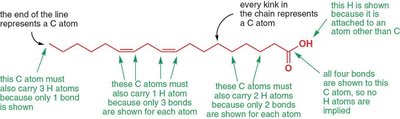
Example: The image above explains how to interpret each vertex and bond in a bond-line structure.
2.3 Three-Dimensional Drawings
Three-dimensional drawings use wedges and dashes to represent the spatial arrangement of atoms around a central atom, typically carbon. This is crucial for understanding stereochemistry and molecular geometry.
Wedge: Bond projects out of the plane toward the viewer.
Dash: Bond projects behind the plane away from the viewer.
Lines: Bonds in the plane of the page.
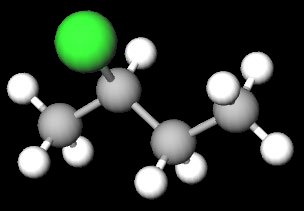
Tip: Tetrahedral geometry should have two bonds in the plane, one wedge, and one dash. Trigonal planar geometry is drawn flat, with all bonds in the plane.
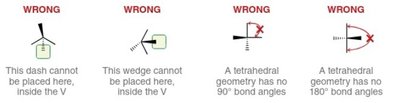
Common Mistakes: Avoid placing wedges or dashes inside rings or at incorrect angles. Tetrahedral geometry does not have 90° or 180° bond angles.
2.4 Identifying Functional Groups
Functional groups are specific groups of atoms within molecules that have characteristic properties and reactivity. Recognizing functional groups is essential for predicting chemical behavior.
Alkane: Single bonds only.
Alkene: Contains a carbon-carbon double bond.
Alkyne: Contains a carbon-carbon triple bond.
Arene: Aromatic ring (e.g., benzene).
Alcohols, Ethers, Amines, Thiols, etc.: Defined by the presence of specific heteroatoms and bonding patterns.
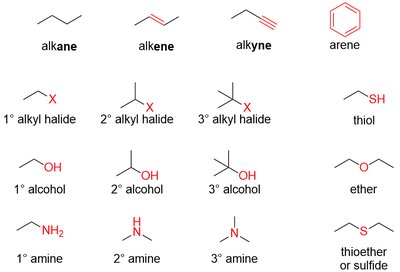
Example: The table above summarizes the structures and names of common functional groups.
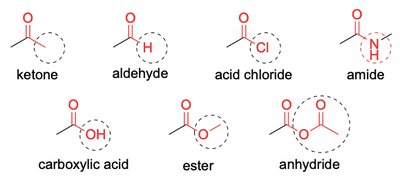
Note: The carbonyl group (C=O) is a component of several functional groups, including ketones, aldehydes, carboxylic acids, esters, and amides.
2.5 Identifying Lone Pairs
Lone pairs are non-bonding pairs of electrons on atoms, especially heteroatoms like oxygen and nitrogen. In bond-line structures, lone pairs are often omitted but should be considered for accurate electron counting and reactivity predictions.
Oxygen typically has two lone pairs when neutral, three when negatively charged, and one when positively charged.
Nitrogen typically has one lone pair when neutral, two when negatively charged, and none when positively charged.
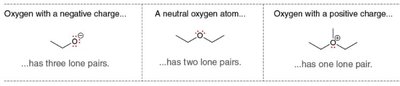
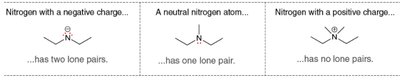
Tip: Always draw in lone pairs on heteroatoms when analyzing reactivity or resonance.
2.6 Carbon Atoms with Formal Charges
Carbon atoms can bear formal charges if they have more or fewer than four bonds. A carbocation (positively charged carbon) has only three bonds and an empty p orbital, while a carbanion (negatively charged carbon) has three bonds and a lone pair.
Carbocation: 3 bonds, 0 lone pairs, sp2 hybridized, empty p orbital.
Carbanion: 3 bonds, 1 lone pair, sp3 hybridized.
Note: Formal charges must always be shown in bond-line structures.
2.7 Recognizing Conjugation
Conjugation occurs when three or more adjacent atoms have p orbitals that overlap, allowing delocalization of π electrons. This delocalization stabilizes the molecule and is a prerequisite for resonance.
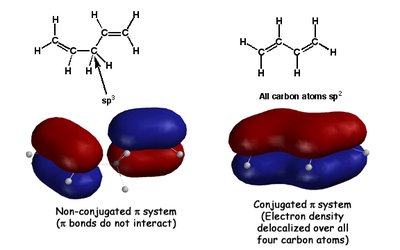
Example: The image compares a non-conjugated π system (no interaction) with a conjugated π system (electron density delocalized over all atoms).
2.8 Introduction to Resonance
Resonance describes the delocalization of electrons in molecules where a single Lewis structure is insufficient. Resonance structures differ only in the placement of electrons, not atoms. The true structure is a resonance hybrid, which is a weighted average of all valid resonance contributors.
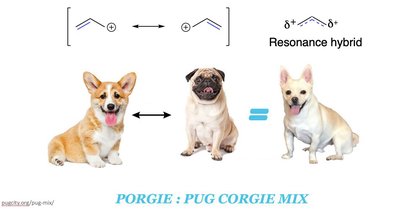
Example: The resonance hybrid is not a simple mixture but a unique structure with delocalized electrons.
2.9 Curved Arrows in Resonance
Curved arrows are used to indicate the movement of electron pairs when drawing resonance structures. Arrows always start at an electron source (lone pair or π bond) and point to an electron sink (atom or bond where electrons are moving).
Never break sigma bonds when drawing resonance structures.
Never exceed the octet for second-row elements (C, N, O, F).
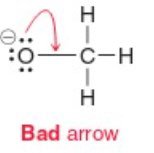
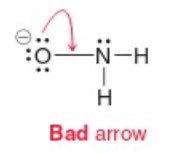
Common Errors: Do not use curved arrows to create impossible structures (e.g., exceeding the octet or breaking sigma bonds).
2.10 Drawing Resonance Structures via Pattern Recognition
There are five key patterns for drawing resonance structures:
Pattern | Number of Curved Arrows |
|---|---|
Allylic lone pair | Two |
Allylic carbocation | One |
Lone pair adjacent to C+ | One |
π bond between atoms of differing electronegativity | One |
Conjugated π bonds in a ring | Three |
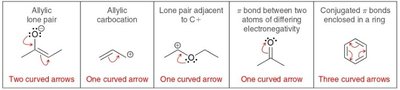
Tip: Learn to recognize these patterns to efficiently draw all significant resonance structures.
2.11 Assessing the Relative Importance of Resonance Structures
Not all resonance structures contribute equally to the resonance hybrid. The most significant (major) contributors are those that:
Obey the octet rule for all atoms.
Minimize formal charges.
Place negative charges on more electronegative atoms and positive charges on less electronegative atoms.
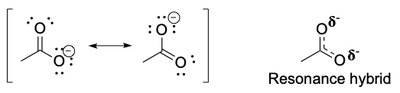
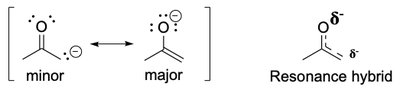
Example: The resonance hybrid reflects the weighted contributions of each resonance structure, with the major contributor dominating the hybrid's character.
2.12 Delocalized and Localized Lone Pairs
Electrons can be classified as localized (confined to one atom or bond) or delocalized (spread over several atoms via resonance). Delocalized electrons participate in resonance and are found in p orbitals, while localized electrons are in hybridized orbitals (sp3, sp2, sp).
Allylic lone pairs are always delocalized.
Localized lone pairs do not participate in resonance.
Application: Determining whether a lone pair is localized or delocalized is essential for predicting reactivity and stability.
Summary Table: Functional Groups
Functional Group | Structure |
|---|---|
Alkane | Single bonds only |
Alkene | Carbon-carbon double bond |
Alkyne | Carbon-carbon triple bond |
Arene | Aromatic ring |
Alcohol | -OH group |
Ether | R-O-R' |
Aldehyde | R-CHO |
Ketone | R-CO-R' |
Carboxylic Acid | R-COOH |
Ester | R-COOR' |
Amide | R-CONH2 |
Amine | R-NH2, R2NH, R3N |
Alkyl Halide | R-X (X = F, Cl, Br, I) |
Thiol | R-SH |
Thioether | R-S-R' |
Key Equations and Concepts
Formal Charge:
Resonance Hybrid: The actual structure is a weighted average of all significant resonance contributors.
Conjugation: Delocalization of π electrons across three or more adjacent p orbitals increases stability.
Chapter Learning Goals
Interpret and draw bond-line, condensed, and Lewis structures.
Represent three-dimensional geometry using wedges and dashes.
Identify and name functional groups.
Recognize lone pairs and assign formal charges.
Identify conjugation and draw resonance structures using curved arrows.
Assess the relative importance of resonance contributors and draw resonance hybrids.
Distinguish between localized and delocalized lone pairs.
