 Indietro
Ch 6: Nucleophilic Substitution Reactions of Alkyl Halides: SN2 and SN1 Mechanisms
Guida di studio - Note intelligenti
 Appunti personalizzati basati sui tuoi materiali, ampliati con definizioni chiave, esempi e contesto.
Alkyl Halides: Structure, Classification, and Nomenclature
Classification of Alkyl Halides
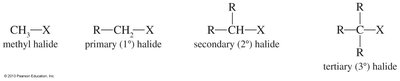
Alkyl halides are organic compounds in which a halogen atom (F, Cl, Br, I) is bonded to an alkyl group. Their classification depends on the degree of substitution at the carbon atom bonded to the halogen.
Methyl halide: Halogen attached to a methyl group (CH3-X).
Primary (1°) alkyl halide: Halogen attached to a carbon bonded to one other carbon.
Secondary (2°) alkyl halide: Halogen attached to a carbon bonded to two other carbons.
Tertiary (3°) alkyl halide: Halogen attached to a carbon bonded to three other carbons.
IUPAC Nomenclature
Alkyl halides are named as haloalkanes. The longest carbon chain is chosen as the parent, and the halogen is given the lowest possible position number.
Example: 2-chlorobutane, 4-(2-fluoroethyl)heptane, 6-bromo-2-methylnonane.
Physical Properties and Bonding in Alkyl Halides
Bond Polarity and Dipole Moments
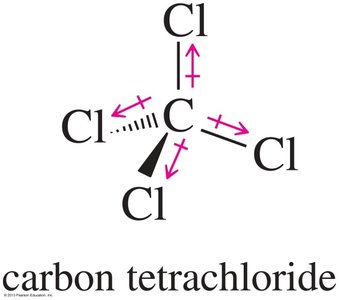
The carbon-halogen bond is polarized due to the higher electronegativity of halogens compared to carbon, resulting in a partial positive charge on carbon and a partial negative charge on the halogen.
Electronegativities: F > Cl > Br > I
Bond lengths: C–F < C–Cl < C–Br < C–I
Bond dipoles: C–Cl > C–F > C–Br > C–I

Intermolecular Forces
Alkyl halides exhibit dipole-dipole interactions and London dispersion forces. Larger halogen atoms increase polarizability and boiling points.
Boiling points: Increase with molecular mass and polarizability.
Density: Alkyl fluorides and chlorides (with one Cl) are less dense than water; dichlorides, bromides, and iodides are denser.
Preparation of Alkyl Halides
Free-Radical Halogenation
Alkanes can be halogenated via free-radical mechanisms. Bromination is more selective than chlorination, favoring substitution at more substituted carbons.
Chlorination: Not selective.
Bromination: Highly selective (3° > 2° > 1°).

Allylic Bromination
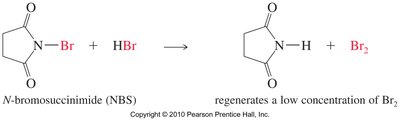
Allylic radicals are resonance stabilized, allowing bromination at the allylic position with good yield. N-bromosuccinimide (NBS) is used to maintain low Br2 concentration.
Example: Bromination of cyclohexene at the allylic position.

Nucleophilic Substitution Reactions: SN2 Mechanism
General Mechanism
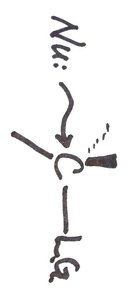
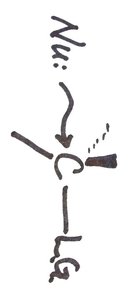
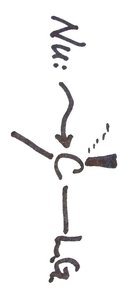
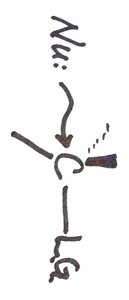
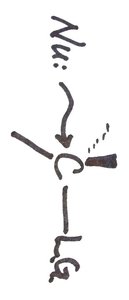
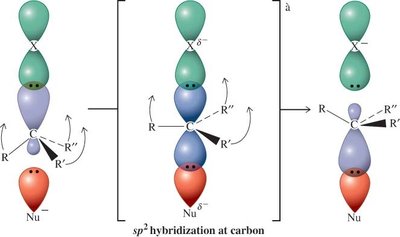
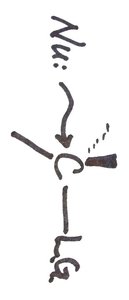
SN2 (Substitution Nucleophilic Bimolecular) reactions involve a concerted, one-step mechanism where the nucleophile attacks the electrophilic carbon from the opposite side of the leaving group, resulting in inversion of configuration (Walden inversion).
Rate law:
Stereochemistry: Inversion at the chiral center.
Substrate reactivity: Methyl > 1° > 2° >> 3° (no SN2 on tertiary carbon due to steric hindrance).
Factors Affecting SN2 Reactions
Nucleophile strength: Stronger nucleophiles increase reaction rate.
Leaving group ability: Best leaving groups are weak bases, stable anions (I- > Br- > Cl- > F-).
Solvent effects: Polar aprotic solvents (e.g., acetone, DMSO) favor SN2 by not solvating nucleophiles.
Steric effects: Bulky substrates and nucleophiles hinder SN2 reactions.
Examples and Applications
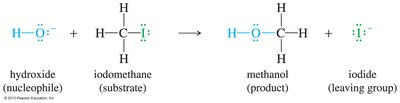
Example: Hydroxide ion attacking iodomethane to produce methanol and iodide.

Summary Table: Nucleophiles and Products
Nucleophile | Product | Class of Product |
|---|---|---|
R–X + :I- | R–I + X- | alkyl halide |
R–X + :OH- | R–OH + X- | alcohol |
R–X + :SH- | R–SH + X- | thiol (mercaptan) |
R–X + :NH2- | R–NH2 + X- | amine salt |
R–X + :N3- | R–N3 + X- | azide |
R–X + :C≡N- | R–C≡N + X- | nitrile |
R–X + :COO- | R–COO + X- | ester |
Nucleophilic Substitution Reactions: SN1 Mechanism
General Mechanism
SN1 (Substitution Nucleophilic Unimolecular) reactions proceed via a two-step mechanism involving formation of a carbocation intermediate. The rate-determining step is the loss of the leaving group to form the carbocation, followed by nucleophilic attack.
Rate law:
Stereochemistry: Racemization occurs; both retention and inversion of configuration are possible.
Substrate reactivity: 3° > 2° > 1° >> methyl (opposite of SN2).
Factors Affecting SN1 Reactions
Carbocation stability: More substituted carbocations are more stable due to inductive effects and hyperconjugation.
Leaving group ability: Same as SN2; best leaving groups are weak bases.
Solvent effects: Polar protic solvents stabilize carbocations and anions via hydrogen bonding.
Rearrangements: Hydride and methyl shifts can occur to form more stable carbocations.
Comparison: SN2 vs SN1
Feature | SN2 | SN1 |
|---|---|---|
Mechanism | One-step, concerted | Two-step, carbocation intermediate |
Rate Law | ||
Stereochemistry | Inversion (Walden inversion) | Racemization |
Substrate Reactivity | Methyl > 1° > 2° >> 3° | 3° > 2° > 1° >> methyl |
Nucleophile | Strong | Weak (may be solvent) |
Solvent | Polar aprotic | Polar protic |
Rearrangements | None | Possible |
Key Concepts and Exam Preparation
Name alkyl halides and classify them as methyl, 1°, 2°, or 3°.
Predict products and stereochemistry of SN2 and SN1 reactions.
Draw mechanisms and energy profiles for SN2 and SN1.
Explain factors affecting reaction rates: substrate, nucleophile, leaving group, solvent.
Identify conditions favoring substitution vs elimination.
Recognize rearrangements in SN1 reactions.
Additional info: These notes cover the essential aspects of nucleophilic substitution reactions (SN2 and SN1) as outlined in Chapter 6 of a standard Organic Chemistry textbook, including substrate classification, mechanism, stereochemistry, and factors affecting reactivity.
