 Indietro
Organic Chemistry Functional Group Identification and Analysis
Guida di studio - Note intelligenti
 Appunti personalizzati basati sui tuoi materiali, ampliati con definizioni chiave, esempi e contesto.
Q2. Identify the functional groups in the following molecule:
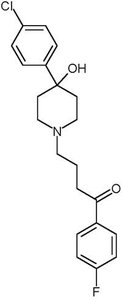
Background
Topic: Functional Groups in Organic Molecules
This question tests your ability to recognize and name the functional groups present in a complex organic molecule. Functional groups are specific groups of atoms within molecules that are responsible for the characteristic chemical reactions of those molecules.
Key Terms and Concepts:
Aromatic ring (benzene ring): A six-membered ring with alternating double bonds, often depicted as a hexagon with a circle inside.
Alcohol: A hydroxyl group (-OH) attached to a saturated carbon atom.
Amine: A nitrogen atom bonded to carbon atoms (can be primary, secondary, or tertiary depending on the number of carbons attached).
Ketone: A carbonyl group (C=O) bonded to two carbon atoms.
Halide: A halogen atom (such as Cl or F) attached to a carbon atom.
Step-by-Step Guidance
Examine the structure for any six-membered rings with alternating double bonds. These are aromatic rings (benzene rings).
Look for any -OH group attached to a carbon atom. This indicates the presence of an alcohol functional group.
Identify any nitrogen atom within a ring or chain. If the nitrogen is bonded to carbons, it is part of an amine group (in this case, likely a tertiary amine due to the ring structure).
Search for a carbonyl group (C=O) that is bonded to two carbons. This is a ketone functional group.
Check for halogen atoms (such as Cl or F) attached to aromatic rings or other carbons. These are halide substituents.
Try solving on your own before revealing the answer!
Final Answer:
Aromatic rings (benzene rings): Two present in the structure.
Alcohol: One hydroxyl (-OH) group attached to a cyclohexane ring.
Amine: One tertiary amine (nitrogen atom in a six-membered ring connected to three carbons).
Ketone: One carbonyl (C=O) group attached to a benzene ring (aromatic ketone).
Halides: One chlorine (Cl) and one fluorine (F) atom attached to aromatic rings.
This molecule contains multiple functional groups, which contribute to its chemical properties and biological activity.
