 Indietro
Organic Chemistry Fundamentals: Structure, Bonding, Nomenclature, and Functional Groups
Guida di studio - Note intelligenti
 Appunti personalizzati basati sui tuoi materiali, ampliati con definizioni chiave, esempi e contesto.
Introduction to Organic Chemistry
Definition and Scope
Organic chemistry is the study of carbon-containing compounds, including their structure, properties, and reactions. Organic compounds can be synthesized in the laboratory or found in nature. The field is foundational for understanding biological processes, pharmaceuticals, and materials science.
Organic Compounds: Molecules primarily composed of carbon and hydrogen, often containing oxygen, nitrogen, sulfur, and halogens.
Importance: Organic chemistry underpins biochemistry, medicine, and industrial chemistry.
Atoms, Elements, and the Periodic Table
Atomic Structure
Atoms are the fundamental building blocks of matter, consisting of protons (positive), neutrons (neutral), and electrons (negative). The arrangement of electrons determines chemical bonding and reactivity.
Protons (p+): Positively charged particles in the nucleus.
Neutrons (n0): Neutral particles in the nucleus.
Electrons (e–): Negatively charged particles in orbitals around the nucleus; responsible for bonding.
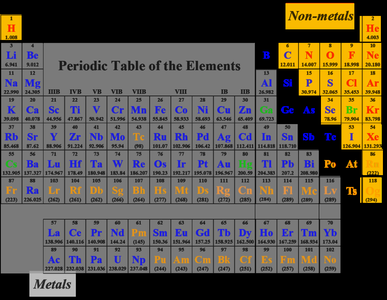
Periodic Table and Element Symbols
The periodic table organizes elements by atomic number and properties. Organic chemistry focuses on a subset of elements, especially non-metals.
Key Elements: H, C, N, O, F, S, Cl, Br, I (and others such as P, Si, etc.)
Symbols: The first letter is capitalized, the second (if present) is lowercase (e.g., Na, Cl).
Chemical Bonding and Lewis Structures
Ionic vs. Covalent Bonding
Bonding involves the interaction of valence electrons. Metals and non-metals form ionic bonds, while non-metals form covalent bonds by sharing electrons.
Ionic Compounds: Formed between metals and non-metals; charges must balance (e.g., Na+ + Cl– → NaCl).
Covalent Compounds: Non-metals share electrons to achieve stable configurations.
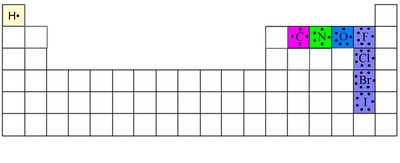
Lewis Dot Structures
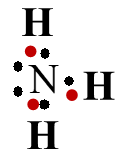
Lewis structures represent valence electrons as dots around element symbols. Bonding pairs are shared between atoms, while lone pairs remain on individual atoms.
Bonding Electrons: Shared between atoms to form single, double, or triple bonds.
Non-bonding Electrons: Lone pairs not involved in bonding.
Molecular Geometry and VSEPR Theory
VSEPR Theory
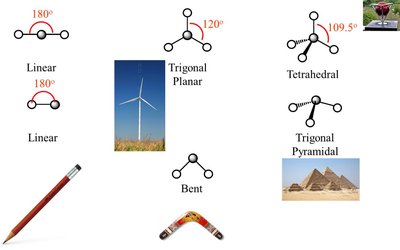
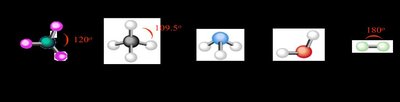
Valence Shell Electron Pair Repulsion (VSEPR) theory predicts molecular shapes based on the repulsion between electron pairs around a central atom. Electron pairs (bonding and non-bonding) arrange themselves as far apart as possible in three-dimensional space.
Linear: 180° bond angle (e.g., CO2).
Trigonal Planar: 120° bond angle (e.g., BF3).
Tetrahedral: 109.5° bond angle (e.g., CH4).
Trigonal Pyramidal: ~107° bond angle (e.g., NH3).
Bent: < 120° or 109.5° depending on the number of lone pairs (e.g., H2O).



Organic Molecules: Representations and Functional Groups
Structural Representations
Organic molecules can be depicted in several ways to convey structure and connectivity:
Molecular Formula: Shows the number and type of atoms (e.g., C3H8).
Condensed Formula: Groups atoms to show connectivity (e.g., CH3CH2CH3).
Line-Angle (Skeletal) Formula: Lines represent carbon chains; hydrogens are implied.
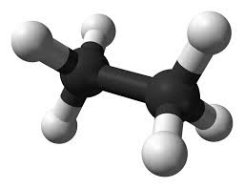
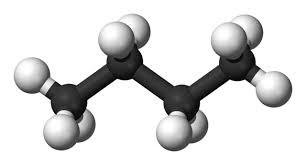
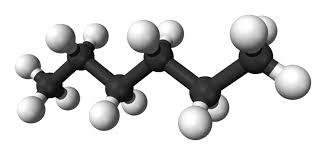
Ball-and-Stick Model: 3D representation showing atoms as spheres and bonds as sticks.
Functional Groups
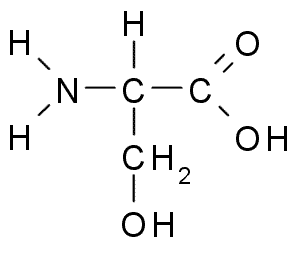
Functional groups are specific groups of atoms within molecules that determine characteristic chemical reactions and properties. Recognizing functional groups is essential for predicting reactivity and nomenclature.
Alcohols: –OH group
Amines: –NH2, –NHR, or –NR2
Carboxylic Acids: –COOH
Others: Aldehydes, ketones, ethers, esters, amides, alkyl halides, etc.
Intermolecular Forces and Physical Properties
Types of Intermolecular Forces (IMFs)
IMFs are forces between molecules that influence boiling point, melting point, solubility, and other physical properties.
Hydrogen Bonding: Strongest IMF; occurs when H is bonded to N, O, or F.
Dipole-Dipole: Occurs between polar molecules.
London Dispersion Forces: Weakest; present in all molecules due to temporary dipoles.

Polarity and Solubility
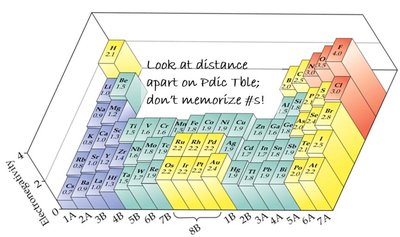
Polarity arises from differences in electronegativity and molecular geometry. Polar molecules dissolve in polar solvents (“like dissolves like”), while non-polar molecules dissolve in non-polar solvents.
Electronegativity: Increases across a period and decreases down a group.
Polarity: Determined by both bond polarity and molecular shape.
Alkanes: Structure, Isomerism, and Nomenclature
Structure and Properties
Alkanes are saturated hydrocarbons with the general formula CnH2n+2. They are relatively unreactive and have low boiling and melting points.
Free Rotation: Single bonds allow free rotation of atoms.
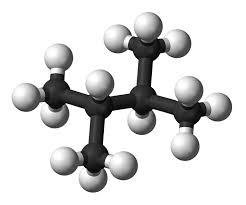
Isomerism: Constitutional isomers have the same formula but different connectivity.

Nomenclature of Alkanes
Systematic naming of alkanes follows IUPAC rules:
Identify the longest continuous carbon chain (parent chain).
Number the chain to give substituents the lowest possible numbers.
Name and number substituents (alkyl groups), using prefixes (di-, tri-, etc.) for multiples.
List substituents alphabetically (ignoring di-, tri-, etc.).
Alkyl Groups and Carbon Classification
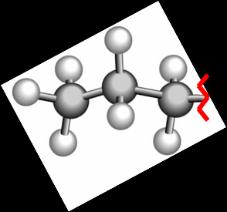
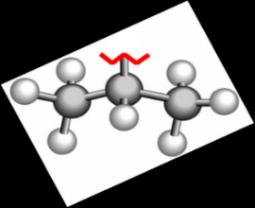
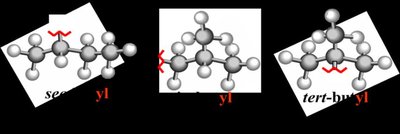
Alkyl groups are fragments derived from alkanes by removing one hydrogen. Carbons are classified by the number of other carbons attached:
Primary (1°): Attached to one other carbon.
Secondary (2°): Attached to two other carbons.
Tertiary (3°): Attached to three other carbons.
Quaternary (4°): Attached to four other carbons.
Cycloalkanes and Ring Structures
Structure and Nomenclature
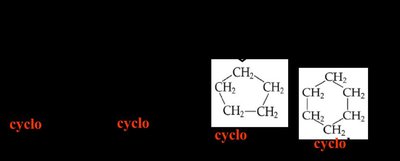
Cycloalkanes are saturated hydrocarbons with carbon atoms arranged in rings. The general formula is CnH2n. Naming is similar to alkanes, but the prefix 'cyclo-' is used.
Number the ring to give substituents the lowest possible numbers.
Rings larger than four carbons are not flat due to ring strain.

Alkane Reactions: Combustion and Substitution
Combustion
Alkanes react with oxygen to produce carbon dioxide and water in a highly exothermic reaction.
General Equation:
Balance the equation to ensure the same number of each atom on both sides.
Halogenation (Substitution)
Alkanes undergo substitution reactions with halogens (F, Cl, Br, I) in the presence of light (hv), replacing a hydrogen atom with a halogen.
Example:
Unsaturated Hydrocarbons: Alkenes and Alkynes
Structure and Nomenclature
Alkenes contain at least one carbon-carbon double bond (C=C), while alkynes contain at least one triple bond (C≡C). They are unsaturated hydrocarbons, with fewer hydrogens than alkanes.
Alkene Formula: CnH2n
Alkyne Formula: CnH2n–2
Number the chain to give the double or triple bond the lowest possible number.
Use suffixes: –ene (alkene), –yne (alkyne).
Cis-Trans Isomerism
Alkenes can exhibit cis-trans (geometric) isomerism due to restricted rotation around the double bond. Alkynes do not show cis-trans isomerism.
Aromatic Compounds
Benzene and Aromaticity
Benzene is a stable, unsaturated ring with alternating double bonds (delocalized electrons). Aromatic compounds contain benzene-like rings and exhibit unique stability and reactivity.
Disubstituted Benzene: Substituents can be ortho- (1,2-), meta- (1,3-), or para- (1,4-).
Polymers
Addition Polymerization
Polymers are large molecules formed by joining many small monomers. Addition polymerization involves the joining of unsaturated monomers (e.g., ethylene) without the loss of atoms.
Examples: Polyethylene, PVC, polystyrene, nylon.
Natural Polymers: Starch, cellulose, DNA.

Summary Table: Common Functional Groups
Functional Group | Structure | Suffix/Prefix |
|---|---|---|
Alkene | C=C | -ene |
Alkyne | C≡C | -yne |
Alcohol | -OH | -ol |
Aldehyde | -CHO | -al |
Ketone | R-CO-R' | -one |
Carboxylic Acid | -COOH | -oic acid |
Ester | -COOR | -oate |
Amine | -NH2 | -amine |
Amide | -CONH2 | -amide |
Haloalkane | -X (F, Cl, Br, I) | halo- |
Benzene | C6H6 | benzene |
Additional info: This guide covers foundational topics from Ch. 1 (Introduction to Organic Chemistry), Ch. 2 (Organic Molecules and Intermolecular Forces), Ch. 4 (Alkanes, Cycloalkanes, and Molecular Conformations), Ch. 7 (Chemistry of Alkyl Halides), Ch. 12 (Alcohols and Phenols), Ch. 13 (Ethers, Epoxides, and Their Sulfur Analogs), Ch. 16 (The Chemistry of Conjugated Molecules), Ch. 17 (Aromaticity), and Ch. 27 (Synthetic Polymers). For further practice, refer to worksheets and syllabus prompts as indicated in the original notes.
