 Indietro
Organic Chemistry I Study Guide: Structural Drawing, Conformations, Acid-Base, Resonance, and Isomer Relationships
Guida di studio - Note intelligenti
 Appunti personalizzati basati sui tuoi materiali, ampliati con definizioni chiave, esempi e contesto.
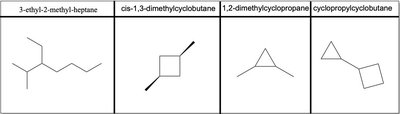
Q1. Draw the structures of the following compounds:
Background
Topic: Organic Structure Drawing
This question tests your ability to interpret IUPAC names and draw the correct structural formulas for organic compounds, including alkanes and cycloalkanes.
Key Terms:
IUPAC Nomenclature: The systematic method for naming organic molecules.
Structural Formula: A representation showing the arrangement of atoms and bonds in a molecule.
Step-by-Step Guidance
Identify the parent chain and any substituents from the compound's name (e.g., "3-ethyl-2-methyl-heptane").
Draw the parent chain (heptane = 7 carbons) and add substituents at the correct positions.
For cycloalkanes, draw the ring structure and place substituents as indicated (e.g., "cis-1,3-dimethylcyclobutane").
Check for stereochemistry (cis/trans) and ensure correct 3D representation if required.
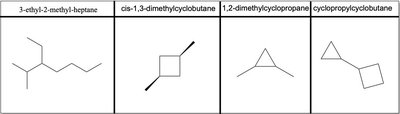
Try solving on your own before revealing the answer!
Final Answer:
The structures are as shown in the image above. Each compound is drawn according to its IUPAC name, with correct placement of substituents and ring systems.
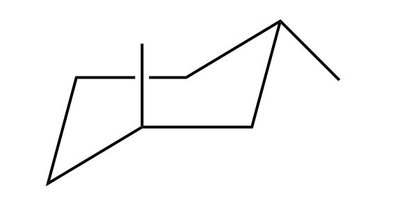
Q2. Draw the most stable chair conformation of trans-1,3-dimethylcyclohexane.
Background
Topic: Cyclohexane Conformations
This question tests your understanding of chair conformations and the stability of substituent positions (axial vs. equatorial) in cyclohexane rings.
Key Terms:
Chair Conformation: The most stable 3D shape of cyclohexane.
Axial/Equatorial Positions: Locations on the ring where substituents can be placed; equatorial is generally more stable for bulky groups.
Trans: Substituents are on opposite sides of the ring.
Step-by-Step Guidance
Draw the chair conformation of cyclohexane.
Identify carbons 1 and 3 and place methyl groups on them.
Ensure the methyl groups are trans (one axial, one equatorial, but on opposite sides).
Choose the arrangement that minimizes steric strain (usually both methyls equatorial if possible).
Try solving on your own before revealing the answer!
Final Answer:
The most stable chair conformation places both methyl groups in equatorial positions, minimizing steric interactions. See the image above for the correct structure.
Q3. Draw the Newman Projection for the gauche conformation of n-butane.
Background
Topic: Newman Projections and Conformational Analysis
This question tests your ability to visualize and draw the Newman projection for a specific conformation (gauche) of n-butane.
Key Terms:
Newman Projection: A way to view a molecule along a specific bond, showing the spatial arrangement of groups.
Gauche Conformation: A staggered conformation where two methyl groups are 60° apart.
Step-by-Step Guidance
Identify the bond to view (C2–C3 in n-butane).
Draw the front and back carbon atoms as circles.
Place the methyl groups at 60° to each other (gauche), and fill in the remaining hydrogens.
Try solving on your own before revealing the answer!
Final Answer:
The gauche conformation shows the two methyl groups 60° apart in a staggered arrangement. See the image above for the correct Newman projection.
Q4. Draw the Newman Projection of the least stable conformation of ethane.
Background
Topic: Conformational Analysis
This question tests your understanding of the stability of different conformations, specifically the eclipsed conformation of ethane.
Key Terms:
Eclipsed Conformation: All bonds are aligned, leading to maximum torsional strain.
Newman Projection: Used to visualize the spatial arrangement of atoms around a bond.
Step-by-Step Guidance
Draw the front and back carbon atoms as circles.
Place all hydrogens so that they are aligned (eclipsed) in the projection.
Recognize that this is the least stable conformation due to torsional strain.
Try solving on your own before revealing the answer!
Final Answer:
The least stable conformation is the fully eclipsed arrangement, where all hydrogens are aligned. This maximizes torsional strain.
Q5. In the boxes on the right, denote the relationship between the pairs of structures as: the same structure, resonance structures, stereoisomers, structural isomers, or conformations. If you believe that there is no such relationship for a given pair, write “no relationship” into the corresponding box.
Background
Topic: Isomerism and Resonance in Organic Chemistry
This question tests your ability to distinguish between different types of relationships between pairs of organic structures: structural isomers, stereoisomers, resonance structures, conformations, or identical structures.
Key Terms:
Structural Isomers: Same molecular formula, different connectivity.
Stereoisomers: Same connectivity, different spatial arrangement.
Resonance Structures: Different electron arrangements, same atom connectivity.
Conformations: Different spatial arrangements due to rotation about single bonds.
Step-by-Step Guidance
Examine each pair of structures carefully.
Compare atom connectivity and spatial arrangement.
Determine if the pair represents resonance, stereoisomers, structural isomers, conformations, or identical structures.
Write the correct relationship in the box for each pair.
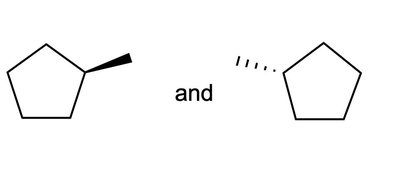
Try solving on your own before revealing the answer!
Final Answer:
Each pair is classified as follows: same structure, resonance structure, stereoisomer, no relationship, conformations, or structural isomers, as appropriate. See the image for visual reference.
Q6. In the following structures, label all atoms except hydrogens, with their hybridization states.
Background
Topic: Hybridization in Organic Molecules
This question tests your ability to assign hybridization states (sp, sp2, sp3) to atoms in organic molecules based on their bonding and geometry.
Key Terms:
Hybridization: The mixing of atomic orbitals to form new hybrid orbitals (sp, sp2, sp3).
Bonding and Geometry: Determines the hybridization state.
Step-by-Step Guidance
Identify the number of regions of electron density (bonds and lone pairs) around each atom.
Assign hybridization: 2 regions = sp, 3 regions = sp2, 4 regions = sp3.
Label each atom accordingly, excluding hydrogens.
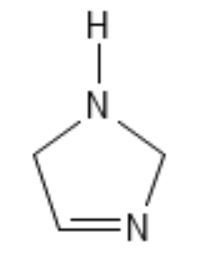
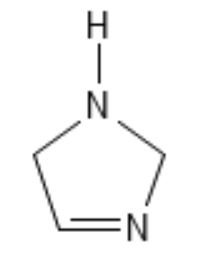
Try solving on your own before revealing the answer!
Final Answer:
Atoms are labeled as sp2 or sp3 based on their bonding and geometry. See the images for correct hybridization assignments.
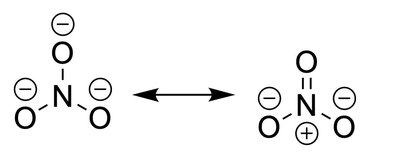
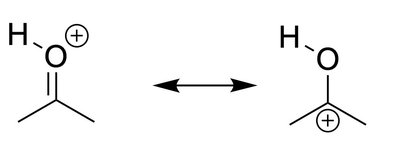
Q7. Draw the major resonance contributors for the following structures:
Background
Topic: Resonance Structures
This question tests your ability to draw resonance contributors, showing the movement of electrons (not atoms) in molecules with delocalized electrons.
Key Terms:
Resonance: Delocalization of electrons across multiple atoms.
Major Contributor: The most stable resonance form, usually with minimized charges and full octets.
Step-by-Step Guidance
Identify possible electron movement (lone pairs, pi bonds).
Draw alternative structures showing electron delocalization.
Ensure atom positions remain unchanged; only electrons move.
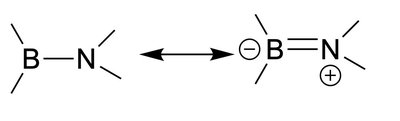
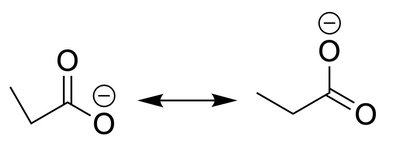
Try solving on your own before revealing the answer!
Final Answer:
The major resonance contributors are shown in the images above, with electron movement indicated by arrows.
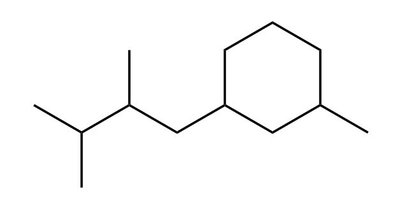
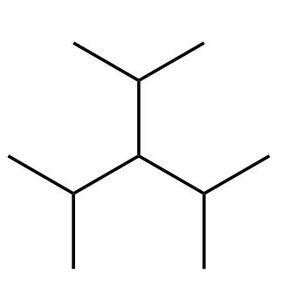
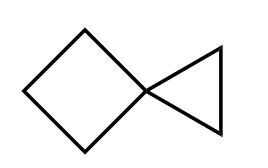
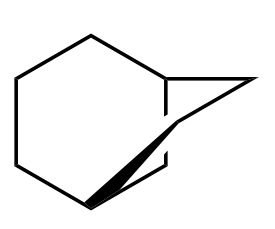
Q8. Name the following alkanes, cycloalkanes, and bicycloalkanes.
Background
Topic: IUPAC Nomenclature
This question tests your ability to apply IUPAC rules to name various types of hydrocarbons, including alkanes, cycloalkanes, and bicycloalkanes.
Key Terms:
Alkane: Saturated hydrocarbon with single bonds.
Cycloalkane: Hydrocarbon with a ring structure.
Bicycloalkane: Hydrocarbon with two fused rings.
Spiro: A compound with two rings sharing one atom.
Step-by-Step Guidance
Identify the parent structure and any substituents.
Apply IUPAC rules for numbering and naming.
For bicyclic and spiro compounds, use the correct bracket notation.
Try solving on your own before revealing the answer!
Final Answer:
The names are: 1-methyl-3(2,3-dimethylbutyl)cyclohexane, 3-isopropyl-2,4-dimethylpentane, spiro[2.3]hexane, bicyclo[3.2.1]octane. See the images for visual reference.
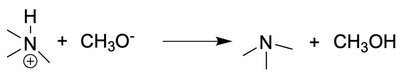
Q9. Complete the following acid-base reactions:
Background
Topic: Acid-Base Chemistry
This question tests your ability to predict the products of acid-base reactions, including the identification of conjugate acids and bases.
Key Terms:
Acid: Donates a proton (H+).
Base: Accepts a proton.
Conjugate Acid/Base: The species formed after acid/base reaction.
Step-by-Step Guidance
Identify the acid and base in each reaction.
Determine which species donates and which accepts a proton.
Write the products, including the conjugate acid and conjugate base.



Try solving on your own before revealing the answer!
Final Answer:
The products are as shown in the images above, with correct identification of conjugate acids and bases for each reaction.
