Indietro

Organic Chemistry Study Notes: Acids/Bases and Alkenes (Chapters 4-6)

Guida di studio - Impara con i video

Lezioni curate abbinate al materiale che hai caricato – impara ogni argomento passo dopo passo.

Acid and Base Definitions

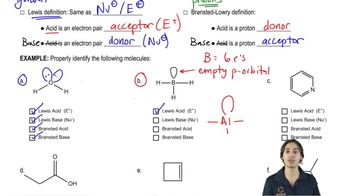
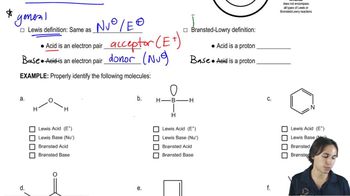
  • Lewis vs. Bronsted-Lowry Definition
    07:46
  • The Bronsted-Lowry definition of acids and bases.
    00:54
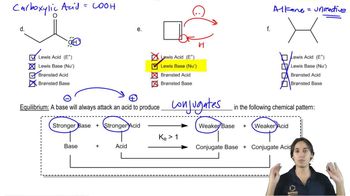
  • Equilibrium constant and conjugates.
    02:11

Equilibrium Constant and pKa

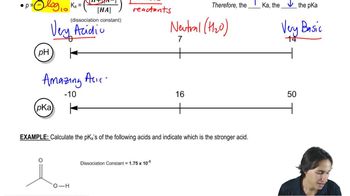
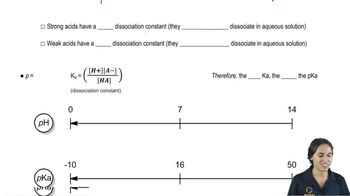
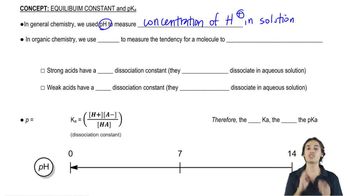
  • The pH scale vs. the pKa scale.
    02:15
  • The relationship between equilibrium constant and pKa.
    02:19
  • Why we use pKa instead of pH.
    01:46
pKa Values

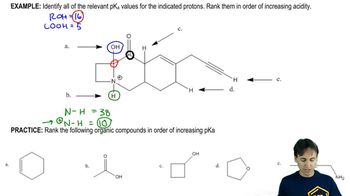
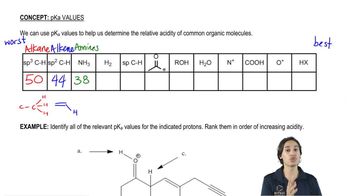
  • Identifying pKa values
    07:45
  • The 12 pKa values you want to memorize (because they are important!).
    09:36
Acid Base Equilibrium

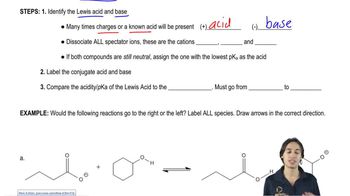
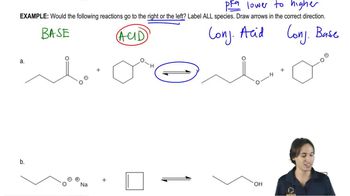
  • The 3 steps for determining the direction of acid and base equilibrium.
    05:11
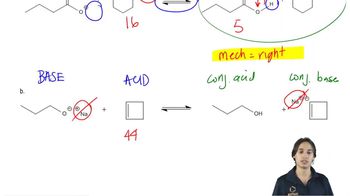
  • Determining Acid/Base Equilibrium
    04:00
  • Determining Acid/Base Equilibrium
    02:34

Factors Affecting Acidity

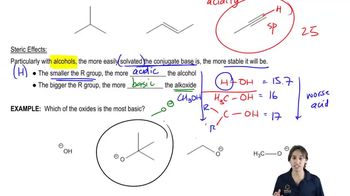
  • Which of the oxides is the most basic?
    00:30
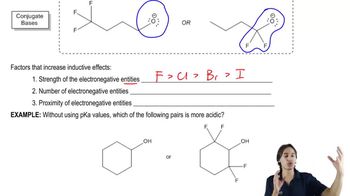
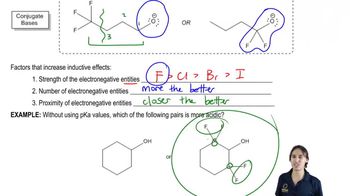
  • The 3 factors that determine the strength of inductive effects.
    03:09
  • Using Inductive Effect to determine acidity
    01:54

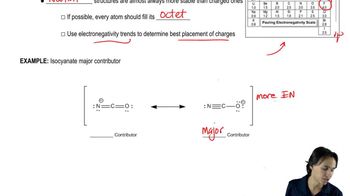
Resonance Structures

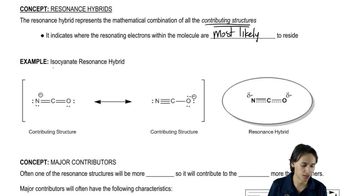
  • How to draw a resonance hybrid.
    03:24
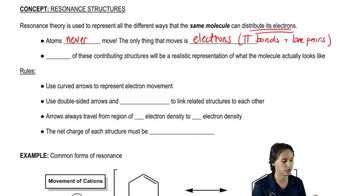
  • The rules you need for resonance:
    03:34
  • How to determine which structure is most stable.
    01:32

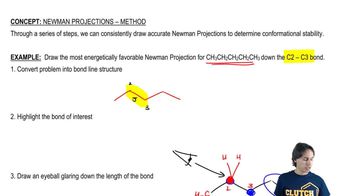
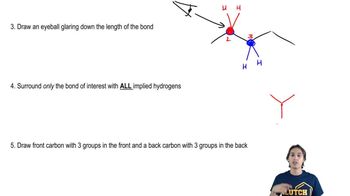
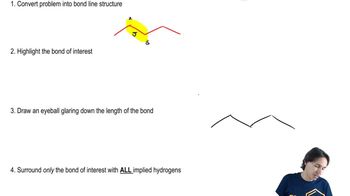
Drawing Newman Projections

  • Step 6 to Drawing Newman Projections
    01:31
  • Step 5 to Drawing Newman Projections
    01:51
  • Step 3 to Drawing Newman Projections
    00:28

Naming Alkenes

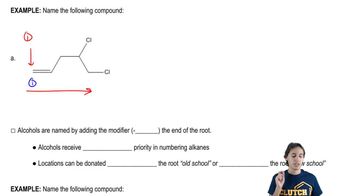
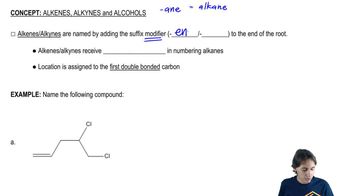
  • Name the following alkene
    02:04
  • How to name alkenes and alkynes
    01:55

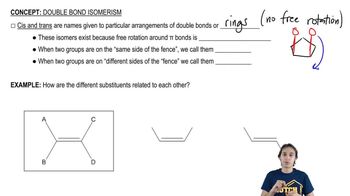
Cis vs Trans

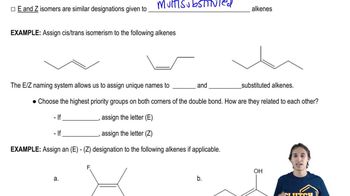
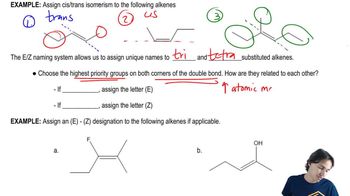
  • Why we need to use the E/Z naming system
    02:07
  • What does E and Z stand for?
    00:50
  • How to name different types of double bonds or rings
    04:28

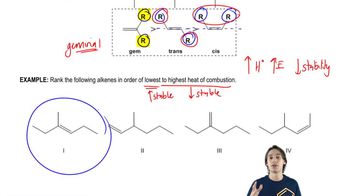
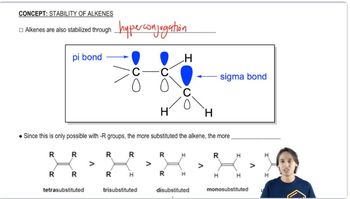
Stability of Alkenes

  • Heat of Combustion
    02:55
  • Understanding trends of alkene stability.
    04:28

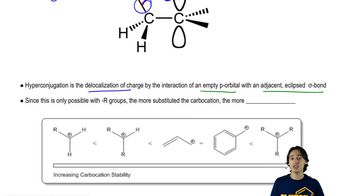
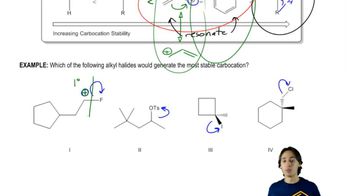
Carbocation Intermediates – Stability

  • Determining Carbocation Stability
    05:58
  • Predicting the most stable carbocation
    01:21

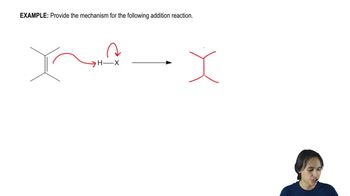
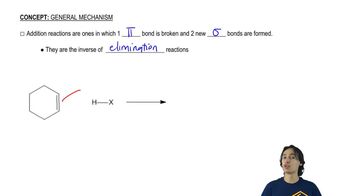
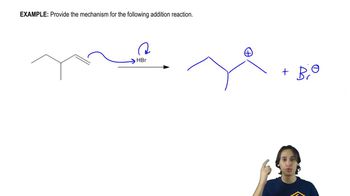
General Mechanism – Addition Reaction

  • Provide the mechanism
    01:15
  • Features of Addition Mechanisms.
    05:39

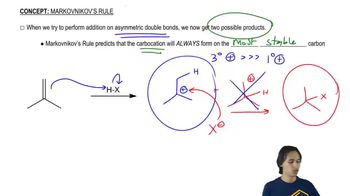
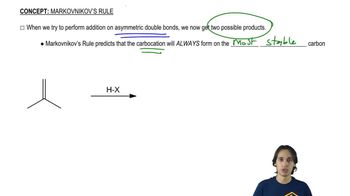
Markovnikov's Rule

  • Provide the mechanism
    01:26
  • How to add to asymmetrical double bonds.
    03:38

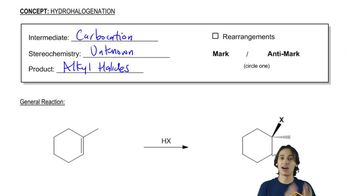
Hydrohalogenation

  • General properties of hydrohalogenation.
    04:07
  • Provide the mechanism
    02:24

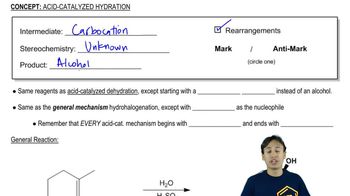
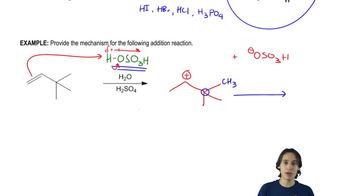
Acid-Catalyzed Hydration

  • General properties of acid-catalyzed hydration.
    06:32
  • Acid-catalyzed hydration mechanism
    06:34

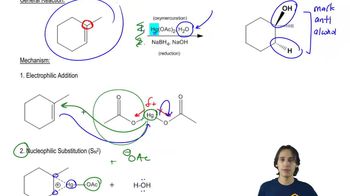
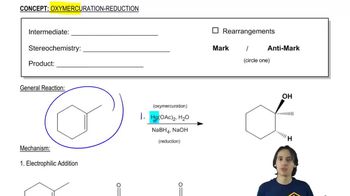
Oxymercuration-Reduction

  • Acid-catalyzed oxymercuration-reduction mechanism
    09:01
  • General properties of oxymercuration-reduction.
    05:

Epoxidation

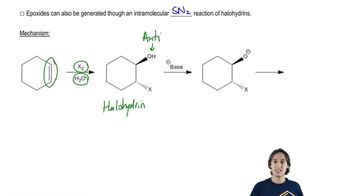
  • Halohydrins to epoxides via intramolecular SN2.
    02:26
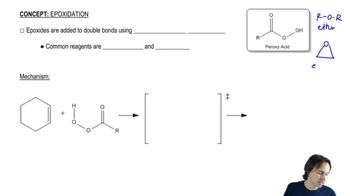
  • General properties of epoxidation.
    02:19
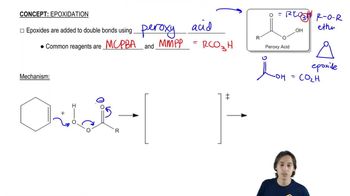
  • The mechanism of how peroxy acids make epoxides.
    03:19

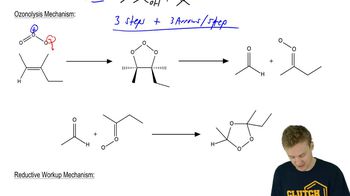
Ozonolysis Full Mechanism

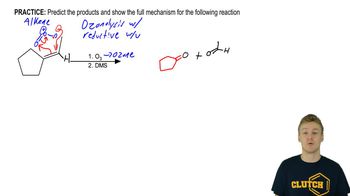
  • Predict the products and show the mechanism:
    12:11
  • General Mechanism:
    07:48
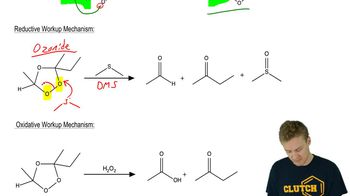
  • Reductive Workup Mechanism:
    03:16