 Indietro
Stereochemistry: Chirality, Enantiomers, Diastereomers, and Isomerism
Guida di studio - Note intelligenti
 Appunti personalizzati basati sui tuoi materiali, ampliati con definizioni chiave, esempi e contesto.
Chapter 5: Stereochemistry
Chirality and Handedness
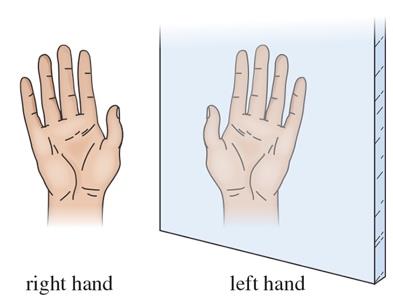
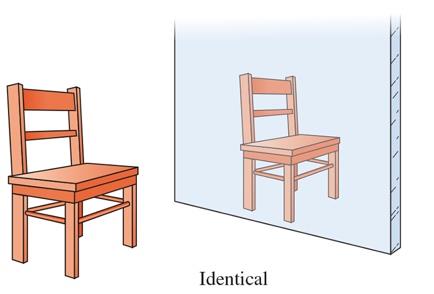
Stereochemistry is the study of the spatial arrangement of atoms in molecules and its effect on their chemical behavior. A key concept is chirality, which refers to objects or molecules that cannot be superimposed on their mirror images. This property is often illustrated by the difference between right and left hands, which are mirror images but not identical.
Chiral objects: Have non-superimposable mirror images.
Achiral objects: Can be superimposed on their mirror images; they are identical.
Enantiomers and Asymmetric Carbons
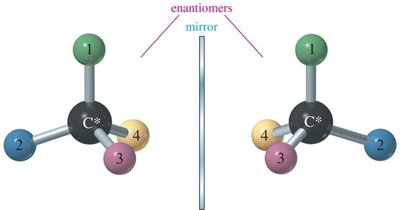
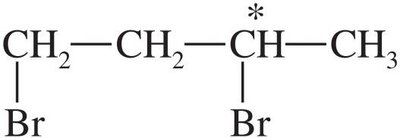
Enantiomers are pairs of molecules that are nonsuperimposable mirror images of each other. Any molecule that is chiral must have an enantiomer. The most common source of chirality in organic molecules is an asymmetric carbon (also called a chiral center), which is a carbon atom bonded to four different groups.
Enantiomers: Nonsuperimposable mirror images.
Asymmetric carbon: Carbon bonded to four different atoms/groups.
Achiral Compounds and Symmetry
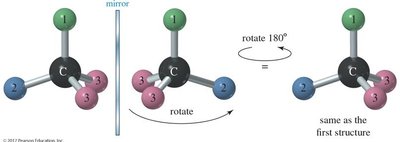
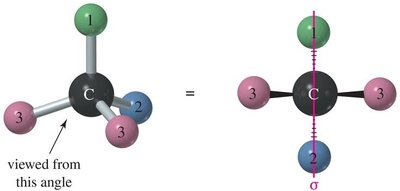
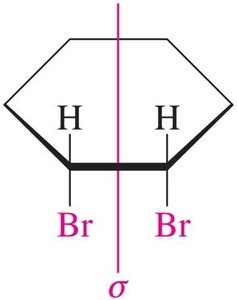
Achiral compounds have mirror images that can be superimposed. If a molecule has a plane of symmetry, it is achiral. For example, a carbon atom bonded to two identical groups is achiral.
Plane of symmetry: Imaginary line dividing a molecule into two identical halves.
Achiral carbon: Carbon connected to two of the same group.
Stereocenters
A stereocenter (or stereogenic atom) is any atom at which the interchange of two groups gives a stereoisomer. Asymmetric carbons and the double-bonded carbon atoms in cis-trans isomers are the most common types of stereocenters.
Stereocenter: Atom where swapping two groups creates a stereoisomer.
Includes asymmetric carbons and double-bonded carbons in cis-trans isomers.
Cis- and Trans- Cyclic Compounds
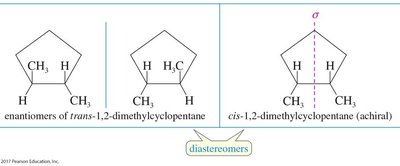
Cyclic compounds can exhibit chirality depending on their symmetry. For example, cis-1,2-dichlorocyclohexane is achiral due to an internal plane of symmetry, while trans-1,2-dichlorocyclohexane is chiral and has two enantiomers.
Cis isomers: Often achiral if a plane of symmetry exists.
Trans isomers: Chiral if no plane of symmetry exists.
Cahn-Ingold-Prelog Convention: Assigning R/S Configuration
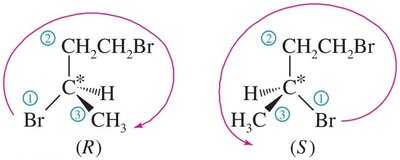
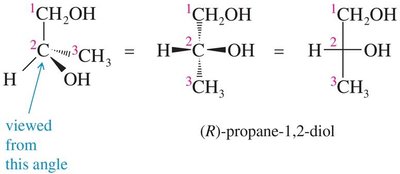
The Cahn-Ingold-Prelog (CIP) convention is used to assign absolute configuration to chiral centers. Each asymmetric carbon atom is assigned (R) or (S) based on the spatial arrangement of its substituents.
Assign priorities based on atomic number: higher atomic number = higher priority.
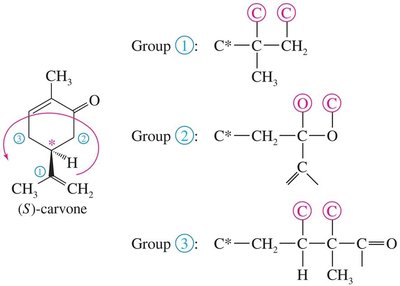
In case of ties, compare the next atoms along the chain.
Treat double and triple bonds as if each bond is to a separate atom.
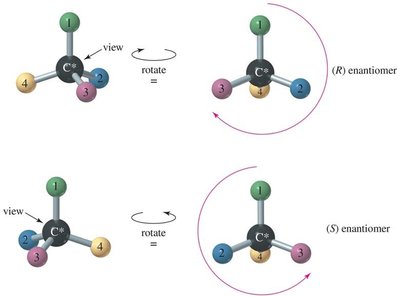
Orient the molecule so the lowest priority group is in the back.
Draw an arrow from highest to lowest priority:
Clockwise = (R)
Counterclockwise = (S)
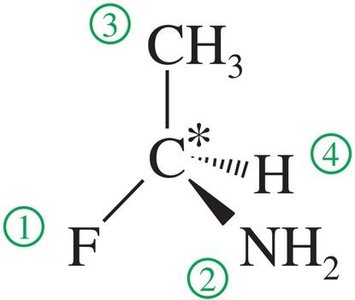
Solved Problem: Drawing Enantiomers
To draw enantiomers, visualize a mirror and draw the molecule’s mirror image, or switch the location of two groups (e.g., dashed and wedge substituents).
Assign priorities to substituents.
Draw a circle from highest to lowest priority.
Assign (R) or (S) configuration.
Configuration in Cyclic Compounds
Assigning priority in rings requires working around the ring and breaking ties by continuing until a difference is found. In alkenes and carbonyls, treat double bonds as if each bond is to a separate atom.
Properties of Enantiomers
Enantiomers have identical physical properties except for their interaction with polarized light and other chiral molecules.
Same boiling point, melting point, density, and refractive index.
Rotate plane-polarized light in equal magnitude but opposite directions.
Different interactions with chiral molecules (e.g., enzymes).
Optical Activity and Polarimetry
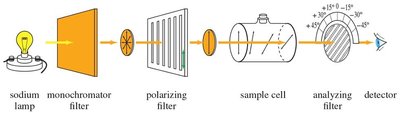
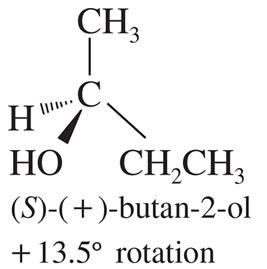
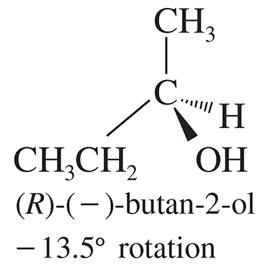
A polarimeter measures optical activity, which is the rotation of plane-polarized light by chiral molecules. Enantiomers are designated as dextrorotatory (+) or levorotatory (-) based on the direction of rotation, but this is not related to R/S configuration.
Relative configuration: Experimentally determined relationship between two enantiomers.
Absolute configuration: Assigned using the CIP system.
Racemic Mixtures
A racemic mixture contains equal concentrations of two enantiomers and exhibits no optical activity because the rotations cancel each other out.
Formed when two optically inactive reagents produce a chiral molecule.
Hydrogenation can add from either side, producing both enantiomers.
Chirality of Conformers
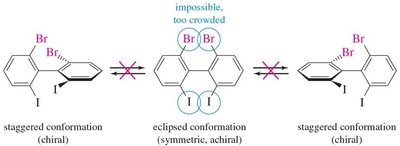
If equilibrium exists between two chiral conformers, the molecule is not chiral. Chirality is judged by the most symmetrical conformer. Some molecules are conformationally locked and remain chiral.
Allenes and Chirality
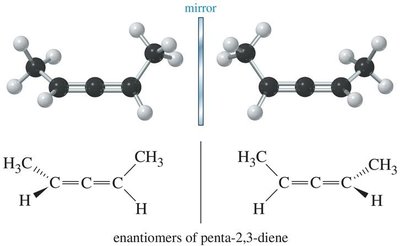
Some allenes are chiral even though they do not have a chiral carbon. The central carbon is sp hybridized, and the two p orbitals are oriented in opposite directions. Chirality arises if the groups at the end carbons are different.
Fischer Projections and Diastereomers
Fischer projections are a flat representation of 3D molecules, useful for visualizing stereochemistry. Diastereomers are stereoisomers that are not mirror images of each other. They have the same molecular formula and atom connectivity but differ in spatial arrangement.
Highest oxidized carbon at the top.
180-degree rotation does not change the molecule.
90-degree rotation is not allowed.
Hydrogen on a dash/horizontal? R/S configuration will be flipped.
Cis-Trans Isomerism on Double Bonds and Rings
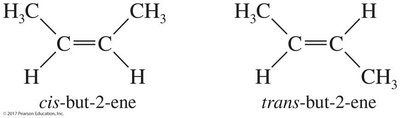
Cis-trans isomerism occurs in compounds with double bonds or rings. Cis isomers have substituents on the same side; trans isomers have them on opposite sides.
Multiple Chiral Centers: Enantiomers, Diastereomers, and Meso Compounds
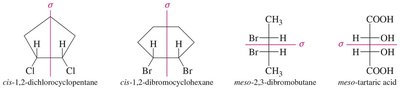
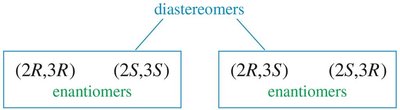
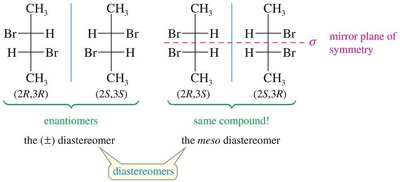
Compounds with two or more chiral centers can have enantiomers, diastereomers, or meso isomers. The maximum number of stereoisomers is , where n is the number of chiral centers. Meso compounds have internal mirror planes and are achiral despite having chiral centers.
Enantiomers: Opposite configuration at each chiral center.
Diastereomers: Some matching, some opposite configurations.
Meso compounds: Internal mirror plane; achiral.
Types of Isomers
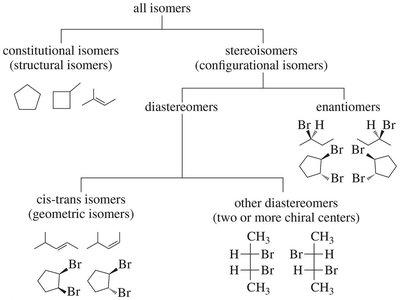
Isomers are classified as constitutional (structural) isomers or stereoisomers. Stereoisomers include enantiomers and diastereomers. Diastereomers can be further divided into cis-trans isomers and other diastereomers with multiple chiral centers.
Type | Description |
|---|---|
Constitutional Isomers | Different connectivity of atoms |
Stereoisomers | Same connectivity, different spatial arrangement |
Enantiomers | Mirror images, nonsuperimposable |
Diastereomers | Not mirror images, different physical properties |
Cis-Trans Isomers | Geometric isomers (double bonds/rings) |
Meso Compounds | Achiral, internal plane of symmetry |
Properties and Separation of Diastereomers
Diastereomers have different physical properties and can be separated easily, unlike enantiomers, which differ only in their interaction with chiral molecules and polarized light. Enantiomers are difficult to separate, but can be converted into diastereomers for separation.
Solved Problem: Stereochemical Relationships
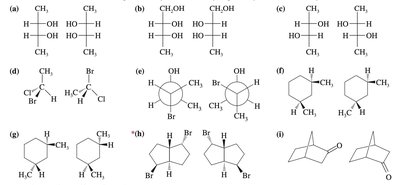
Given pairs of structures, determine their stereochemical relationship: same compound, structural isomers, enantiomers, or diastereomers. Key tips include checking for internal planes of symmetry (meso), configuration at chiral centers, and using Newman projections for comparison.
 Additional info: The notes above expand on brief points with academic context, definitions, and examples to ensure completeness and clarity for exam preparation.
