Ch. 17 - Reactions at the Alpha-Carbon
Bruice - Organic Chemistry 8th Edition
Bruice8th EditionOrganic ChemistryISBN: 9780135213711Non è quello che usi tu?Cambia libro di testo
Capitolo 17, Problema 31c

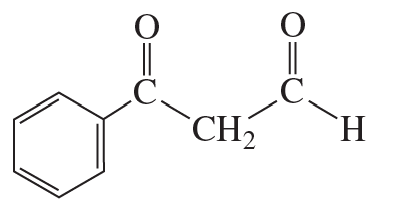
Show how each of the following compounds can be prepared from methyl phenyl ketone:
c.

Guida verificata passo dopo passo
1
Step 1: Begin with methyl phenyl ketone (C6H5COCH3), which is the starting material. This compound contains a phenyl group attached to a methyl ketone functional group.
Step 2: Perform an alpha-halogenation reaction. Treat methyl phenyl ketone with bromine (Br2) in acidic conditions (e.g., HBr) to introduce a bromine atom at the alpha position of the ketone. This forms α-bromoacetophenone (C6H5COCH2Br).
Step 3: Conduct a nucleophilic substitution reaction. React α-bromoacetophenone with cyanide ion (e.g., NaCN or KCN) to replace the bromine atom with a cyano group (-CN), forming α-cyanoacetophenone (C6H5COCH2CN).
Step 4: Hydrolyze the cyano group. Treat α-cyanoacetophenone with acidic or basic hydrolysis (e.g., HCl or NaOH with heat) to convert the cyano group into a carboxylic acid group (-COOH), yielding α-keto acid (C6H5COCH2COOH).
Step 5: Decarboxylate the α-keto acid. Heat the compound under decarboxylation conditions (e.g., with soda lime or simply heating) to remove the carboxylic acid group, leaving the desired compound shown in the image: phenylglyoxal (C6H5COCHO).

Risposta video verificata per un problema simile:

Questa soluzione video è stata consigliata dai nostri tutor come utile per risolvere questo problema.

Concetti chiave

Ecco i concetti essenziali che devi comprendere per rispondere correttamente alla domanda.

Methyl Phenyl Ketone

Methyl phenyl ketone, also known as acetophenone, is an aromatic ketone with the formula C8H8O. It consists of a phenyl group attached to a carbonyl group (C=O) and a methyl group. Understanding its structure is crucial for predicting its reactivity and the types of reactions it can undergo, such as nucleophilic addition or oxidation.
Video consigliato:
Percorso guidato
1:45
Cleavage of Phenyl Ethers Concept 1

Nucleophilic Addition Reactions

Nucleophilic addition reactions are fundamental in organic chemistry, particularly for carbonyl compounds like ketones. In these reactions, a nucleophile attacks the electrophilic carbon of the carbonyl group, leading to the formation of an alcohol or other functional groups. Recognizing how methyl phenyl ketone can participate in these reactions is essential for synthesizing various compounds.
Video consigliato:
08:27
Nucleophilic Addition

Synthetic Pathways

Synthetic pathways refer to the series of chemical reactions that transform one compound into another. In the context of preparing compounds from methyl phenyl ketone, understanding different synthetic routes, such as reduction, oxidation, or substitution reactions, is vital. This knowledge allows chemists to design efficient methods for synthesizing desired products from starting materials.
Video consigliato:
Percorso guidato
2:13
Energy Production In Biochemical Pathways Concept 1