Domanda del libro di testo
How many electrons does an atom of each of the following elements need to gain to achieve a noble gas configuration? By gaining that many electrons, which noble gas configuration is achieved?
(b) Iodine
957
views
1
rank

 Mullins 1st EditionCh. 2 - General Chemistry Translated: Finding the ElectronsProblema 15d
 Guida verificata passo dopo passo
 02:14
02:14
 03:54
03:54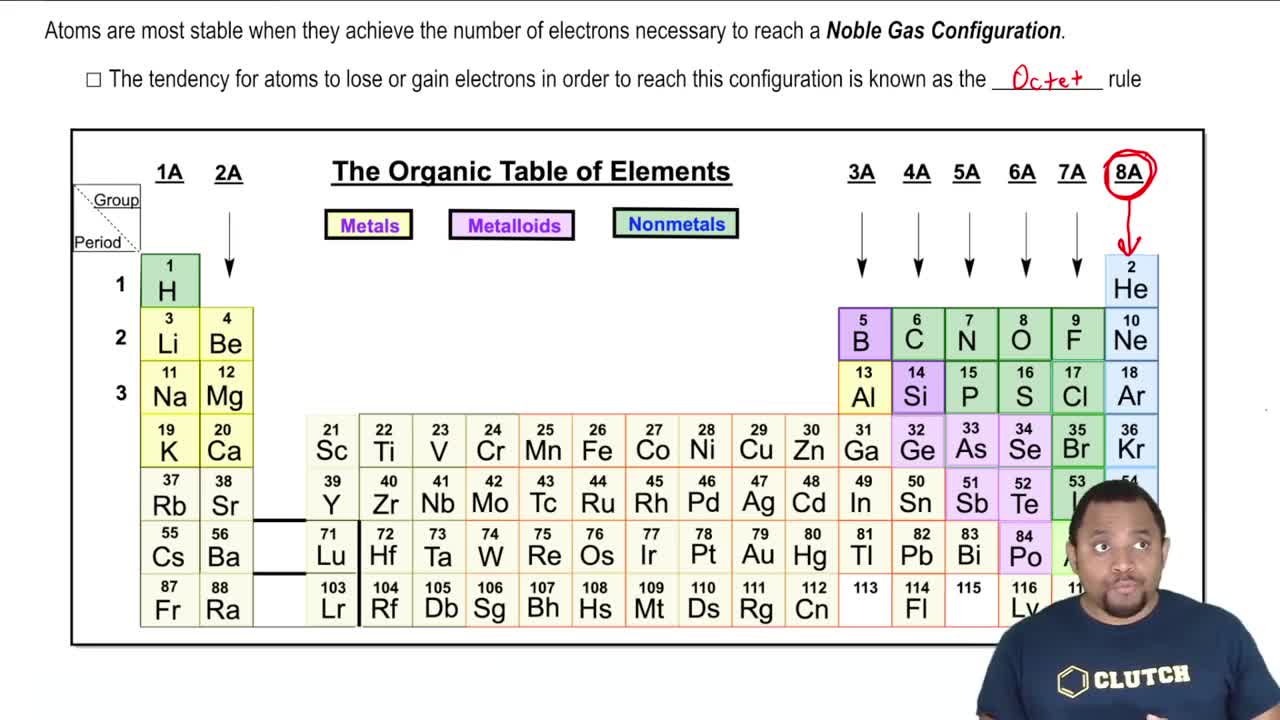 02:24
02:24How many electrons does an atom of each of the following elements need to gain to achieve a noble gas configuration? By gaining that many electrons, which noble gas configuration is achieved?
(b) Iodine
How many electrons does an atom of each of the following elements need to gain to achieve a noble gas configuration? By gaining that many electrons, which noble gas configuration is achieved?
(a) Oxygen
Give the charge most likely to result from ionization of the following metals.
(a) Lithium
How many electrons does an atom of each of the following elements need to gain to achieve a noble gas configuration? By gaining that many electrons, which noble gas configuration is achieved?
(c) Phosphorus
Give the charge most likely to result from ionization of the following metals.
(b) Aluminum
Give the charge most likely to result from ionization of the following metals.
(c) Potassium