Indietro
Problema 1
Show all possible constitutional isomers of C5H12O. Label them as functional, positional, or chain isomers.
Problema 2c
Convert the following structural formulas to line-angle drawings
(c) CH3CH2NHCH2CH2OH
Problema 4
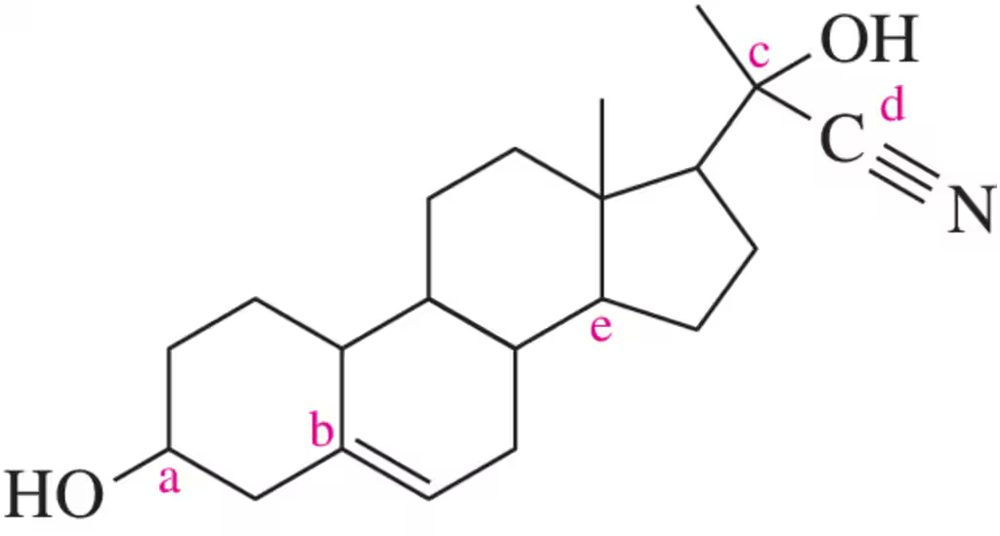
Predict the shape and hybridization of the indicated atoms.
Problema 5a
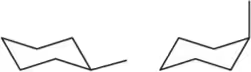
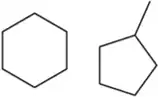
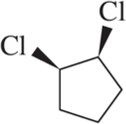
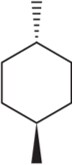
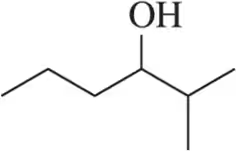
What type of isomerism is indicated by each of the following pairs of molecules? Be as specific as possible.
(a)
Problema 5b
What type of isomerism is indicated by each of the following pairs of molecules? Be as specific as possible.
(b)
Problema 5d
What type of isomerism is indicated by each of the following pairs of molecules? Be as specific as possible.
(d)
Problema 5e
What type of isomerism is indicated by each of the following pairs of molecules? Be as specific as possible.
(e)
Problema 6a
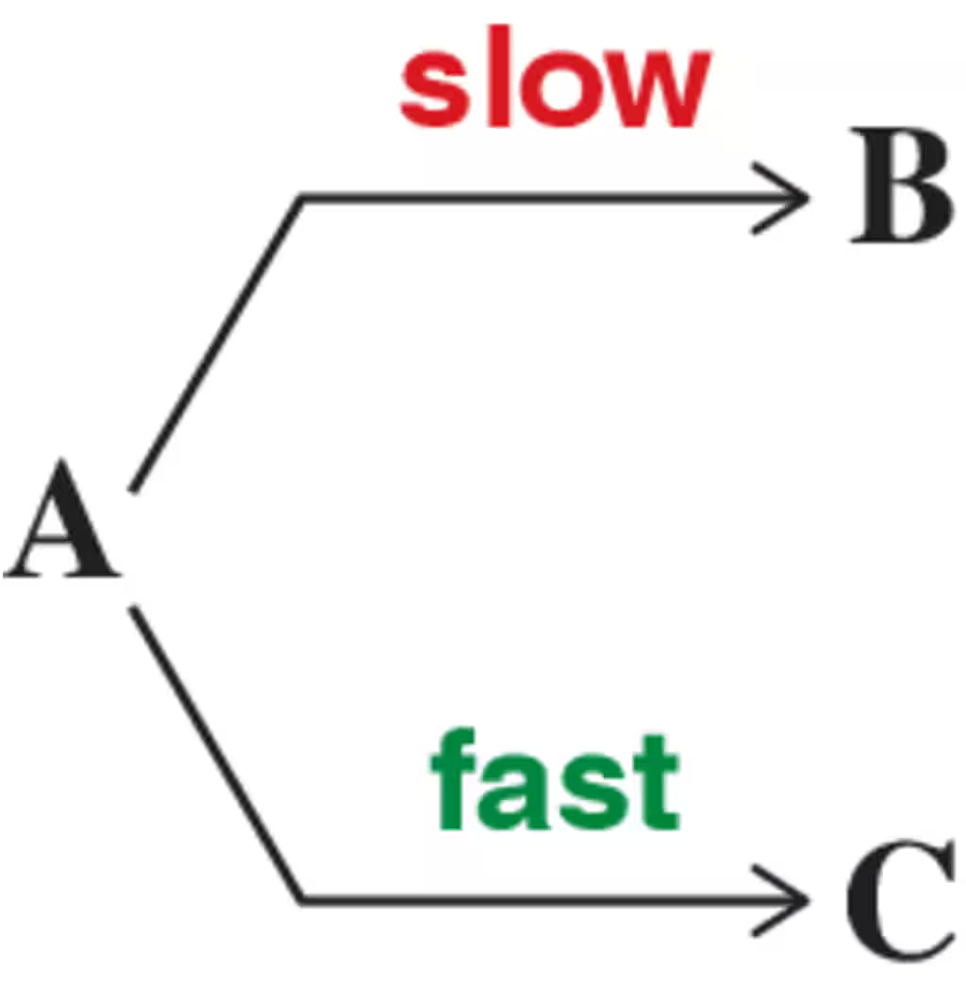
The molecule A undergoes a three-step reaction to make B, where the first step is rate determining. Conversely, C can be produced by A in a two-step reaction where the second step is rate determining. Show a reaction coordinate diagram for each reaction, making it clear that the reaction to make C is faster than the reaction to make B.
Problema 7.17
In Chapters 8 and 17 we learn two reactions for the synthesis of the alcohol shown. (a) Show a mechanism for each of the reactions. (b) If you were designing a synthetic route, which would be considered more sustainable? Consider all factors. [Assume the starting organic molecules are equally green.]
Problema 8a
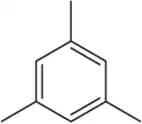
Identify all planes of symmetry in the following molecules/conformations, if any.
(a)
Problema 8c
Identify all planes of symmetry in the following molecules/conformations, if any.
(c)
Problema 8d
Identify all planes of symmetry in the following molecules/conformations, if any.
(d)
Problema 8f
Identify all planes of symmetry in the following molecules/conformations, if any.
(f)
Problema 9c
For each of the following molecules, draw a 3-D representation.
(c) CHBr3
Problema 9d
For each of the following molecules, draw a 3-D representation.
(d) CHClBrI
Problema 10a
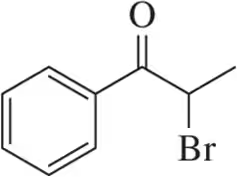
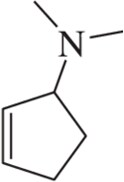
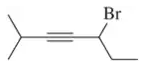
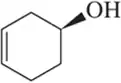
For each of the following molecules, draw one 3-D representation at only the necessary atoms (that is, the ones with four different atoms/groups attached).
(a)
Problema 10b
For each of the following molecules, draw one 3-D representation at only the necessary atoms (that is, the ones with four different atoms/groups attached).
(b)
Problema 10c
For each of the following molecules, draw one 3-D representation at only the necessary atoms (that is, the ones with four different atoms/groups attached).
(c)
Problema 11a
For each of the following molecules, identify all stereocenters and draw all possible stereoisomers.
(a)
Problema 11b
For each of the following molecules, identify all stereocenters and draw all possible stereoisomers.
(b)
Problema 11e
For each of the following molecules, identify all stereocenters and draw all possible stereoisomers.
(e)
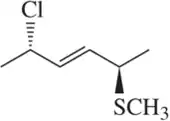
Problema 11f
For each of the following molecules, identify all stereocenters and draw all possible stereoisomers.
(f)
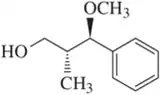
Problema 12c
Identify the following molecules as chiral or achiral. If chiral, draw the nonsuperimposable mirror image and verify its nonsuperimposability.
(c)
Problema 12e
Identify the following molecules as chiral or achiral. If chiral, draw the nonsuperimposable mirror image and verify its nonsuperimposability.
(e)
Problema 12f
Identify the following molecules as chiral or achiral. If chiral, draw the nonsuperimposable mirror image and verify its nonsuperimposability.
(f)
Problema 13
A molecule of the type shown is discussed in greater detail in Section 6.5.1. Although it contains at least one atom with four different groups attached, why is it not a chiral molecule?
Problema 14b
For each of the following chiral molecules, obtain the enantiomer (i) by drawing the nonsuperimposable mirror image and (ii) by switching the spatial orientation at each asymmetric center. Confirm (possibly using models) that the structures you drew for (i) and (ii) are the same.
(b)
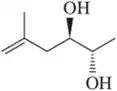
Problema 14d
For each of the following chiral molecules, obtain the enantiomer (i) by drawing the nonsuperimposable mirror image and (ii) by switching the spatial orientation at each asymmetric center. Confirm (possibly using models) that the structures you drew for (i) and (ii) are the same.
(d)
Problema 15
Draw the mirror image of the following molecule. Then, using the mirror image generated, switch the spatial orientation at the asymmetric center. Is the final structure the enantiomer of the original? If not, what is it?
Problema 16
A molecule of the type shown here is discussed in greater detail in Section 6.5.1. Draw the mirror image. Is it superimposable? Switch the spatial orientation at both asymmetric centers. Have you generated a new molecule?