Domanda del libro di testo
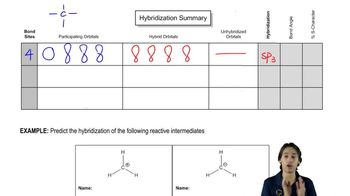
Looking ahead in Chapter 4, we explain that molecules like CH3+ are Lewis acids or electron pair acceptors. Into which orbital would the new electron pair go?
1097
views

 Mullins 1st EditionCh. 2 - General Chemistry Translated: Finding the ElectronsProblema 84
 Guida verificata passo dopo passo
 03:43
03:43
 10:43
10:43 1:47
1:47Looking ahead in Chapter 4, we explain that molecules like CH3+ are Lewis acids or electron pair acceptors. Into which orbital would the new electron pair go?
Looking ahead in Chapter 3, we describe how the formal charge on an atom can be used to predict the number of lone pairs. Given the charge, or lack of charge, on each atom, fill in the electron pairs.
(c)
In propene, the indicated C―C bond length is 1.51 Å. In the allyl cation, the indicated C―C bond length is 1.41 Å. Explain.
Looking ahead in Chapter 3, we describe how the formal charge on an atom can be used to predict the number of lone pairs. Given the charge, or lack of charge, on each atom, fill in the electron pairs.
(a)
In Chapter 4, we explain that molecules like CH3- are Lewis bases or electron pair donors. What makes it a Lewis base?
In comparison to CH3+ in Assessment 2.82, the related molecule H3O+ is not a Lewis acid at oxygen. Why?