
Look closely at the resonance structures of the benzylic anions, radicals, and cations in Figures 24.2–24.4. On which benzene carbons did the charge/radical exist in the resonance structures—that is, were they ortho, meta, or para?
Ch. 24 - Benzene 2: Reactions Influenced by the Aromatic Ring

Mullins1st EditionOrganic Chemistry: A Learner Centered ApproachISBN: 9780137566471Non è quello che usi tu?Cambia libro di testo
Tutti i libri di testo
Mullins 1st Edition
Ch. 24 - Benzene 2: Reactions Influenced by the Aromatic Ring
Problema 9
Mullins 1st Edition
Ch. 24 - Benzene 2: Reactions Influenced by the Aromatic Ring
Problema 9Capitolo 23, Problema 9
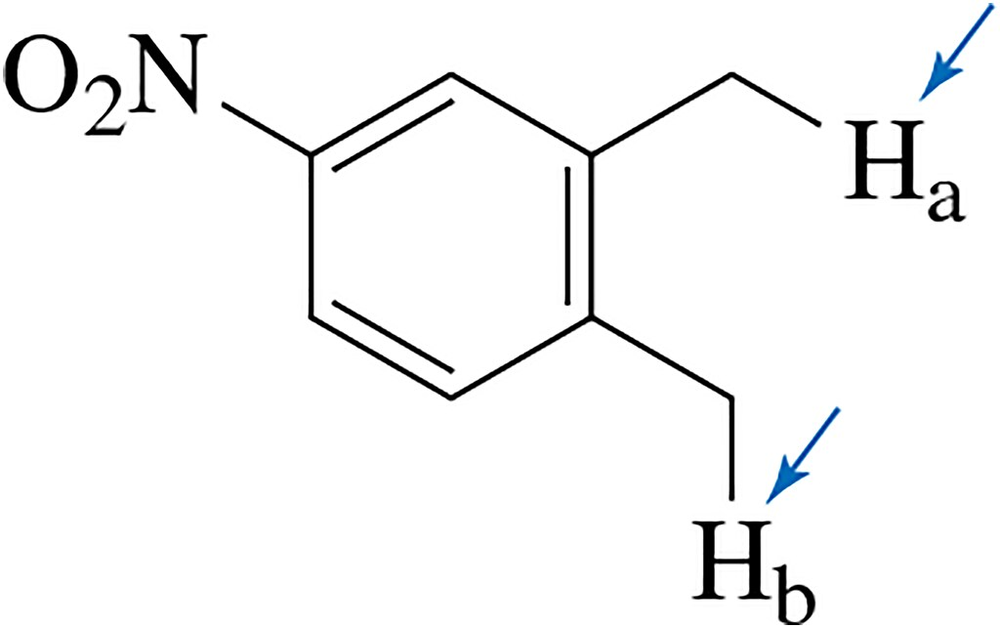
Which proton, Ha or Hb, would you expect to have the lower pKa value?

Guida verificata passo dopo passo1
Step 1: Understand the relationship between pKa and acidity. The pKa value is inversely related to the acidity of a proton. A lower pKa value indicates a more acidic proton.
Step 2: Analyze the chemical environment of Hₐ and H_b. Consider factors such as electronegativity of nearby atoms, resonance stabilization, and inductive effects that can influence the acidity of each proton.
Step 3: Evaluate resonance effects. If the removal of a proton leads to a conjugate base that is resonance-stabilized, the proton is likely to be more acidic and have a lower pKa value.
Step 4: Consider inductive effects. Electronegative atoms or groups near the proton can withdraw electron density, making the proton more acidic and lowering its pKa value.
Step 5: Compare the environments of Hₐ and H_b based on the above factors to determine which proton is more acidic and thus has the lower pKa value.

Risposta video verificata per un problema simile:
Questa soluzione video è stata consigliata dai nostri tutor come utile per risolvere questo problema.
Durata del video:
5mConcetti chiave
Ecco i concetti essenziali che devi comprendere per rispondere correttamente alla domanda.
pKₐ and Acidity
pKₐ is a measure of the acidity of a proton in a molecule, with lower pKₐ values indicating stronger acids. The pKₐ value reflects the tendency of a proton to dissociate from its parent molecule. Understanding the relationship between pKₐ and acidity is crucial for predicting which proton is more likely to be released in a chemical reaction.
Video consigliato:
Using factors affecting acidity to rank acids
Proton Position and Stability
The position of a proton in a molecule can significantly influence its acidity. Protons attached to more electronegative atoms or those that are part of a resonance-stabilized structure tend to have lower pKₐ values. Analyzing the molecular structure helps determine which proton is more stable when dissociated, thus affecting its acidity.
Video consigliato:
Determining Carbocation Stability
Resonance and Inductive Effects
Resonance and inductive effects can stabilize the conjugate base formed after a proton is lost, leading to lower pKₐ values. If the removal of a proton results in a resonance-stabilized anion or is influenced by electronegative substituents, the corresponding proton will be more acidic. Understanding these effects is essential for predicting the relative acidity of protons in different environments.
Video consigliato:
Understanding the Inductive Effect.
Pratica correlata
Domanda del libro di testo
553
views
Domanda del libro di testo
Suggest a phenoxide and an alkyl halide to make the following aryl alkyl ethers.
(a)
929
views
Domanda del libro di testo
Fluoxetine hydrochloride (Prozac®) is a widely used antidepressant. How might you stereoselectively install the indicated ether functional group (ROR) in (R)-fluoxetine?
1212
views
Domanda del libro di testo
What is the product of the following reaction?
1001
views
Domanda del libro di testo
Rationalize the rate difference in carbocation formation for the following molecules.
992
views
Domanda del libro di testo
Though the nitro group is electron-withdrawing by resonance, when in the meta position, it doesn’t communicate by resonance with the phenoxide anion. And yet, the pKₐ value of m-nitrophenol is lowered from 10 (the pKₐ value of unsubstituted phenol) to 8.4. Explain this observation.
1078
views