Ch. 3 - Alkanes and Cycloalkanes: Properties and Conformational Analysis
Mullins - Organic Chemistry: A Learner Centered Approach 1st Edition
Mullins1st EditionOrganic Chemistry: A Learner Centered ApproachISBN: 9780137566471Non è quello che usi tu?Cambia libro di testo
Capitolo 2, Problema 49a

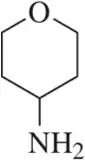
Draw in all missing lone pairs for the following molecules.
(a) Chemical structure of a six-membered ring with an oxygen atom and an amine group, indicating missing lone pairs.

Guida verificata passo dopo passo
1
Step 1: Identify the molecular structure provided in the problem. Look at each atom in the molecule and determine its valence electron count based on its position in the periodic table.
Step 2: Recall that lone pairs are unshared electrons on an atom. For each atom, calculate the number of lone pairs by subtracting the number of bonds and formal charges from the total valence electrons.
Step 3: Add lone pairs to atoms that need them to satisfy the octet rule (or duet rule for hydrogen). Ensure that the total number of electrons around each atom matches its expected valence configuration.
Step 4: Double-check the formal charges on each atom after adding lone pairs. Use the formula: Formal Charge = Valence Electrons - (Lone Pair Electrons + 1/2 Bonding Electrons). Adjust lone pairs if necessary to minimize formal charges.
Step 5: Verify the overall structure for stability and resonance possibilities. Ensure that the molecule adheres to fundamental rules of organic chemistry, such as the octet rule and proper electron distribution.

Risposta video verificata per un problema simile:

Questa soluzione video è stata consigliata dai nostri tutor come utile per risolvere questo problema.
Durata del video:
3m

Concetti chiave

Ecco i concetti essenziali che devi comprendere per rispondere correttamente alla domanda.

Lone Pairs

Lone pairs are pairs of valence electrons that are not involved in bonding and are localized on a single atom. They play a crucial role in determining the geometry and reactivity of molecules. Understanding how to identify and represent lone pairs is essential for accurately drawing Lewis structures and predicting molecular shapes.
Video consigliato:
02:04
Heterocycles - Which lone pairs react?

Lewis Structures

Lewis structures are diagrams that represent the bonding between atoms in a molecule and the lone pairs of electrons. They provide a visual way to understand the arrangement of electrons and the connectivity of atoms. Drawing Lewis structures correctly requires knowledge of valence electrons and the octet rule, which states that atoms tend to form bonds until they are surrounded by eight valence electrons.
Video consigliato:
04:12
Drawing the Lewis Structure for N2H4.

Octet Rule

The octet rule is a chemical rule of thumb that states atoms tend to bond in such a way that they each have eight electrons in their valence shell, achieving a stable electron configuration similar to that of noble gases. This rule helps predict how atoms will bond and the arrangement of electrons in molecules. However, there are exceptions to this rule, particularly for elements in the third period and beyond.
Video consigliato:
02:59
The octet rule.