Ch. 20 - Carboxylic Acids
Wade - Organic Chemistry 9th Edition
Wade9th EditionOrganic ChemistryISBN: 9780135213728Non è quello che usi tu?Cambia libro di testo
Capitolo 20, Problema 2a,b,c

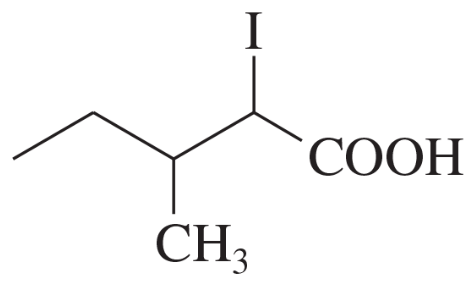
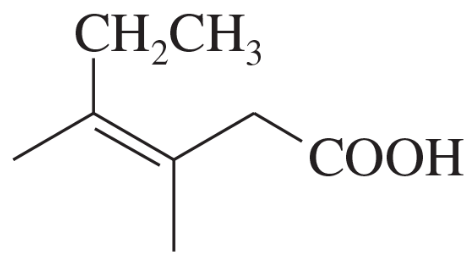
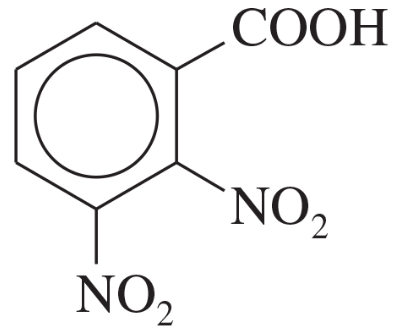
Name the following carboxylic acids (when possible, give both a common name and a systematic name).
(a)
(b)
(c)

Guida verificata passo dopo passo
1
Step 1: Analyze the structure in (i). The molecule contains a carboxylic acid group (-COOH) attached to a chain of four carbon atoms. The chain is substituted with a bromine atom and a methyl group. Identify the longest chain containing the carboxylic acid group and number the chain starting from the carbon of the carboxylic acid group.
Step 2: For (i), assign the position of the substituents (bromine and methyl group) based on the numbering. The systematic name will be derived by combining the substituent names with their positions and the base name of the carboxylic acid. The common name can be derived based on traditional naming conventions for carboxylic acids.
Step 3: Analyze the structure in (ii). The molecule contains a carboxylic acid group (-COOH) attached to a chain of six carbon atoms. The chain includes a double bond and a methyl group as substituents. Identify the longest chain containing the carboxylic acid group and the double bond, and number the chain starting from the carbon of the carboxylic acid group.
Step 4: For (ii), assign the position of the double bond and the methyl group based on the numbering. The systematic name will include the position of the double bond (using 'E' or 'Z' configuration if stereochemistry is specified) and the substituent name. The common name can be derived based on traditional naming conventions for carboxylic acids.
Step 5: Analyze the structure in (iii). The molecule contains a benzene ring with a carboxylic acid group (-COOH) and two bromine atoms as substituents. Number the benzene ring starting from the carbon of the carboxylic acid group and assign positions to the bromine atoms. The systematic name will include the positions of the bromine atoms and the carboxylic acid group. The common name can be derived based on traditional naming conventions for aromatic carboxylic acids.

Risposta video verificata per un problema simile:

Questa soluzione video è stata consigliata dai nostri tutor come utile per risolvere questo problema.
Durata del video:
13m

Concetti chiave

Ecco i concetti essenziali che devi comprendere per rispondere correttamente alla domanda.

Carboxylic Acids

Carboxylic acids are organic compounds characterized by the presence of one or more carboxyl groups (-COOH). They are known for their acidic properties due to the ability of the carboxyl group to donate a proton (H+). Common examples include acetic acid (ethanoic acid) and benzoic acid. Understanding their structure is crucial for naming and identifying these compounds.
Video consigliato:
04:20
Carboxylic Acids Nomenclature

Nomenclature of Organic Compounds

The nomenclature of organic compounds follows specific rules set by the International Union of Pure and Applied Chemistry (IUPAC). For carboxylic acids, the systematic name is derived from the longest carbon chain containing the carboxyl group, with the suffix '-oic acid' added. Common names may also be used, often based on historical or traditional names, which can differ from systematic naming.
Video consigliato:
01:40
Defining meso compounds.

Substituents and Their Effects on Naming

Substituents are atoms or groups of atoms that replace hydrogen atoms in a hydrocarbon chain. In naming carboxylic acids, the presence of substituents such as halogens (e.g., Br) or alkyl groups affects the numbering of the carbon chain and the overall name. It is essential to identify and correctly position these substituents to derive the accurate systematic name of the compound.
Video consigliato:
Percorso guidato
2:02
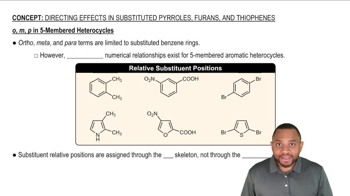
Directing Effects in Substituted Pyrroles, Furans, and Thiophenes Concept 1