Ch. 24 - Amino Acids, Peptides, and Proteins
Wade - Organic Chemistry 9th Edition
Wade9th EditionOrganic ChemistryISBN: 9780135213728Non è quello che usi tu?Cambia libro di testo
Capitolo 24, Problema 30a

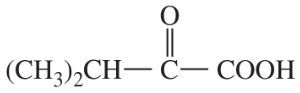
Show how you would synthesize any of the standard amino acids from each starting material. You may use any necessary reagents.
(a)

Guida verificata passo dopo passo
1
Step 1: Identify the starting material. The given compound is isobutyric acid (2-methylpropanoic acid), which contains a carboxylic acid functional group and a branched alkyl chain.
Step 2: Convert the carboxylic acid group into an amine group. This can be achieved by first converting the carboxylic acid into an acyl chloride using thionyl chloride (SOCl₂). The reaction forms 2-methylpropanoyl chloride.
Step 3: Perform an amination reaction. React the acyl chloride with ammonia (NH₃) to form the corresponding amide, 2-methylpropionamide.
Step 4: Reduce the amide to an amine. Use a reducing agent such as lithium aluminum hydride (LiAlH₄) to convert the amide into 2-methylpropylamine.
Step 5: Introduce the carboxylic acid group to form the amino acid. React the amine with a cyanide source (e.g., NaCN) followed by hydrolysis (acidic or basic conditions) to yield the desired amino acid, valine.

Risposta video verificata per un problema simile:

Questa soluzione video è stata consigliata dai nostri tutor come utile per risolvere questo problema.
Durata del video:
2m

Concetti chiave

Ecco i concetti essenziali che devi comprendere per rispondere correttamente alla domanda.

Amino Acid Structure

Amino acids are organic compounds characterized by the presence of both an amine group (-NH2) and a carboxyl group (-COOH). This dual functionality allows them to act as both acids and bases, making them zwitterionic at physiological pH. The general structure includes a central carbon atom (alpha carbon) bonded to a hydrogen atom, a carboxyl group, an amine group, and a variable side chain (R group) that determines the specific properties of each amino acid.
Video consigliato:
7:19
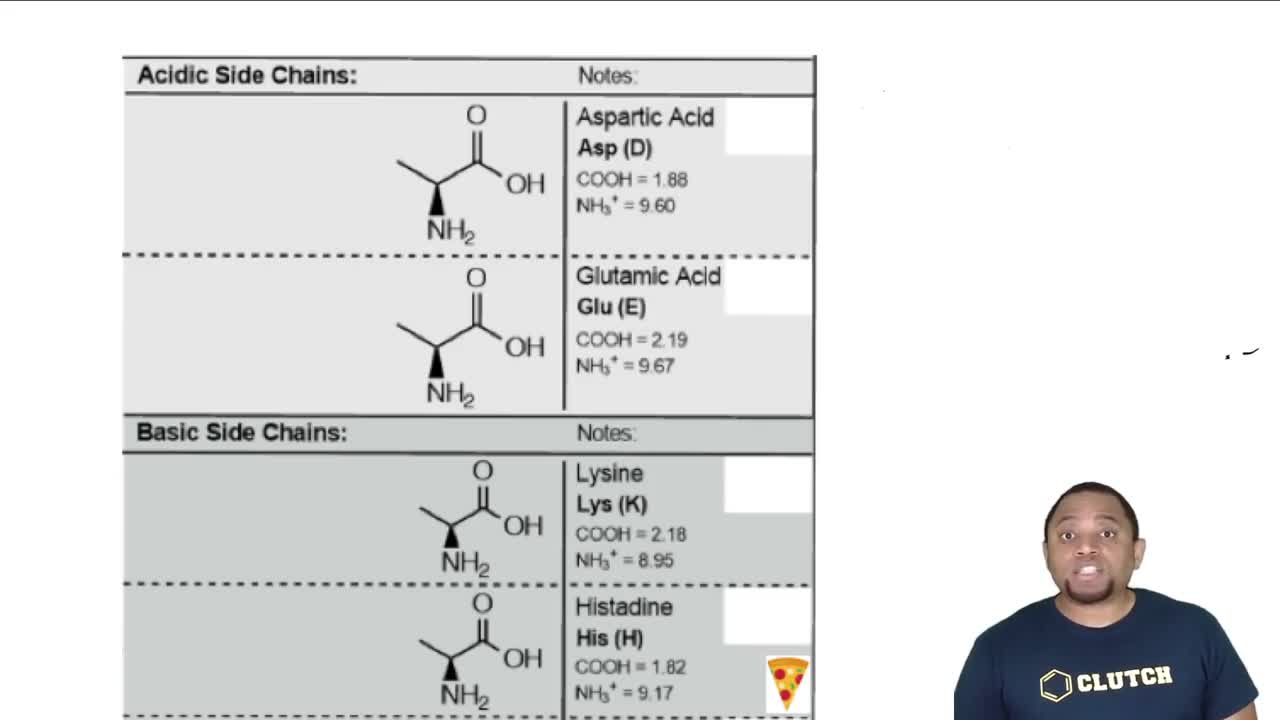
Charged Amino Acids

Synthesis of Amino Acids

The synthesis of amino acids can be achieved through various methods, including the Strecker synthesis and Gabriel synthesis. In the Strecker synthesis, an aldehyde is reacted with ammonia and cyanide to form an amino acid. The Gabriel synthesis involves the use of phthalimide and an alkyl halide to produce an amino acid after hydrolysis. Understanding these synthetic pathways is crucial for constructing amino acids from simpler starting materials.
Video consigliato:
Percorso guidato
1:16
Synthesis of Amino Acids: Strecker Synthesis Example 1

Reagents and Reaction Conditions

The choice of reagents and reaction conditions is vital in organic synthesis, particularly in the formation of amino acids. Common reagents include alkyl halides, amines, and carbonyl compounds, which must be selected based on the desired amino acid structure. Additionally, reaction conditions such as temperature, solvent, and pH can significantly influence the yield and purity of the synthesized amino acids, making it essential to optimize these parameters for successful synthesis.
Video consigliato:
01:52
Reagents