 Indietro
Introduction to Biology: The Chemical and Cellular Basis of Life
Guida di studio - Note intelligenti
 Appunti personalizzati basati sui tuoi materiali, ampliati con definizioni chiave, esempi e contesto.
Introduction to Biology and the Properties of Life
Defining Life and Its Common Properties
Biology is the scientific study of life and living organisms. All living things share a set of fundamental properties that distinguish them from non-living matter. These properties include order, regulation, growth and development, energy processing, response to the environment, reproduction, and evolutionary adaptation.
Order: Living organisms exhibit complex but ordered organization, from molecules to entire ecosystems.
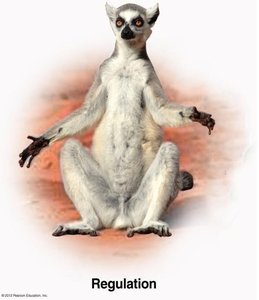
Regulation: Organisms can regulate their internal environment to maintain conditions suitable for life (homeostasis).
Growth and Development: Organisms grow and develop according to specific instructions coded in their DNA.
Energy Processing: Living things acquire energy and transform it to power their activities.
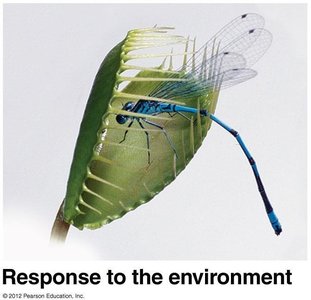
Response to the Environment: Organisms can sense and respond to environmental stimuli.
Reproduction: Living things can reproduce, passing their genetic information to the next generation.
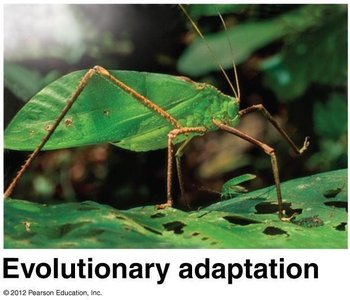
Evolutionary Adaptation: Populations of organisms evolve over generations through adaptations that enhance survival and reproduction.




Life’s Hierarchy of Organization
Levels of Biological Organization
Life is organized into a hierarchy of structural levels, each building on the levels below it. This hierarchy extends from atoms and molecules to the entire biosphere.
Biosphere: All environments on Earth that support life.
Ecosystem: All organisms in a particular area, along with nonliving components.
Community: All living organisms in an ecosystem.
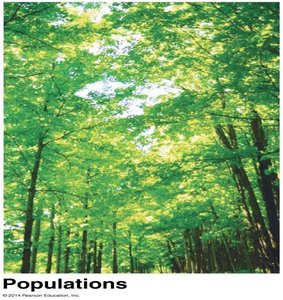
Population: All individuals of a species in a specific area.
Organism: An individual living thing.
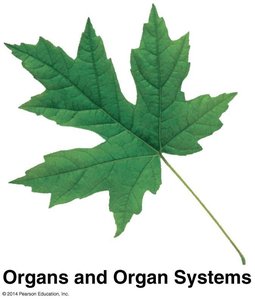
Organ System: Groups of organs that work together to perform a function.
Organ: A structure composed of tissues that performs a specific function.
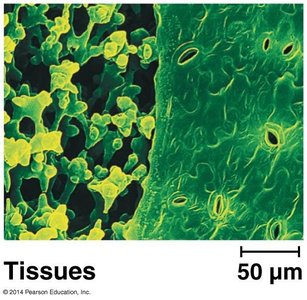
Tissue: Groups of similar cells performing a specific function.
Cell: The basic unit of life.
Organelle: Membrane-bound structures within cells with specialized functions.
Molecule: Clusters of atoms held together by chemical bonds.
Atom: The smallest unit of matter that retains the properties of an element.



The Chemical Basis of Life
Elements and Compounds
All matter is composed of elements, substances that cannot be broken down by chemical means. The most common elements in living organisms are carbon, hydrogen, oxygen, and nitrogen, which make up about 96% of living matter. Elements combine to form compounds, which are substances consisting of two or more elements in a fixed ratio.
Atom: The smallest unit of an element, consisting of protons, neutrons, and electrons.
Isotope: Atoms of the same element with different numbers of neutrons.
Ion: An atom or molecule with an electrical charge due to loss or gain of electrons.
Chemical Bonds
Atoms form chemical bonds to achieve stability:
Covalent Bonds: Atoms share electrons (can be polar or nonpolar).
Ionic Bonds: Electrons are transferred from one atom to another, creating charged ions.
Hydrogen Bonds: Weak attractions between a hydrogen atom and an electronegative atom (important in water and biological molecules).
Van der Waals Interactions: Weak attractions due to transient local charges.
Water and Life
Properties of Water
Water is essential for life due to its unique properties, which arise from its polar covalent bonds and ability to form hydrogen bonds:
Cohesion: Water molecules stick together, aiding transport in plants.
Adhesion: Water molecules stick to other substances.
High Specific Heat: Water resists temperature changes, stabilizing environments.
High Heat of Vaporization: Water absorbs heat as it evaporates, cooling organisms.
Expansion Upon Freezing: Ice is less dense than liquid water, allowing it to float.
Versatility as a Solvent: Water dissolves many substances, facilitating chemical reactions in cells.
Macromolecules and the Chemistry of Life
Major Classes of Biological Macromolecules
Living organisms are composed of four major classes of macromolecules, each with distinct structures and functions:
Type | Examples | Elements | Functions | Monomer |
|---|---|---|---|---|
Carbohydrates | Sugars, starches | C, H, O | Energy, structure | Monosaccharide |
Lipids | Fats, oils | C, H, O | Energy storage, membranes | Glycerol, fatty acids |
Proteins | Enzymes, antibodies | C, H, O, N, S | Structure, catalysis, transport | Amino acid |
Nucleic Acids | DNA, RNA | C, H, O, N, P | Genetic information | Nucleotide |
The Cell: Basic Unit of Life
Cell Theory and Types of Cells
The cell is the fundamental unit of life. The cell theory states that all living things are composed of cells, and all cells arise from pre-existing cells. There are two main types of cells:
Prokaryotic Cells: Lack a nucleus and membrane-bound organelles (e.g., bacteria, archaea).
Eukaryotic Cells: Have a nucleus and membrane-bound organelles (e.g., plants, animals, fungi, protists).
Cell Structure and Organelles
Eukaryotic cells contain specialized structures called organelles, each with specific functions:
Nucleus: Contains genetic material (DNA).
Ribosomes: Sites of protein synthesis.
Endoplasmic Reticulum (ER): Rough ER synthesizes proteins; smooth ER synthesizes lipids and detoxifies chemicals.
Golgi Apparatus: Modifies, sorts, and ships proteins and lipids.
Lysosomes: Digest and recycle cellular waste.
Mitochondria: Produce ATP through cellular respiration.
Chloroplasts (plants): Site of photosynthesis.
Peroxisomes: Break down fatty acids and detoxify harmful substances.
Cytoskeleton: Provides structural support and facilitates movement.
Emergent Properties and Biological Systems
Emergent Properties
Emergent properties arise at each level of biological organization due to the arrangement and interaction of parts. For example, a functioning cell exhibits properties not found in its individual molecules.
Evolution: The Unifying Theme of Biology
Evolutionary Adaptation
Evolution explains both the unity and diversity of life. Through natural selection, organisms adapt to their environments over generations, leading to the diversity of species observed today.
The Process of Science
The Scientific Method
Science is a systematic approach to understanding the natural world. The scientific method involves:
Making observations
Formulating hypotheses
Testing hypotheses through experiments
Analyzing data
Drawing conclusions
Key terms:
Hypothesis: A testable prediction.
Theory: A well-substantiated explanation based on evidence.
Law: A consistent, universal relationship, often mathematical.
Types of Scientific Reasoning
Inductive Reasoning: Deriving general principles from specific observations.
Deductive Reasoning: Making specific predictions based on general principles.
Conclusion
Understanding the chemical and cellular basis of life provides the foundation for all biological sciences. The properties of life, the hierarchy of biological organization, and the process of scientific inquiry are central to the study of biology and personal health.
