 Indietro
Study Guide: Forces and Newton’s Laws of Motion
Guida di studio - Note intelligenti
 Appunti personalizzati basati sui tuoi materiali, ampliati con definizioni chiave, esempi e contesto.
Forces and Newton’s Laws of Motion
Introduction to Forces
Understanding the relationship between force and motion is fundamental in physics. Forces are responsible for changes in the motion of objects, and Newton’s laws provide the framework for analyzing these effects.
Force: A force is a push or a pull exerted by an agent on an object. It is a vector quantity, meaning it has both magnitude and direction.
Agent: The source of the force (e.g., a person pushing a car).
Object: The recipient of the force (e.g., the car being pushed).
Contact Forces: Forces that require physical contact (e.g., friction, tension).
Long-range Forces: Forces that act without contact (e.g., gravity, electric, magnetic).
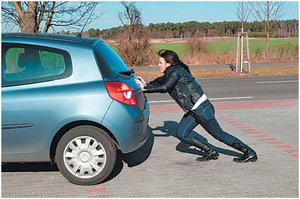
Example: A person pushing a car demonstrates a contact force.
Newton’s First Law (Law of Inertia)
Newton’s first law states that an object at rest remains at rest, and an object in motion continues in a straight line at constant speed unless acted upon by a net force.
Inertia: The tendency of an object to resist changes in its motion.
Net Force: The vector sum of all forces acting on an object.

Example: In a car crash, the car stops due to a force, but the dummy continues moving until another force acts on it.
What Is a Force?
A force is a vector quantity, represented by an arrow in diagrams. The length of the arrow indicates the magnitude, and the direction shows the force’s direction.
Notation: Forces are often denoted as \( \vec{F} \).
Magnitude: The size or strength of the force, denoted as \( F \).
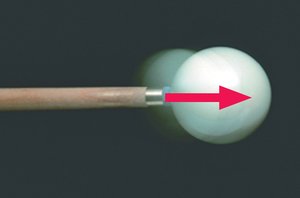
Example: Drawing force vectors helps visualize how forces act on objects.
Types of Forces
There are several common types of forces encountered in physics problems:
Weight: The gravitational force exerted by the Earth, always directed downward. \( \vec{w} = m \vec{g} \)
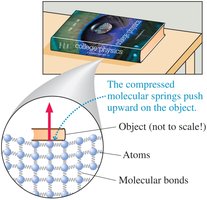
Spring Force: The force exerted by a compressed or stretched spring. \( \vec{F}_{\text{spring}} = -k x \)
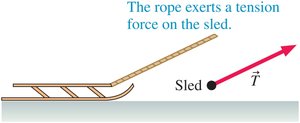
Tension: The force exerted by a string, rope, or cable when pulled tight.
Normal Force: The force exerted by a surface perpendicular to the object.
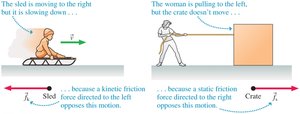
Friction: The force exerted by a surface parallel to the object, opposing motion. Includes kinetic (sliding) and static (preventing motion).
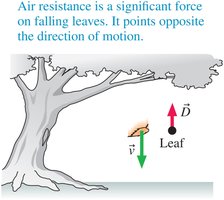
Drag: The resistive force of a fluid (air or water) on a moving object.
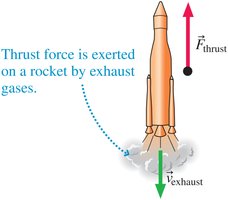
Thrust: The force produced by expelling gas (e.g., rocket engines).
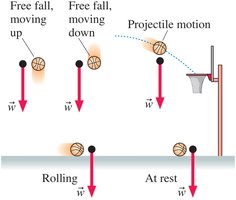
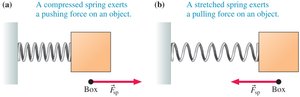
Identifying Forces
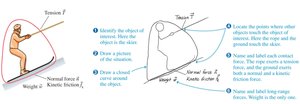
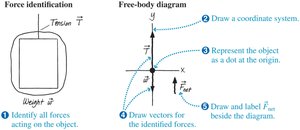
To analyze a physics problem, first identify all forces acting on the object. Draw a closed curve around the object and locate points of contact for contact forces. Also, include any long-range forces such as gravity.
Contact Forces: At each point of contact, label the force (e.g., normal, friction, tension).
Long-range Forces: For most introductory problems, only weight is considered.
Combining Forces: Net Force
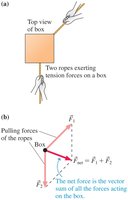
When multiple forces act on an object, they combine to form a net force, which is the vector sum of all individual forces. The net force determines the object’s acceleration.
Vector Addition: Forces are added using vector addition rules.
Resultant Force: The net force is not a new force, but the sum of all acting forces.
What Do Forces Do?
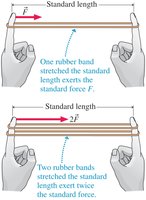
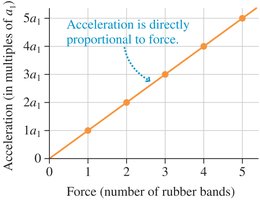
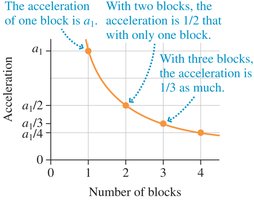
Experiments show that a constant force causes a constant acceleration. The acceleration is directly proportional to the force and inversely proportional to the mass of the object.
Direct Proportionality: \( a \propto F \)
Inverse Proportionality: \( a \propto \frac{1}{m} \)
Inversely Proportional Relationships
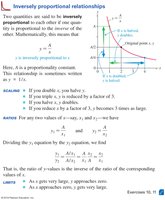
Two quantities are inversely proportional if one increases as the other decreases. For force and mass, the relationship is:
\( a = \frac{A}{m} \), where \( A \) is a constant.
As mass increases, acceleration decreases for a given force.
Newton’s Second Law
Newton’s second law quantifies the relationship between force, mass, and acceleration:
Equation:
The direction of acceleration is the same as the direction of the net force.
For multiple forces:
Units of Force
The SI unit of force is the newton (N). One newton is the force required to accelerate a 1 kg mass by 1 m/s2.
1 N = 1 kg·m/s2
1 lb = 4.45 N
Free-Body Diagrams
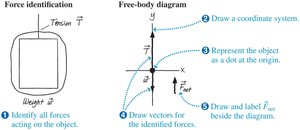
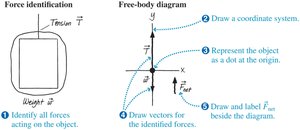
A free-body diagram is a visual tool used to represent all forces acting on an object. The object is shown as a dot, and force vectors are drawn from the dot.
Draw a coordinate system.
Represent the object as a dot at the origin.
Draw and label all force vectors.
Draw the net force vector beside the diagram.
Newton’s Third Law
Newton’s third law states that every force occurs as one member of an action/reaction pair. The two forces are equal in magnitude, opposite in direction, and act on different objects.
Action/Reaction Pair: If object A exerts a force on object B, then object B exerts an equal and opposite force on object A.
Examples: Hammer and nail, bat and ball, foot and floor.
Summary Table: Common Forces and Their Notation
Force Type | Notation | Description |
|---|---|---|
Weight | \( \vec{w} \) | Gravitational pull, always downward |
Normal | \( \vec{n} \) | Perpendicular to surface |
Tension | \( \vec{T} \) | Along string, rope, or cable |
Friction | \( \vec{f}_k, \vec{f}_s \) | Kinetic (sliding) or static (preventing motion) |
Spring | \( \vec{F}_{\text{spring}} \) | Push or pull by spring |
Drag | \( \vec{D} \) | Resistive force from fluid |
Thrust | \( \vec{F}_{\text{thrust}} \) | Force from expelling gas |
Summary of Principles
Newton’s First Law: Objects remain at rest or in uniform motion unless acted upon by a net force.
Newton’s Second Law:
Newton’s Third Law: For every action, there is an equal and opposite reaction.
Force Identification: Locate points of contact and long-range forces.
Free-Body Diagrams: Visualize all forces acting on an object.
Applications and Examples
Identifying forces on a bungee jumper and skier.
Analyzing forces on an elevator and a towed skier using free-body diagrams.
Understanding action/reaction pairs in everyday situations (e.g., walking, rocket propulsion).
Additional info: Academic context was added to clarify definitions, examples, and formulas. All images included are directly relevant to the explanation of the adjacent paragraph.
