 Indietro
Vectors: Definitions, Properties, and Operations
Guida di studio - Note intelligenti
 Appunti personalizzati basati sui tuoi materiali, ampliati con definizioni chiave, esempi e contesto.
Vectors in Physics
Definition and Representation
Vectors are fundamental quantities in physics characterized by both magnitude and direction. Unlike scalars, which have only magnitude, vectors are used to describe quantities such as displacement, velocity, and force.
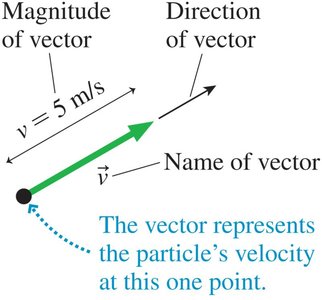
Vector notation: Vectors are typically denoted with an arrow above the symbol, e.g., for velocity.
Magnitude: The length of the vector represents its magnitude, which is always a non-negative scalar.
Direction: The arrow points in the direction of the vector.
Example: Velocity vector with magnitude .
Equality of Vectors
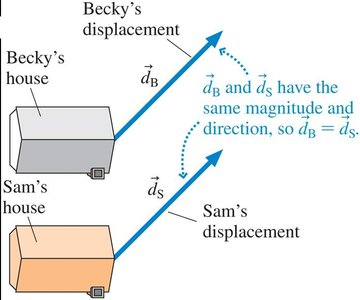
Two vectors are considered equal if they have the same magnitude and direction, regardless of their initial points. This property is essential for comparing physical quantities in different locations.
Displacement vectors: The straight-line connection from initial to final position.
Example: Displacement vectors and are equal if they have the same magnitude and direction.
Vector Addition
Resultant Vector and Net Displacement
Vector addition is used to combine two or more vectors to find a resultant vector. In physics, this is often applied to displacement, velocity, or force.
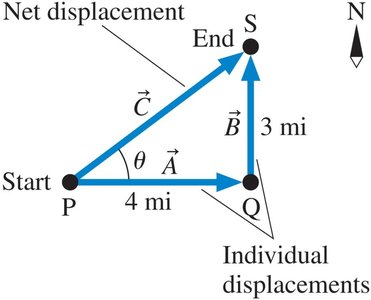
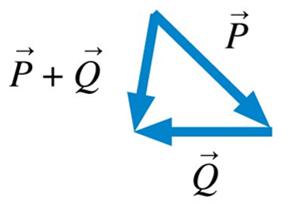
Resultant vector: The sum of two vectors and is .
Commutative property: .
Example: Net displacement after two consecutive movements.
Methods of Vector Addition
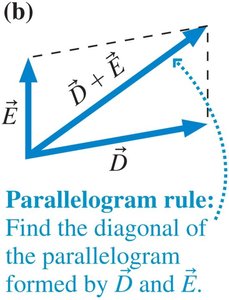
There are two primary graphical methods for adding vectors: the tip-to-tail rule and the parallelogram rule.
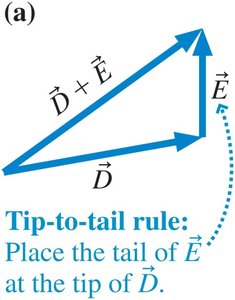
Tip-to-tail rule: Place the tail of the second vector at the tip of the first vector. The resultant vector is drawn from the tail of the first to the tip of the second.
Parallelogram rule: Place both vectors with their tails at the same point. The resultant vector is the diagonal of the parallelogram formed.
Example of Vector Addition
Consider vectors and . Their sum is found using the tip-to-tail method.
Multiplication of Vectors by Scalars
Positive and Negative Scalars
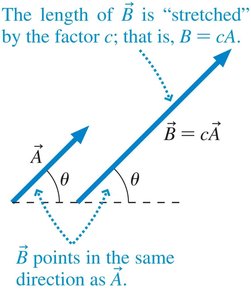
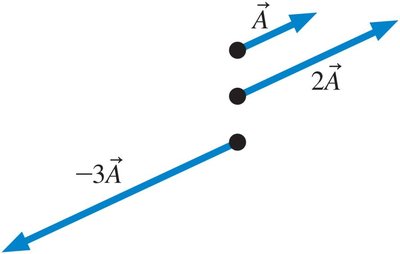
Multiplying a vector by a scalar changes its magnitude but may also affect its direction.
Positive scalar: The vector's magnitude is scaled, but its direction remains unchanged.
Zero scalar: The result is the zero vector, which has zero length and no direction.
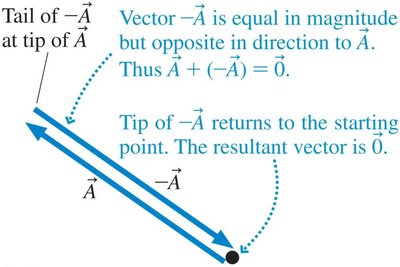
Negative scalar: The vector's direction is reversed, but its magnitude is scaled by the absolute value of the scalar.
Multiplying by -1: Reverses the direction without changing the magnitude.
Example: , where is a scalar.
Vector Subtraction
Subtracting Vectors Graphically
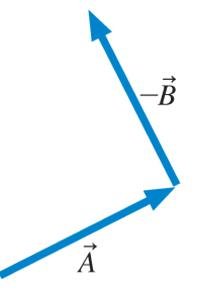
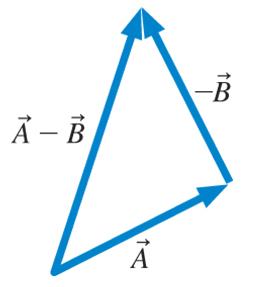
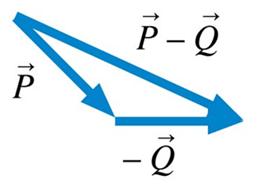
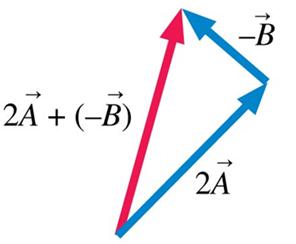
Vector subtraction is performed by adding the negative of the vector to be subtracted. The negative of a vector has the same magnitude but opposite direction.
Procedure:
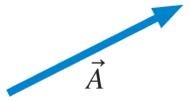
Draw .
Draw (same magnitude as , opposite direction).
Place the tail of at the tip of .
Draw the resultant vector from the tail of to the tip of .
Result: .
QuickCheck Examples
Identifying Vector Sums and Differences
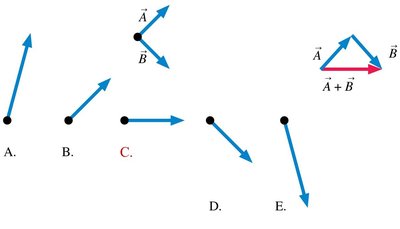
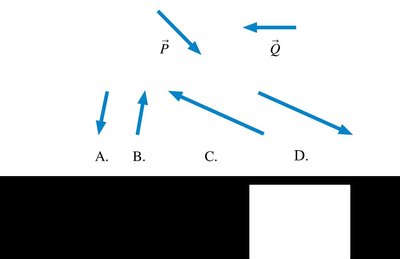
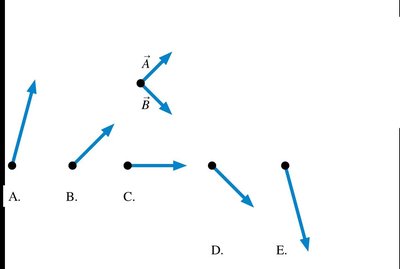
QuickCheck exercises often ask students to identify the correct graphical representation of vector addition or subtraction.
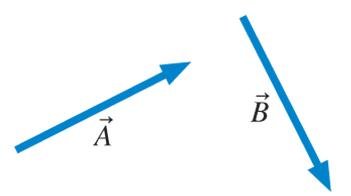
Example: Given vectors and , identify or among several options.
Summary Table: Vector Operations
Operation | Result | Graphical Method |
|---|---|---|
Addition () | Resultant vector | Tip-to-tail or parallelogram rule |
Subtraction () | Resultant vector | Add negative vector, tip-to-tail |
Multiplication by scalar () | Scaled vector | Length changes, direction may reverse if |
Additional info: These notes expand on the brief slide content to provide full academic context, definitions, and examples suitable for Physics with Algebra students.
