 Indietro
Chapter 1: Representing Motion – Scalars, Vectors, and Measurement in Physics
Guida di studio - Note intelligenti
 Appunti personalizzati basati sui tuoi materiali, ampliati con definizioni chiave, esempi e contesto.
Chapter 1: Representing Motion
Introduction to Representing Motion
Understanding how to represent motion is fundamental in physics. This chapter introduces the concepts of scalars and vectors, displacement, and the importance of significant figures and scientific notation in measurement. These foundational ideas are essential for analyzing and describing physical phenomena quantitatively.
Scalars and Vectors
Definition and Examples
Scalar: A quantity described only by a magnitude (number and unit), with no direction. Examples include time, temperature, and mass.
Vector: A quantity described by both a magnitude and a direction. Examples include velocity and force.
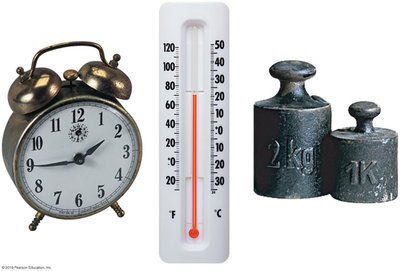
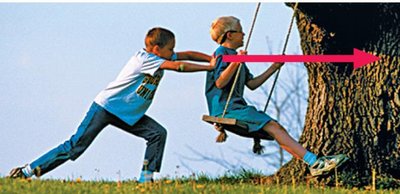
Key Point: Scalars and vectors are treated differently in calculations. Vectors require both magnitude and direction for complete description.
Displacement and Distance
Understanding Displacement
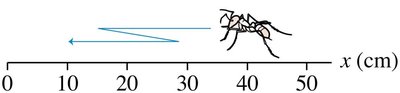
Displacement is a vector quantity that represents the change in position of an object. It is always directed from the initial position to the final position, regardless of the path taken.
Distance: The total length of the path traveled, a scalar quantity.
Displacement: The straight-line vector from the starting point to the ending point.

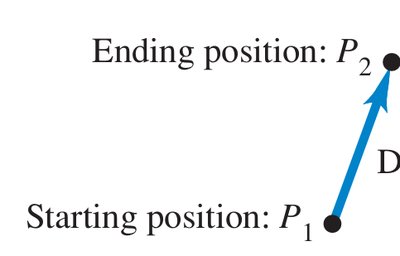
Example: If an ant zig-zags back and forth on a table, its distance traveled is the total path length, but its displacement is the straight-line distance from start to finish.
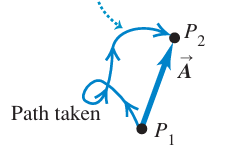
Additional info: Displacement can be positive, negative, or zero, depending on the direction and the initial and final positions.
Vector Addition
Adding Vectors Graphically
Vectors cannot be added like ordinary numbers. To add vectors, use the tip-to-tail method:
Draw the first vector.
Place the tail of the second vector at the tip of the first.
The resultant vector is drawn from the tail of the first to the tip of the last vector.
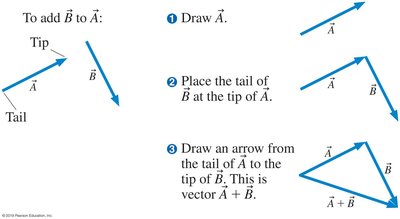
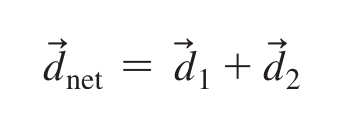
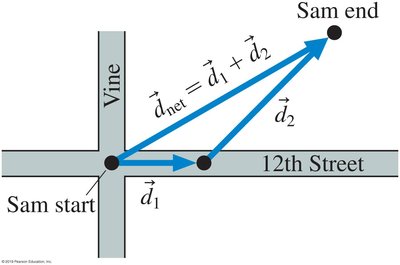
The resultant vector represents the net effect of the combined vectors.
Equation:
Working with Displacement Components
Breaking Down Vectors
Vectors can be broken into components along the x- and y-axes. This is useful for analyzing motion in two dimensions, such as a delivery truck's route or a person walking along city blocks.
To find the net displacement along a particular direction, sum the components in that direction.
Use trigonometry to resolve vectors into components if they are not aligned with the axes.
Example: A delivery truck travels along a route with segments in different directions. The net displacement in the x-direction is the sum of all x-components of each segment.
Additional info: The Pythagorean theorem and trigonometric functions are often used to calculate the magnitude and direction of the resultant vector.
Significant Figures
Precision in Measurement
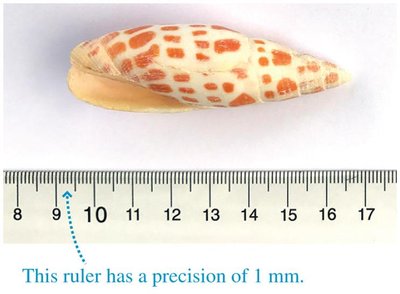
Significant figures reflect the precision of a measurement. The number of significant figures is determined by the measuring instrument's smallest division.
When recording a measurement, include all certain digits plus one estimated digit.
Significant figures are important for reporting results accurately and honestly.
Significant Figures in Calculations
For multiplication and division, the result should have as many significant figures as the measurement with the fewest significant figures.
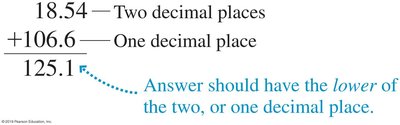
For addition and subtraction, the result should have the same number of decimal places as the measurement with the fewest decimal places.

Scientific Notation
Expressing Large and Small Numbers
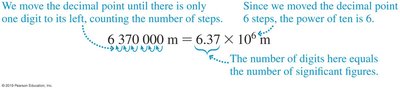
Scientific notation is used to express very large or very small numbers in a compact form, making calculations and comparisons easier. It also helps in maintaining the correct number of significant figures.
Move the decimal point so that only one nonzero digit remains to its left.
Count the number of places the decimal point was moved; this becomes the exponent of ten.
The number of digits in the coefficient equals the number of significant figures.
Example:
Summary Table: Scalars vs. Vectors
Quantity Type | Definition | Examples |
|---|---|---|
Scalar | Described by magnitude only | Time, Temperature, Mass, Distance |
Vector | Described by magnitude and direction | Displacement, Velocity, Force |
Key Takeaways
Scalars and vectors are fundamental concepts for describing physical quantities.
Displacement is a vector and differs from distance, which is a scalar.
Vector addition requires graphical or component methods, not simple arithmetic.
Significant figures and scientific notation are essential for accurate and clear communication of measurements in physics.
