 Indietro
Electric Potential and Electric Potential Energy
Guida di studio - Note intelligenti
 Appunti personalizzati basati sui tuoi materiali, ampliati con definizioni chiave, esempi e contesto.
Ch. 21 | Electric Potential & Electric Potential Energy
Review: Coulomb’s Law and Electric Fields
Coulomb’s Law describes the force between two point charges, while the electric field is the force per unit charge at a point in space. These concepts are foundational for understanding electric potential and potential energy.
Coulomb’s Law: The magnitude of the electric force between two point charges is given by: where , and are the charges, is the distance between them, and is the unit vector from one charge to the other.
Electric Field from a Point Charge:
Vector Components:
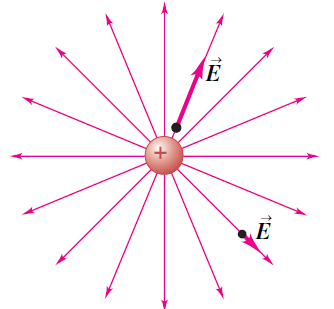
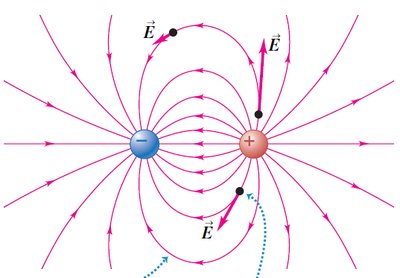
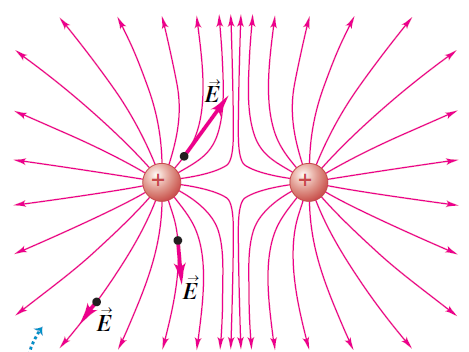
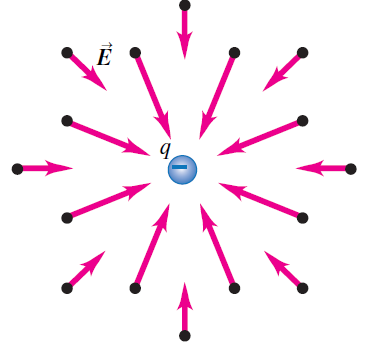
Drawing Electric Field Lines
Electric field lines provide a visual representation of the direction and strength of the electric field around charges.
Field lines originate from positive charges (+Q) or infinity and terminate on negative charges (–Q) or extend to infinity.
The number of field lines is proportional to the magnitude of the charge.
The electric field vector is tangent to the field line at any point.
The density of field lines indicates the magnitude of the field.
Field lines never cross each other.
Work, Potential Energy, and Conservation of Energy
Work is done on a body when a force acts on it during displacement. If the force is conservative, the work can be expressed in terms of potential energy, and the process is reversible and path-independent.
Work Done by a Constant Force:
Conservative Forces: Work done is path-independent and reversible. Total work over a closed path is zero.
Work-Energy Theorem: Work done on an object changes its kinetic energy:
Conservation of Energy: If only conservative forces do work:
Work and Potential Energy:
Electric Potential Energy
When a charged particle moves in an electric field, the field does work on the particle, which can be expressed as a change in electric potential energy (). This is analogous to gravitational potential energy.
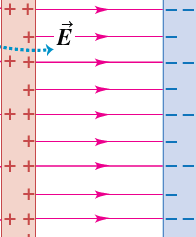
Electric Potential Energy in a Uniform Field:
Potential energy increases if a test charge moves opposite to the electric force; it decreases if the charge moves in the direction of the force.
The concept applies to any static charge distribution, not just uniform fields.
Electric Potential
Electric potential () is the potential energy per unit charge at a point in an electric field. It is a scalar quantity and provides a convenient way to describe energy changes for charges in electric fields.
Definition: or
SI Unit: Volt ()
Relation to Electric Field:
Examples and Applications
Potential Energy Change for Point Charges: For two point charges and separated by distance :
Example Problem: A point charge is at . A second charge moves from infinity to . Find the change in potential energy and the initial velocity if its mass is .
Summary Table: Key Concepts
Concept | Equation | Description |
|---|---|---|
Coulomb’s Law | Force between two point charges | |
Electric Field (Point Charge) | Field due to a point charge | |
Work (Constant Force) | Work done by a constant force | |
Potential Energy (Point Charges) | Potential energy between two point charges | |
Electric Potential | Potential energy per unit charge |
