 Indietro
Energy Transfer, Temperature Changes, and Efficiency: Study Notes for Physics with Calculus
Guida di studio - Note intelligenti
 Appunti personalizzati basati sui tuoi materiali, ampliati con definizioni chiave, esempi e contesto.
Temperature Changes
Internal Energy and Temperature
Understanding the difference between internal energy and temperature is fundamental in thermodynamics. Internal energy refers to the total energy contained within a system, including both kinetic and potential energies of particles. Temperature, on the other hand, is a measure of the average kinetic energy of the particles in a substance.
Internal Energy: The sum of all kinetic and potential energies of particles in a system.
Temperature: Indicates the average kinetic energy of particles; measured in Kelvin (K), Celsius (°C), or Fahrenheit (°F).
Energy Transfer: Energy can be transferred to or from a system, changing its internal energy and possibly its temperature.
Heating: When energy is transferred to a substance, its temperature usually increases unless a phase change occurs.
Example: Heating water increases the kinetic energy of its molecules, raising its temperature. 
Cooling by Evaporation
Evaporation is a process where a liquid changes into a gas, often resulting in cooling. This occurs because the most energetic particles escape from the liquid, reducing the average energy and thus the temperature of the remaining liquid.
Evaporation: The process by which molecules with higher kinetic energy leave the liquid phase, causing cooling.
Applications: Sweating cools the body as sweat evaporates, removing heat.
Example: Water evaporating from a garden path cools the surface. 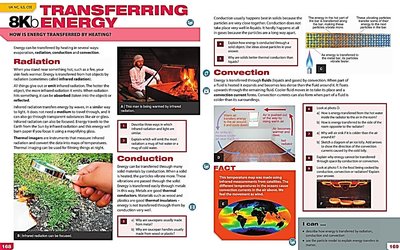
Transferring Energy
Methods of Energy Transfer
Energy can be transferred by heating through three main mechanisms: radiation, conduction, and convection. Each method involves different physical processes and is relevant in various contexts.
Radiation: Transfer of energy by electromagnetic waves, such as infrared radiation. No medium is required.
Conduction: Transfer of energy through direct contact; occurs mainly in solids.
Convection: Transfer of energy by the movement of fluids (liquids or gases).
Example: A metal rod heated at one end transfers energy to the other end by conduction. 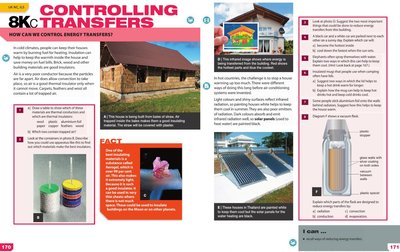
Controlling Energy Transfers
Insulation and Energy Efficiency
Controlling energy transfers is essential for improving energy efficiency in buildings and appliances. Insulation reduces unwanted energy loss, helping maintain desired temperatures and reducing energy consumption.
Insulation: Materials that reduce the rate of energy transfer, such as foam, wool, or double glazing.
Energy Efficiency: The ratio of useful energy output to total energy input.
Applications: Insulated houses, thermos flasks, and solar panels.
Example: A house with thick walls and roof insulation loses less energy to the environment. 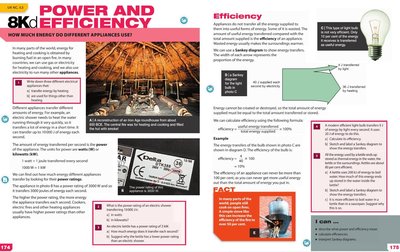
Power and Efficiency
Measuring Energy Use and Efficiency
Different appliances use energy at different rates, measured in watts (W). Efficiency quantifies how much of the input energy is converted into useful output.
Power: The rate at which energy is transferred or converted; measured in watts (W).
Efficiency Formula:
Improving Efficiency: Using better insulation, more efficient appliances, and reducing energy waste.
Example: An electric heater converts electrical energy into heat, but some energy is lost to the surroundings. 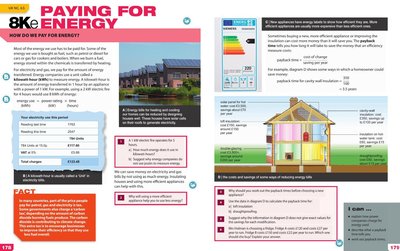
Paying for Energy
Energy Costs and Consumption
Energy use is measured in kilowatt-hours (kWh), and consumers pay for the energy they use. Understanding energy bills and how to reduce costs is important for both economic and environmental reasons.
Energy Consumption: Calculated as
Reducing Costs: Using energy-efficient appliances and improving insulation.
Example: A household can reduce its energy bill by using LED lights and insulating walls. 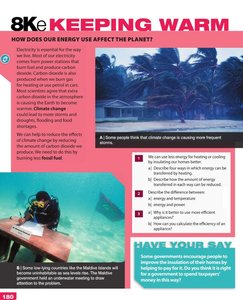
Keeping Warm
Environmental Impact of Energy Use
Energy use, especially from fossil fuels, affects the environment by contributing to climate change and pollution. Efficient energy use and renewable sources help mitigate these impacts.
Climate Change: Burning fossil fuels releases greenhouse gases, leading to global warming.
Renewable Energy: Sources like solar and wind reduce environmental impact.
Efficiency: Reducing energy waste helps lower emissions and costs.
Example: Using solar panels and efficient insulation reduces a home's carbon footprint.
