Indietro
Introduction to Astronomy and Space Physics: Models, Evidence, and Fundamental Forces
Guida di studio - Note intelligenti
 Appunti personalizzati basati sui tuoi materiali, ampliati con definizioni chiave, esempi e contesto.
Changing Ideas in Astronomy
Historical Models of the Solar System
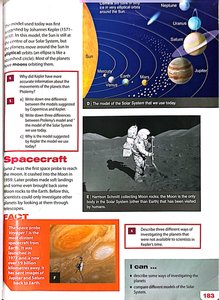
For thousands of years, humans have observed the Sun, Moon, and stars, developing models to explain their motions. Early models placed the Earth at the center of the universe, but over time, evidence led to the acceptance of the heliocentric model, with the Sun at the center of the Solar System.
Geocentric Model: The Earth is at the center; all celestial bodies orbit around it.
Heliocentric Model: The Sun is at the center; planets, including Earth, orbit the Sun.
Evidence for Change: Observations of planetary motion, retrograde motion, and improved telescopic data led to the acceptance of the heliocentric model.
Modern Understanding: The Solar System consists of the Sun, planets, moons, and other bodies, all governed by gravitational forces.
Additional info: The transition from geocentric to heliocentric models is a foundational shift in scientific thinking, illustrating the importance of evidence-based reasoning in physics.
Gathering the Evidence
Observational Astronomy and the Scientific Method
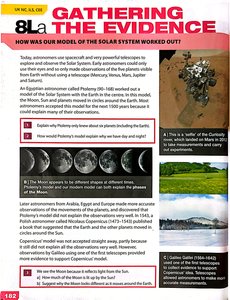
Advances in technology, such as telescopes and spacecraft, have allowed astronomers to gather detailed evidence about the Solar System. Observations of planetary motion, lunar phases, and the use of spacecraft have all contributed to our current understanding.
Lunar Phases: The changing appearance of the Moon is due to its orbit around Earth and the relative positions of the Sun, Earth, and Moon.
Spacecraft Exploration: Robotic probes and human missions have provided direct data about the surfaces and atmospheres of other planets and moons.
Working in Space
Human Spaceflight and Scientific Research
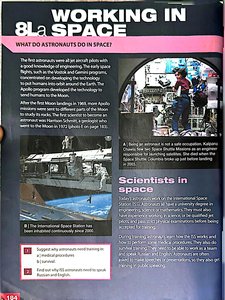
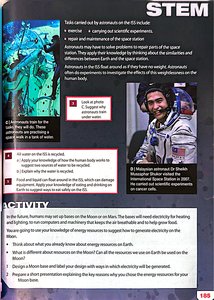
Astronauts conduct scientific experiments, maintain spacecraft, and study the effects of microgravity on the human body. The International Space Station (ISS) serves as a laboratory for research in physics, biology, and engineering.
Microgravity: The condition of apparent weightlessness experienced in orbit, allowing unique experiments not possible on Earth.
Space Technology: Advances in materials, robotics, and life support systems are essential for long-duration missions.
Seasons and Earth's Tilt
Causes of the Seasons
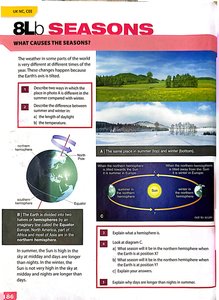
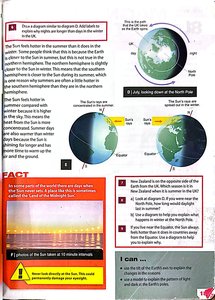
The tilt of Earth's axis (approximately 23.5°) and its orbit around the Sun cause the seasons. The angle of sunlight and the length of daylight vary throughout the year, leading to temperature changes and seasonal weather patterns.
Summer: The hemisphere tilted toward the Sun experiences longer days and more direct sunlight.
Winter: The hemisphere tilted away from the Sun experiences shorter days and less direct sunlight.
Earth's Magnetic Field
Magnetism and the Planetary Dynamo
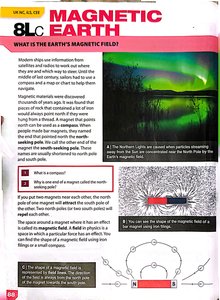
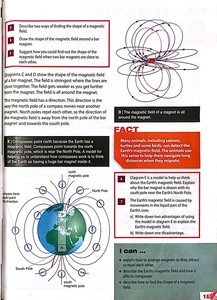
Earth acts like a giant bar magnet, with a magnetic field generated by the motion of molten iron in its outer core. This field protects the planet from solar wind and cosmic radiation, and is responsible for phenomena such as the aurora borealis (Northern Lights).
Magnetic Poles: The points on Earth's surface where the magnetic field is vertical.
Field Lines: Invisible lines that represent the direction and strength of the magnetic field.
Gravity in Space
Universal Gravitation and Orbits
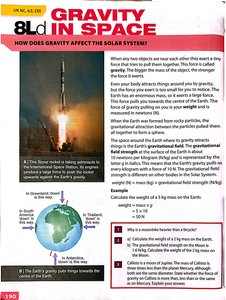
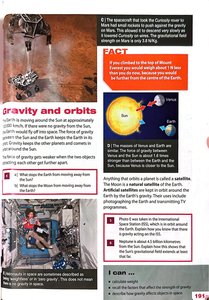
Gravity is the force of attraction between masses. It governs the motion of planets, moons, and artificial satellites. The strength of gravity depends on the masses involved and the distance between them, as described by Newton's Law of Universal Gravitation:
Orbits: Planets and moons follow elliptical paths due to the balance between gravitational attraction and their inertia.
Weight: The force of gravity acting on an object's mass. Weight varies with location (e.g., less on the Moon than on Earth).
Making Comparisons in the Solar System
Numerical and Proportional Reasoning
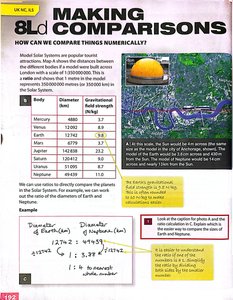
Comparing the sizes, masses, and gravitational fields of planets helps us understand their properties and the forces at work in the Solar System. Ratios, percentages, and scientific notation are useful tools for these comparisons.
Body | Diameter (km) | Gravitational Field (N/kg) |
|---|---|---|
Mercury | 4880 | 3.7 |
Venus | 12120 | 8.9 |
Earth | 12742 | 9.8 |
Mars | 6779 | 3.7 |
Jupiter | 142984 | 24.8 |
Saturn | 120536 | 10.4 |
Beyond the Solar System
Stars, Galaxies, and the Universe
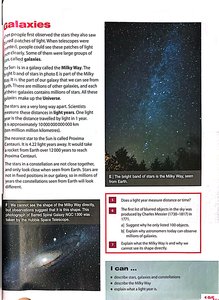
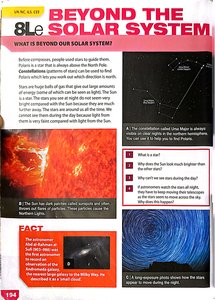
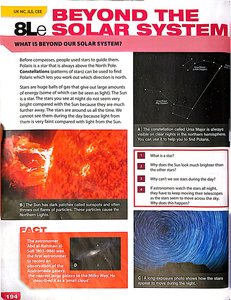
Beyond our Solar System lie billions of stars, grouped into galaxies. The Milky Way is the galaxy that contains our Solar System. Light from distant stars and galaxies takes years to reach us, allowing astronomers to study the universe's structure and history.
Galaxy: A massive system of stars, gas, and dust bound together by gravity.
Light Year: The distance light travels in one year, about 9.46 trillion kilometers.
Studying Space
Space Exploration and Its Importance
Space missions, both robotic and crewed, have expanded our knowledge of the Solar System and beyond. These missions provide data on planetary atmospheres, surfaces, and magnetic fields, and help answer fundamental questions about the origins and evolution of the universe.
Robotic Probes: Unmanned spacecraft sent to explore planets, moons, and other celestial bodies.
International Collaboration: Many missions are joint efforts between space agencies around the world.