 Indietro
Introduction to Electrostatics: Charge, Materials, and Coulomb’s Law
Guida di studio - Note intelligenti
 Appunti personalizzati basati sui tuoi materiali, ampliati con definizioni chiave, esempi e contesto.
Introduction to Phys 102: Electricity and Magnetism
Phys 102 builds on the foundational concepts of matter and energy from Phys 101, focusing on the behavior of charged matter, electric and magnetic fields, and their unification in electromagnetic waves. This course also introduces the basics of optics and nuclear physics.
Electrostatics: The Nature of Electric Charge
Definition and Historical Context
Electric charge (Q or q) is a fundamental property of matter, analogous to mass.
The concept of electric charge dates back to ancient Greece; the term "electric" comes from the Greek word Elektron (amber).
There are two types of charge: positive (+) and negative (−), as labeled by Benjamin Franklin.
Like charges repel, and unlike charges attract. The electric force is a fundamental interaction, similar in importance to gravity and the nuclear forces.

Origin of Electric Charge in Matter
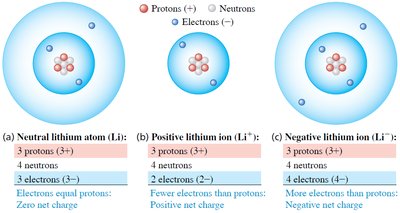
All matter is composed of atoms, which contain positively charged protons, neutral neutrons, and negatively charged electrons.
The magnitude of the electron's negative charge is exactly equal to the proton's positive charge.
Protons and neutrons are bound in the nucleus, while electrons are more loosely bound and can be transferred between atoms.
Charging an object involves adding or removing electrons, resulting in a net positive or negative charge.
Conservation of Charge
The total electric charge in an isolated system is conserved; charge can be transferred but not created or destroyed.
Conductors and Insulators
Material Properties and Electron Mobility
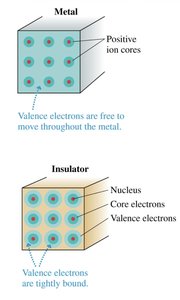
Conductors (e.g., metals like copper, silver, gold): Electrons move freely, forming a "sea of electrons" around positive ion cores. When charged, the excess charge spreads over the surface.
Insulators (e.g., rubber, wood, nylon): Electrons are tightly bound and do not move freely. Excess charge remains localized.
Charging Objects: Methods and Effects
Charging by Contact
When a charged object touches a neutral conductor, electrons redistribute, resulting in both objects sharing the total charge.

Charging by Induction
Bringing a charged object near a conductor causes electrons to move within the conductor, creating regions of positive and negative charge. If the conductor is then grounded, electrons can be added or removed, leaving the object with a net charge.


Coulomb’s Law: The Force Between Charges
Quantitative Description
Formulated by Charles Augustin de Coulomb, this law quantifies the force between two point charges.
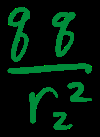
The magnitude of the force is directly proportional to the product of the charges and inversely proportional to the square of the distance between them.
Mathematical Formulation:
where is Coulomb's constant, and are the charges, and is the separation distance.
Direction and Nature of the Force
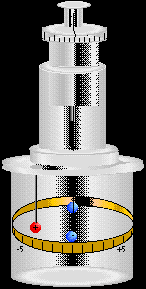
The force acts along the line joining the two charges.
If both charges are of the same sign, the force is repulsive; if opposite, the force is attractive.
The force is not constant; it changes as the distance between charges changes.
Examples and Applications
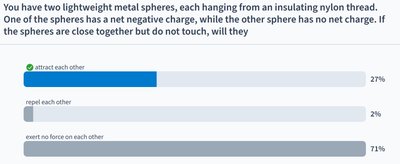
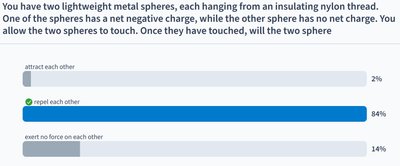
Example: Two metal spheres, one negatively charged and one neutral, will attract each other if brought close but not touching. If allowed to touch, they will share charge and then repel each other due to like charges.
Summary Table: Properties of Conductors and Insulators
Property | Conductors | Insulators |
|---|---|---|
Electron Mobility | High (free electrons) | Low (bound electrons) |
Charge Distribution | Spreads over surface | Localized |
Examples | Copper, Silver, Gold | Rubber, Wood, Nylon |
Additional info: This guide covers the foundational concepts of electrostatics, including the nature of charge, material properties, methods of charging, and Coulomb’s Law, as relevant to introductory college physics with calculus.
