 Indietro
Oscillations and Simple Harmonic Motion: Physics with Calculus Study Notes
Guida di studio - Note intelligenti
 Appunti personalizzati basati sui tuoi materiali, ampliati con definizioni chiave, esempi e contesto.
Oscillations and Simple Harmonic Motion
Introduction to Oscillatory Motion
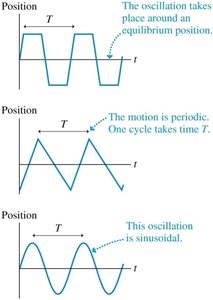
Oscillatory motion refers to any motion that repeats itself in a regular cycle, moving back and forth around an equilibrium position. Such systems are called oscillators. The study of oscillations is fundamental in physics, as it applies to mechanical systems, electrical circuits, and even quantum phenomena.
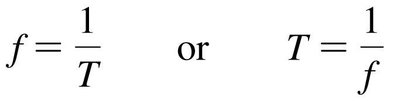
Period (T): The time required to complete one full cycle of motion.
Frequency (f): The number of cycles per second, measured in hertz (Hz). or
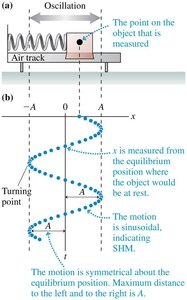
Amplitude (A): The maximum displacement from the equilibrium position.
Simple Harmonic Motion (SHM)
Simple Harmonic Motion is a specific type of oscillatory motion where the restoring force is directly proportional to the displacement and acts in the direction opposite to that of displacement. Many physical systems, such as a mass on a spring or a pendulum for small angles, exhibit SHM.
Restoring Force: , where is the spring constant and is the displacement from equilibrium.
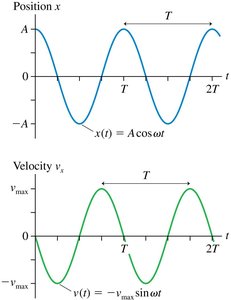
Equation of Motion: , where is the angular frequency and is the phase constant.
Angular Frequency:
Characteristics of SHM
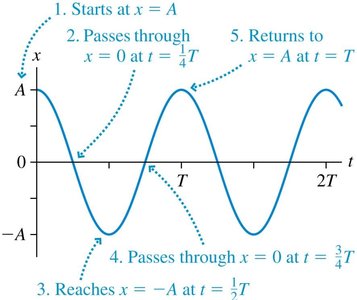
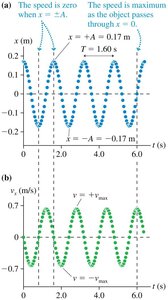
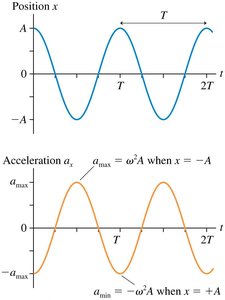
Sinusoidal Nature: The position, velocity, and acceleration of an object in SHM are sinusoidal functions of time.
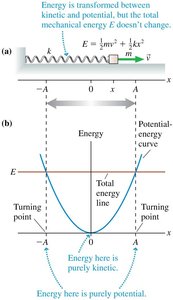
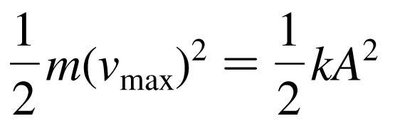
Turning Points: The velocity is zero at maximum displacement (), and the speed is maximum at the equilibrium position ().
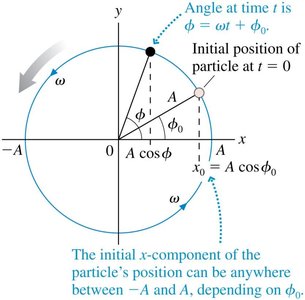
Phase Constant (): Determines the initial position and direction of motion at .
Relationship to Circular Motion
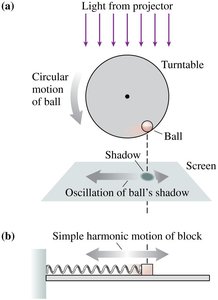
Simple harmonic motion can be visualized as the projection of uniform circular motion onto one axis. The phase of the SHM corresponds to the angular position of the particle in circular motion.
Energy in Simple Harmonic Motion
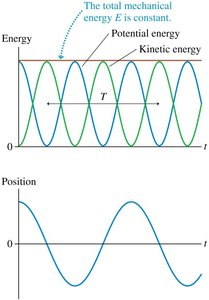
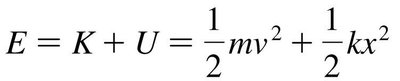
In SHM, energy oscillates between kinetic and potential forms, but the total mechanical energy remains constant (in the absence of non-conservative forces).
Kinetic Energy (K):
Potential Energy (U):
Total Mechanical Energy (E):
Frequency and Period of SHM
Frequency:
Period:
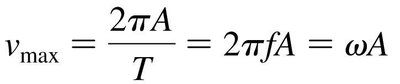
Maximum Speed:
Dynamics of SHM
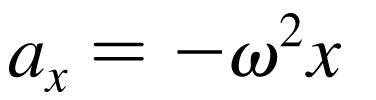
The acceleration in SHM is always directed toward the equilibrium position and is proportional to the displacement:
From Newton's Second Law:

Vertical Oscillations
When a mass hangs from a vertical spring, the equilibrium position is shifted due to gravity, but the period and frequency of oscillation remain the same as in the horizontal case:
The Simple Pendulum
A simple pendulum consists of a mass attached to a string of length . For small angles (), the motion approximates SHM:
Period:
Frequency:
Damped Oscillations
In real systems, energy is gradually lost due to non-conservative forces such as friction or air resistance. This leads to damped oscillations, where the amplitude decreases over time.
Damping Force: , where is the damping constant.
Energy Decay: , where is the time constant.
Driven Oscillations and Resonance
When an external periodic force drives an oscillator, the system can exhibit resonance if the driving frequency matches the natural frequency, resulting in large amplitude oscillations. Damping affects the sharpness and height of the resonance peak.
Resonance: Maximum amplitude occurs when .
Damping: Reduces the amplitude and broadens the resonance curve.
Summary Table: Key Equations in SHM
Quantity | Equation |
|---|---|
Restoring Force | |
Position | |
Velocity | |
Acceleration | |
Angular Frequency | |
Period | |
Frequency | |
Total Energy |
