 Indietro
Chapter 2: Acute Angles and Right Triangles – Trigonometric Functions and Applications
Guida di studio - Note intelligenti
 Appunti personalizzati basati sui tuoi materiali, ampliati con definizioni chiave, esempi e contesto.
Chapter 2: Acute Angles and Right Triangles
2.1 Trigonometric Functions of Acute Angles
Trigonometric functions are defined using the ratios of sides in a right triangle. These functions are foundational for understanding angles and their relationships in mathematics and applications.
Right-Triangle-Based Definitions: For an acute angle A in a right triangle, the primary trigonometric functions are defined as follows:
Sine (sin A): Ratio of the length of the side opposite angle A to the hypotenuse.
Cosine (cos A): Ratio of the length of the side adjacent to angle A to the hypotenuse.
Tangent (tan A): Ratio of the length of the side opposite angle A to the side adjacent to angle A.
Cosecant (csc A): Reciprocal of sine.
Secant (sec A): Reciprocal of cosine.
Cotangent (cot A): Reciprocal of tangent.
Key Terms: side opposite, side adjacent, hypotenuse, cofunctions
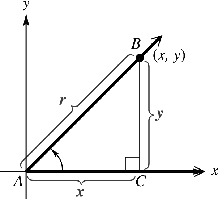
Example: In a right triangle with sides x, y, and hypotenuse r, for angle A:
Cofunctions: Cofunctions are pairs of trigonometric functions where the function of an angle is equal to the cofunction of its complement. For any acute angle A:
How Function Values Change: As angle A increases from to , increases while decreases.
Trigonometric Function Values of Special Angles: The values for , , and are especially important and can be derived from special right triangles.
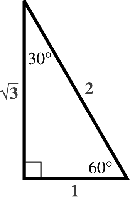
Example: For a angle in a triangle with sides 1, , and 2:
2.2 Trigonometric Functions of Non-Acute Angles
Trigonometric functions can be extended to non-acute angles using reference angles and the unit circle.
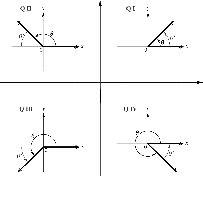
Reference Angle: The reference angle for a given angle is the positive acute angle formed by the terminal side of the angle and the x-axis.
Special Angles as Reference Angles: Special angles such as , , and are often used as reference angles to find trigonometric values for other angles.
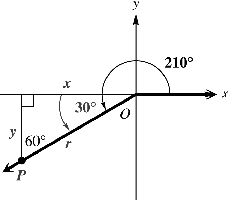
Example: To find the trigonometric values for :
Reference angle is (since ).
Use the signs appropriate for Quadrant III.
2.3 Approximations of Trigonometric Function Values
Calculators are used to approximate trigonometric function values and angle measures. It is important to ensure the calculator is set to the correct mode (degrees or radians) based on the problem context.
Calculator Approximations: Use the calculator to find values such as or to a specified number of decimal places.
Inverse Trigonometric Functions: To find an angle given a trigonometric value, use the inverse functions , , or .
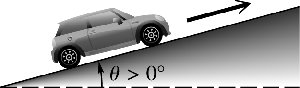
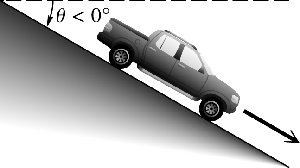
Application Example: Grade resistance for vehicles on an incline is modeled by , where is the weight and is the grade angle.
2.4 Solutions and Applications of Right Triangles
Solving right triangles involves finding all unknown sides and angles using trigonometric ratios. Applications include measuring heights, distances, and angles of elevation or depression.
Significant Digits: Answers should be rounded appropriately based on the given data, typically to the nearest degree, tenth, hundredth, or thousandth as specified.
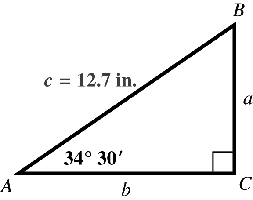
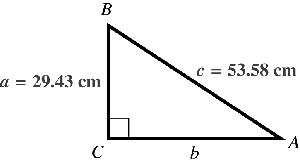
Solving Triangles: Use given sides and angles to find unknowns using trigonometric functions.
Angles of Elevation and Depression: The angle of elevation is measured upward from the horizontal, while the angle of depression is measured downward from the horizontal.
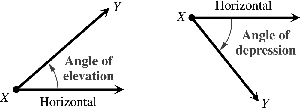
Example: To find the height of a flagpole given the distance from the base and the angle of elevation, use .
2.5 Further Applications of Right Triangles
Right triangle trigonometry is used in navigation, surveying, and other real-world applications. Bearings and the subtense bar method are two such applications.
Bearing (Method 1): Bearing is measured clockwise from due north. For example, a bearing of means $32^\circ$ east of north.
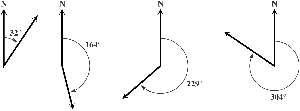
Example: To find the distance from a radar station to a plane using bearings from two stations, apply the Law of Sines or Law of Cosines as appropriate.
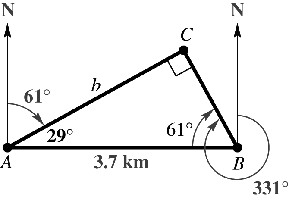
Bearing (Method 2): Bearing is expressed as N or S, followed by an acute angle, then E or W (e.g., N E).
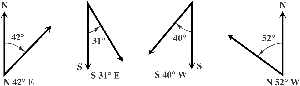
Further Applications: The subtense bar method is used in surveying to measure distances indirectly using trigonometry.
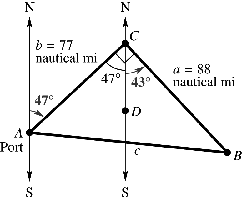
Example: To find the height of a tree using two angles of elevation from different points, set up two right triangles and solve using trigonometric ratios.
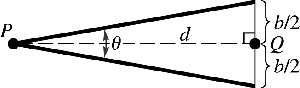
Additional info: These notes cover the essential concepts of right triangle trigonometry, including definitions, special angles, reference angles, calculator use, and practical applications such as navigation and surveying. All images included are directly relevant to the explanations provided.
