 Indietro
Introduction to Psychology: Foundations, Perspectives, and Careers
Guida di studio - Note intelligenti
 Appunti personalizzati basati sui tuoi materiali, ampliati con definizioni chiave, esempi e contesto.
Introduction to Psychology
What is Psychology?
Psychology is the scientific study of behavior and mental processes. Psychologists aim to describe, predict, and explain human behavior and mental processes using scientific methods. These include not only observable actions but also thoughts, emotions, perceptions, reasoning, memories, and biological activities that maintain bodily functioning.
Behavior: Any observable action made by a living person or animal.
Mental processes: Internal experiences such as thoughts, feelings, and motives.
Psychologists use empirical research to test ideas and challenge common misconceptions about human behavior.
Psychologists at Work
Major Specialties in Psychology
Psychology is a diverse field with many subfields, each focusing on different aspects of behavior and mental processes:
Behavioral genetics: Studies the influence of genetics on behavior.
Behavioral neuroscience: Examines how the brain and nervous system affect behavior.
Clinical psychology: Focuses on diagnosing and treating psychological disorders.
Clinical neuropsychology: Investigates the biological origins of psychological disorders.
Cognitive psychology: Studies higher mental processes such as thinking, memory, and problem-solving.
Counseling psychology: Helps people with educational, social, and career adjustment problems.
Developmental psychology: Examines growth and change across the lifespan.
Educational psychology: Studies how people learn and the best practices for teaching.
Environmental psychology: Explores the relationship between people and their physical environment.
Evolutionary psychology: Investigates how behavior is shaped by evolutionary processes.
Experimental psychology: Researches basic psychological processes such as sensation, perception, and learning.
Forensic psychology: Applies psychology to legal issues.
Health psychology: Studies how psychological factors affect health and illness.
Industrial/organizational psychology: Examines workplace behavior.
Personality psychology: Investigates individual differences and personality traits.
Program evaluation: Assesses the effectiveness of programs and interventions.
Psychology of women: Focuses on issues relevant to women’s experiences.
School psychology: Supports students’ learning and well-being in educational settings.
Social psychology: Studies how people are influenced by others.
Sport psychology: Applies psychology to athletic performance and exercise.
Where Do Psychologists Work?
Psychologists are employed in a variety of settings, including academic institutions, private practice, hospitals, clinics, government agencies, businesses, schools, prisons, and the military. Most work in academic or professional service settings, but their roles are diverse.
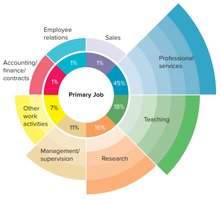
Table: Primary Jobs of Psychologists (PhD or PsyD)
Primary Job | Percentage (%) |
|---|---|
Professional services | 45 |
Teaching | 18 |
Research | 16 |
Management/Supervision | 11 |
Other work activities | 7 |
Accounting/Finance/Contracts | 1 |
Employee relations | 1 |
Sales | 1 |
Demographics of Psychologists
Women now outnumber men in psychology, but disparities remain in salaries and high-status positions.
Only 14% of active psychologists are from racial minority groups, leading to underrepresentation and fewer culturally diverse perspectives in the field.
Education and Careers in Psychology
Most psychologists hold a doctorate (PhD or PsyD).
PhD: Emphasizes research and original investigation.
PsyD: Focuses on clinical practice and treatment.
Psychologists are distinct from psychiatrists, who are medical doctors specializing in psychological disorders.
Psychology majors develop critical thinking, analytical skills, and strong communication abilities, preparing them for careers in social services, education, business, and government.
The Evolution of Psychology
Historical Foundations
Structuralism: Focused on uncovering the basic components of consciousness using introspection (Wilhelm Wundt).
Functionalism: Emphasized the functions of the mind and behavior in adapting to the environment (William James).
Gestalt Psychology: Proposed that the whole of perception is greater than the sum of its parts (Hermann Ebbinghaus, Max Wertheimer).
Women in Psychology: Founding Mothers
Margaret Floy Washburn: First woman to earn a PhD in psychology; studied animal behavior.
Leta Stetter Hollingworth: Early researcher in child development and women’s issues.
Mary Calkins: Studied memory; first female president of the APA.
Karen Horney: Focused on social and cultural factors in personality.
June Etta Downey: First woman to head a psychology department; studied personality traits.
Anna Freud: Advanced the treatment of abnormal behavior.
Mamie Phipps Clark: Researched racial identity in children.
Major Perspectives in Contemporary Psychology
Modern psychology is shaped by five major perspectives, each offering unique insights into behavior and mental processes.
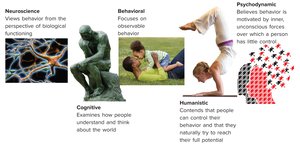
Perspective | Key Focus |
|---|---|
Neuroscience | Biological functioning and the brain |
Cognitive | Thinking, understanding, and information processing |
Behavioral | Observable behavior and learning |
Humanistic | Personal growth, free will, and self-actualization |
Psychodynamic | Unconscious motives and inner conflicts |
Neuroscience Perspective: Examines behavior through the brain, nervous system, and biological processes.
Psychodynamic Perspective: Focuses on unconscious motives and internal conflicts (Sigmund Freud).
Behavioral Perspective: Emphasizes observable, measurable behavior (John B. Watson, B.F. Skinner).
Cognitive Perspective: Studies mental processes such as thinking, memory, and problem-solving.
Humanistic Perspective: Highlights free will, personal growth, and the pursuit of self-actualization (Carl Rogers, Abraham Maslow).
Key Issues and Controversies in Psychology
Nature vs. Nurture
Debates whether behavior is primarily determined by genetics (nature) or environment (nurture). Most psychologists recognize an interaction between both factors.
Conscious vs. Unconscious Causes of Behavior
Explores the extent to which behavior is driven by conscious awareness versus unconscious processes.
Observable Behavior vs. Internal Mental Processes
Considers whether psychology should focus only on observable actions or also include internal mental activities.
Free Will vs. Determinism
Free will: Behavior is primarily the result of individual choices.
Determinism: Behavior is shaped by factors outside of conscious control.
Individual Differences vs. Universal Principles
Examines whether behavior is best understood by focusing on unique individual traits or universal principles that apply to all humans.
The Future of Psychology
Increasing specialization within the field.
Greater influence of neuroscience on other branches.
Growing impact on public policy and societal issues.
Stricter ethical and moral guidelines for research and practice.
Enhanced public understanding of psychology.
Increased emphasis on diversity and inclusion.
