 Indietro
Introduction to Psychology: Historical Foundations and Scientific Thinking
Guida di studio - Note intelligenti
 Appunti personalizzati basati sui tuoi materiali, ampliati con definizioni chiave, esempi e contesto.
Introduction to Psychology
Brief History of Psychology
Psychology originated as a branch of philosophy, with early thinkers pondering the relationship between the mind and body. The term itself is derived from the Greek words "psyche" (soul or breath) and "logia" (study or research). Ancient philosophers such as Plato, Socrates, and Aristotle laid the groundwork for psychological inquiry by exploring the origins of ideas, the essence of life, and the nature of mental processes.
Plato and Socrates: Proposed that some ideas are innate and originate from the soul, influencing identity and preferences. Socrates is known for the Socratic dialogue, a method of questioning to stimulate critical thinking.
Aristotle: Emphasized naturalistic observation of mental life, including dreams, memory, and sleep, and believed in the presence of the psyche as the essence of life.
Hippocrates’ Temperaments
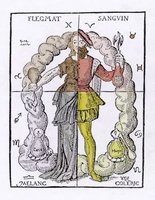
Hippocrates introduced a biological approach to understanding personality by categorizing people into four temperaments, each associated with bodily fluids (humors):
Sanguine: Cheerful and active
Melancholic: Sad
Choleric: Angry and aggressive
Phlegmatic: Calm and passive
He theorized that the balance of these humors influenced individual temperament and behavior.
Galen
Galen, a Greek physician, expanded on Hippocrates' ideas and proposed that the brain is the seat of thoughts and emotions, furthering the biological perspective in psychology.
Buddhist and Confucian Philosophy
Eastern philosophies, such as Buddhism and Confucianism, emphasized the interconnectedness of mind and body and the influence of nature and environment on human development.
St. Augustine of Hippo and Thomas Aquinas
St. Augustine: Integrated Platonic ideas with Christian theology, bringing psychological thought to Europe.
Thomas Aquinas: Combined Aristotelian rationalism with church doctrine, influencing medieval perspectives on the mind.
Medieval Age and Early Treatments
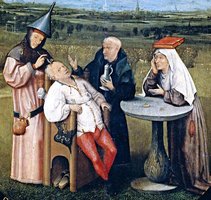
During the medieval period, mental health issues were poorly understood, often resulting in inhumane treatments such as confinement in dungeons, trepanning (drilling holes in the skull to release 'evil spirits'), and accusations of witchcraft.
Philosophical Developments
Rene Descartes: Proposed mind-body dualism, the idea that the mind and body are separate entities.
John Locke: Introduced the concept of "tabula rasa" (blank slate), suggesting that knowledge comes from experience.
David Hume: Argued that the mind is a product of sensory experiences.
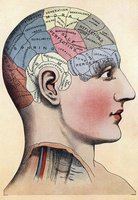
Franz Joseph Gall: Developed phrenology, the (now discredited) study of skull shapes to determine mental traits.
19th Century to Modern Psychology
Wilhelm Wundt: Conducted the first psychological experiment and founded structuralism, focusing on the structure of conscious experience.
William James: Founded functionalism, emphasizing the functions of mental processes.
Emil Kraepelin: Classified mental disorders such as schizophrenia and depression.
Sigmund Freud: Developed psychoanalysis, positing that unconscious factors drive behavior.
Modern Approaches: Humanistic, cognitive, and behavioral psychology emerged, each offering unique perspectives on mental processes and behavior.
Psychology as a Science
Definition and Scope
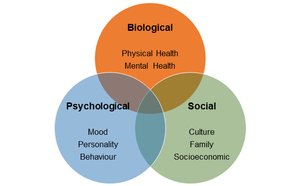
Psychology is formally defined as the scientific study of mental processes and behavior in organisms. It employs empirical methods to investigate how biological, psychological, and social factors interact to shape behavior.
Three Levels of Analysis:
Biological: Physical and mental health
Psychological: Mood, personality, behavior
Social: Culture, family, socioeconomic status
Distinctiveness of Psychology
Multiply Determined Behavior: Human behavior is influenced by multiple factors (equifinality), not just single causes.
Interdependence: Psychological, biological, and social factors interact (e.g., anorexia nervosa involves all three).
Reciprocal Determinism: People influence and are influenced by each other (Albert Bandura).
Cultural Differences: Emic (within-group) and etic (across-group) approaches help study cultural influences on behavior.
Common Sense vs. Scientific Inquiry
While common sense can sometimes be accurate, it is often misleading due to biases such as naïve realism (believing the world is exactly as we perceive it). Examples include historical beliefs like the earth being flat or the center of the universe.

Empiricism and the Scientific Method
Empiricism: Knowledge is based on systematic observation and evidence.
Scientific Theory: A well-substantiated explanation based on multiple lines of evidence.
Hypothesis: A testable prediction derived from a theory.
Common misconceptions include the belief that theories explain only specific events or are mere guesses.
Safeguards Against Bias
Confirmation Bias: The tendency to seek out information that confirms our beliefs while ignoring contradictory evidence.
Belief Perseverance: Clinging to initial beliefs even when faced with disconfirming evidence.
Tasks like the Wason selection task illustrate how people often fail to test hypotheses logically.

Metaphysical Claims and Scientific Humility
Metaphysical claims (e.g., religious or supernatural explanations) are beyond the scope of scientific testing. Recognizing the limits of current knowledge and being open to new evidence is essential for scientific progress. As Carl Sagan noted, even the best scientists must admit, "But I might be wrong."
Summary Table: Major Historical Approaches in Psychology
Approach | Key Figures | Main Ideas |
|---|---|---|
Structuralism | Wilhelm Wundt | Analyzing the structure of conscious experience |
Functionalism | William James | Understanding the functions of mental processes |
Psychoanalysis | Sigmund Freud | Unconscious motives drive behavior |
Behaviorism | John B. Watson, B.F. Skinner | Focus on observable behavior |
Humanistic Psychology | Carl Rogers, Abraham Maslow | Emphasis on human growth and potential |
Cognitive Psychology | Ulric Neisser, Jean Piaget | Study of mental processes such as thinking and memory |
Additional info: This guide covers foundational concepts from the history and philosophy of psychology, the scientific method, and the importance of critical thinking in psychological science. It is suitable for exam preparation in an introductory psychology course.
