 Indietro
Introduction to Psychology: Scientific Methods and Research Design
Guida di studio - Note intelligenti
 Appunti personalizzati basati sui tuoi materiali, ampliati con definizioni chiave, esempi e contesto.
Introduction to Psychology and Scientific Thinking
Science, Pseudoscience, and Critical Thinking
Psychology as a science relies on systematic methods to understand human behavior and mental processes. Distinguishing science from pseudoscience is crucial for developing accurate knowledge and avoiding misinformation.
Science uses empirical evidence, systematic observation, and critical thinking to draw conclusions.
Pseudoscience refers to beliefs or practices mistakenly regarded as being based on the scientific method.
Warning signs of pseudoscience include exaggerated claims, lack of peer review, and reliance on anecdotes.
Humans are drawn to pseudoscience due to cognitive biases and heuristics, such as the affect heuristic (relying on emotions rather than evidence) and logical fallacies.
Scientific thinking involves skepticism, openness to evidence, and the ability to distinguish between correlation and causation.
Psychology and artificial intelligence are interconnected fields, both relying on systematic research to advance understanding.
Great debates of psychology (e.g., nature vs. nurture) illustrate the importance of evidence-based reasoning.
Application: Psychological science impacts everyday life, from health decisions to social interactions.
Theoretical Frameworks and Research Questions
Challenging Assumptions and the Need for Research Design
Psychological research often challenges our intuitions and assumptions about human behavior. Well-designed research is necessary to answer complex questions and avoid errors in reasoning.
Intuitions about the mind are often inaccurate; systematic research helps correct these errors.
Correlation does not imply causation; experiments are needed to establish cause-and-effect relationships.
Statistical significance does not always mean practical significance; both must be considered in interpreting results.
Case Studies in Research Errors
Facilitated Communication
Facilitated communication was developed as a method to help individuals with autism communicate, but research revealed that facilitators, not the individuals, were producing the messages. This case highlights the importance of rigorous research design and replication.
Initial claims were not supported by controlled studies.
Replication studies showed the method was ineffective and potentially harmful.
Illustrates the dangers of ignoring scientific evidence.


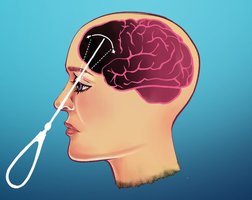
Prefrontal Lobotomy
The prefrontal lobotomy was once considered an effective treatment for mental illness, but later research demonstrated its ineffectiveness and harm. This case underscores the necessity of rigorous scientific evaluation before adopting new treatments.
Developed by Egas Moniz; initially celebrated but later discredited.
Demonstrates the importance of replication and critical scrutiny in science.
Modes of Thinking and Heuristics
System 1 and System 2 Thinking
Humans use two primary modes of thinking: intuitive (System 1) and analytical (System 2). While intuitive thinking is fast and automatic, it is prone to errors; analytical thinking is slower but more accurate.
System 1 (Intuitive): Quick, automatic, relies on heuristics (mental shortcuts).
System 2 (Analytical): Deliberate, effortful, logical reasoning.
Heuristics can lead to mistakes, such as overreliance on hunches.
Example: Learning to drive initially requires analytical thinking but becomes intuitive with practice.
The Scientific Method in Psychology
Key Features and Importance
The scientific method is a systematic approach to inquiry, involving observation, hypothesis formation, experimentation, and analysis. It is essential for reducing bias and increasing the reliability of findings.
Random selection increases the generalizability of results.
Sample size and representativeness are crucial for accurate conclusions.
Evaluating Psychological Measures
Reliability and Validity
Reliable and valid measures are essential for sound psychological research.
Reliability: Consistency of a measure (e.g., test-retest reliability).
Validity: The extent to which a measure assesses what it claims to measure.
Not all reliable tests are valid, and vice versa.
Openness and Replicability in Science
The Open Science Movement
Transparency and replicability are foundational to scientific progress. The open science movement encourages sharing data, replication studies, and publishing all sound research, regardless of outcome.
Replicability: Ability to duplicate findings in new studies.
Reproducibility: Ability to reanalyze data and obtain the same results.
Ethical responsibility to share findings and reduce emphasis on single studies.
Research Methods in Psychology
Naturalistic Observation
Naturalistic observation involves studying behavior in real-world settings without manipulation. It provides high external validity but low internal validity.
Used to observe genuine behavior (e.g., studies of laughter in public places).
Technological advances have improved data collection.
Awareness of being observed can alter behavior (observer effect).
Case Study Designs
Case studies involve in-depth analysis of individuals or small groups over time. They provide existence proofs but may lack generalizability.
Useful for rare or unique phenomena.
Cannot establish cause and effect.
Self-Report Measures and Surveys
Self-report measures assess characteristics such as personality and interests. They are easy to administer but can be affected by biases.
Advantages: Efficient, meaningful results.
Disadvantages: Response biases, lack of self-awareness, malingering.
Halo effect: Positive impressions in one area influence ratings in others.
Correlational Designs
Correlational studies examine the relationship between variables but cannot establish causation.
Correlation coefficients indicate the strength and direction of relationships.
Scatterplots visually represent correlations.
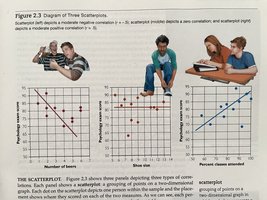
Illusory correlation: Perceiving a relationship where none exists (e.g., full moon and strange behavior).
Experimental Designs
Experiments allow researchers to establish cause-and-effect relationships by manipulating independent variables and randomly assigning participants to groups.
Independent variable: Manipulated by the researcher.
Dependent variable: Measured outcome.
Random assignment: Ensures groups are comparable.
Between-subjects design: Compares different groups.
Within-subjects design: Measures the same participants under different conditions.
Confounds: Uncontrolled variables that can affect results.

Pitfalls in Experimental Design
Several factors can bias experimental results, including the placebo effect, experimenter expectancy effect, and demand characteristics.
Placebo effect: Improvement due to expectation alone.
Nocebo effect: Harm due to expectation of harm.
Double-blind studies: Both participants and experimenters are unaware of group assignments to reduce bias.

Ethical Issues in Research
Ethical guidelines protect participants in psychological research. Key principles include informed consent, debriefing, and minimizing harm. Historical abuses, such as the Tuskegee Syphilis Study, highlight the importance of ethics.
Informed consent: Participants must be fully informed about the study.
Debriefing: Participants are educated about the study after participation.
Special considerations for animal research and cultural differences.

Statistics in Psychological Research
Descriptive and Inferential Statistics
Statistics are essential for summarizing data and testing hypotheses in psychology.
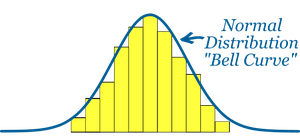
Descriptive statistics: Summarize data (mean, median, mode, range).
Inferential statistics: Test hypotheses and determine statistical significance (e.g., p < .05).
Meta-analysis: Combines results from multiple studies for a comprehensive view.
Peer review ensures research quality before publication.
Application: ESP and Psychic Abilities
Scientific Evaluation of Extraordinary Claims
Claims of extrasensory perception (ESP) are divided into precognition, telepathy, and clairvoyance. Scientific evidence does not support the existence of ESP, and belief in such phenomena is often due to illusory correlation and cognitive biases.
Cold reading: Technique used by psychics to appear knowledgeable about strangers.
Critical thinking and scientific methods are essential for evaluating extraordinary claims.
Summary and Next Steps
This chapter introduced the foundations of psychological science, emphasizing the importance of research design, critical thinking, and ethical considerations. The next topic will focus on biological and evolutionary psychology.
