 Indietro
Introduction to Psychology: Scientific Thinking and Foundations
Guida di studio - Note intelligenti
 Appunti personalizzati basati sui tuoi materiali, ampliati con definizioni chiave, esempi e contesto.
Course Overview and Structure
Welcome to PSY 101
This course provides an introduction to the scientific study of psychology, focusing on the mind, brain, and behavior. Students will explore foundational concepts, research methods, and the application of psychological principles to everyday life.
Instructor: Dr. Sonia Kong
Textbook: Lilienfeld, S. O., Lynn, S. J., Namy, L. L., Cramer, K. M., & Schmaltz, R. (2022). Psychology: From Inquiry to Understanding, Fifth Canadian Edition.
Course Materials: Chapters 1-8 of the e-textbook and lecture slides
Evaluation: Four exams, each covering two chapters (Midterms 1-3 and Final, each worth 25%)
What is Psychology?
Definition and Scope
Psychology is the scientific study of the mind, brain, and behavior. It seeks to understand individuals and groups by establishing general principles and researching specific cases.
Levels of Analysis: Psychology examines phenomena from multiple perspectives, including biological, psychological, and social-cultural levels.
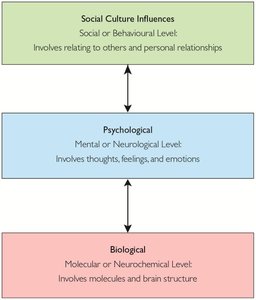
Biological Level: Focuses on molecules, neurochemistry, and brain structure. Psychological Level: Involves thoughts, feelings, and emotions. Social-Cultural Level: Involves relationships and social influences.
Five Main Challenges in Psychology
Psychology is a complex science due to several unique challenges:
1. Human behavior is difficult to predict: Actions are multiply determined by various factors.
2. Psychological influences are rarely independent: Multiple factors interact to shape behavior.
3. Individual differences: People vary widely in their responses and characteristics.
4. Reciprocal determinism: People influence each other in social contexts.
5. Cultural shaping: Behavior is influenced by cultural context (emic vs. etic approaches).
Psychology and Scientific Thinking
Common Sense and Intuition
Many beliefs about human behavior are based on intuition or common sense, but these are not always reliable. Examples include proverbs and sayings that often contradict each other (e.g., "Birds of a feather flock together" vs. "Opposites attract").
Limitations of Common Sense
Naive Realism: The belief that we see the world precisely as it is ("seeing is believing").
Common sense can be misleading (e.g., the earth appears flat, but it is round).

Example: Visual illusions demonstrate that our perceptions can be inaccurate, highlighting the need for scientific investigation.
Psychology as a Science
Psychology uses scientific methods to test hypotheses and build knowledge. Science is not just a collection of facts but an approach to gathering evidence and evaluating claims.
Hypothesis: A testable prediction derived from a theory.
Scientific Theory: An explanation for a large number of findings or observations in the natural world.
Example: The hypothesis "Does sleep improve memory performance?" can be tested scientifically.
Theory vs. Hypothesis
Theory: Explains and predicts many related events; supported by evidence and subject to revision.
Hypothesis: A specific, testable prediction derived from a theory.
Misconceptions:
A theory is not just an educated guess; it is a well-supported explanation.
Theories can be revised or rejected when new evidence emerges.
Bias Awareness in Psychological Science
Types of Bias
Confirmation Bias: The tendency to seek evidence that supports our beliefs and ignore contradictory information.
Belief Perseverance: The tendency to cling to initial beliefs even when faced with disconfirming evidence.
Awareness of these biases is essential for scientific thinking and critical evaluation of evidence.
Course Logistics and Expectations
Communication and Materials
Use your official university email and include "PSY101" in the subject line for course-related communication.
Course materials and announcements are posted on Moodle; students are responsible for keeping up with all content.
Attendance is expected; if you miss a class, obtain notes and materials from classmates or Moodle.
Evaluation Structure
Grade Component | Weight |
|---|---|
Midterm 1 (Chapters 1-2) | 25% |
Midterm 2 (Chapters 3-4) | 25% |
Midterm 3 (Chapters 5-6) | 25% |
Final (Chapters 7-8) | 25% |
Instructor Philosophy
The course emphasizes not only learning psychological concepts but also applying them to real-world situations. Grades are important, but the development of critical thinking and practical skills is equally valued.
Additional info: Students are encouraged to engage with co-operative education opportunities to gain practical experience related to their degree.
