 Indietro
Sensation and Perception: Study Notes for Introduction to Psychology
Guida di studio - Note intelligenti
 Appunti personalizzati basati sui tuoi materiali, ampliati con definizioni chiave, esempi e contesto.
Chapter 4: Sensation and Perception
4.1 Sensation and Perception at a Glance
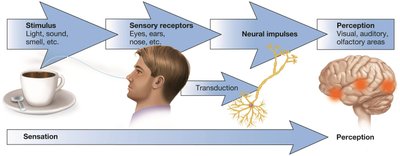
Sensation and perception are fundamental processes in psychological science, allowing us to detect and interpret stimuli from the environment. Sensation refers to the detection of physical energy by sense organs, while perception involves the interpretation of these sensory signals in the brain.
Sensation: The process by which sensory receptors and the nervous system receive and represent stimulus energies from the environment.
Perception: The process of organizing and interpreting sensory information, enabling us to recognize meaningful objects and events.
Transduction: The conversion of a stimulus into a neural impulse.
Example: Light entering the eye is detected by photoreceptors, converted to neural impulses, and interpreted as visual images in the brain.
Stimulus Thresholds
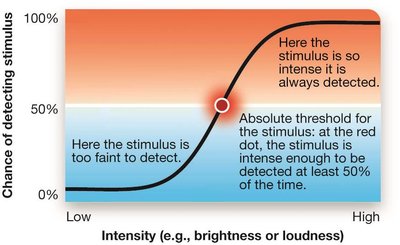
Stimulus thresholds determine the minimum level of stimulation required for detection. The absolute threshold is the lowest intensity at which a stimulus can be detected 50% of the time.
Absolute Threshold: The minimum stimulation needed to detect a particular stimulus.
Difference Threshold (Just Noticeable Difference): The smallest detectable difference between two stimuli.
Signal Detection Theory
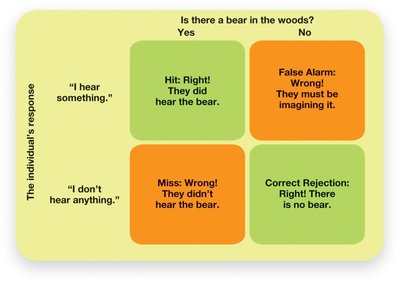
Signal detection theory explains how we discern between information-bearing patterns and random patterns that distract from the information. It considers both the presence or absence of a stimulus and the individual's response.
Hit: Correctly detecting a present stimulus.
Miss: Failing to detect a present stimulus.
False Alarm: Incorrectly detecting a stimulus that is absent.
Correct Rejection: Correctly identifying that no stimulus is present.
Gestalt Principles of Perception
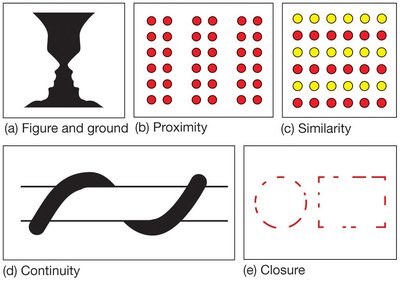
Gestalt psychology emphasizes that the whole of perception is more than the sum of its parts. Gestalt principles describe how we organize sensory information into meaningful patterns.
Figure and Ground: Distinguishing an object from its background.
Proximity: Grouping items that are close together.
Similarity: Grouping items that are similar.
Continuity: Perceiving continuous patterns.
Closure: Filling in gaps to perceive a complete object.
Top-Down and Bottom-Up Processing
Perception can occur through bottom-up processing (starting with sensory input) or top-down processing (influenced by expectations and prior knowledge).
Top-Down Processing: Perception guided by higher-level mental processes, such as expectations.
Bottom-Up Processing: Perception based on the physical features of the stimulus.
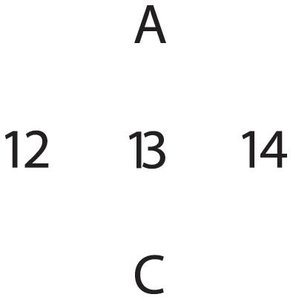

Attention and Perception
Attention is the process of focusing awareness on a particular aspect of the environment. It can be selective or divided, and inattentional blindness occurs when we fail to notice obvious stimuli.
Selective Attention: Focusing on one stimulus while ignoring others.
Divided Attention: Attending to multiple stimuli simultaneously.
Inattentional Blindness: Failure to notice visible objects when attention is directed elsewhere.
4.2 The Visual System
Light and the Electromagnetic Spectrum
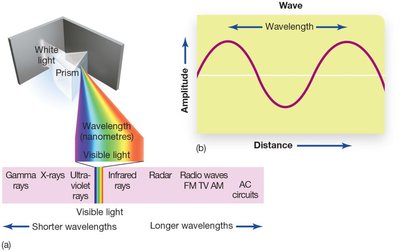
Vision begins with the detection of light, a form of electromagnetic energy. The visible spectrum is a small portion of the electromagnetic spectrum.
Wavelength: Determines the colour (hue) of light.
Amplitude: Determines brightness.
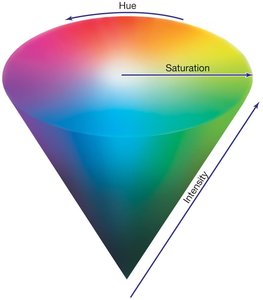
Hue, Intensity, and Saturation
Colour perception is based on three properties: hue, intensity, and saturation.
Hue: The colour itself, determined by wavelength.
Intensity: The brightness of the colour.
Saturation: The purity or vividness of the colour.
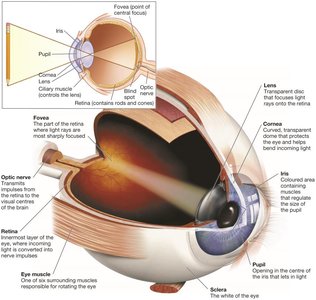
The Structure of the Eye
The eye is a complex organ that gathers and focuses light, converting it into neural signals.
Cornea: Protects the eye and bends incoming light.
Lens: Focuses light onto the retina.
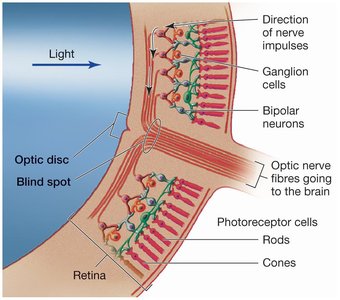
Retina: Contains photoreceptors (rods and cones).
Optic Nerve: Transmits visual information to the brain.
Blind Spot
The blind spot is an area of the retina where the optic nerve exits the eye; no photoreceptors are present, so no image is detected.

Distribution of Rods and Cones
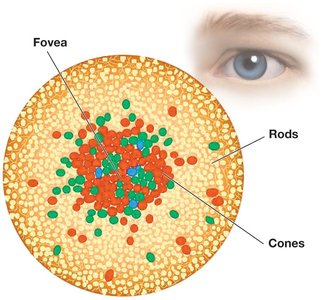
Rods and cones are distributed differently across the retina. Rods are more numerous in the periphery, while cones are concentrated at the fovea.
Rods: Sensitive to dim light, important for night vision.
Cones: Sensitive to colour and detail, important for daylight vision.
Theories of Colour Vision
Two main theories explain colour vision: the trichromatic theory and the opponent-process theory.
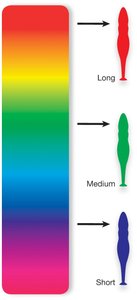
Trichromatic Theory: Three types of cones respond to short, medium, and long wavelengths.
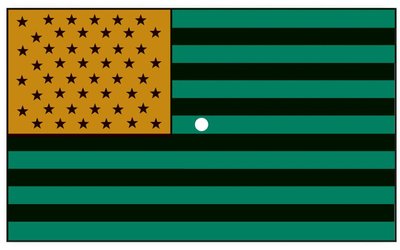
Opponent-Process Theory: Colour is perceived in terms of opposing pairs (red-green, blue-yellow).
Common Vision Disorders
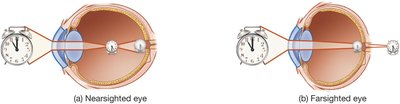
Nearsightedness (myopia) and farsightedness (hyperopia) are caused by misshapen eyes, resulting in images not being properly focused on the retina.
Visual Perception and the Brain
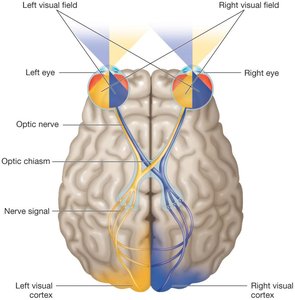
Visual information is processed in the brain through specialized pathways. The optic nerves cross at the optic chiasm, and information is routed to the visual cortex.
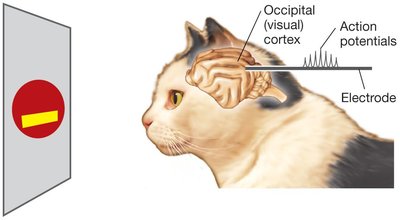
Feature Detectors: Specialized cells in the visual cortex that respond to specific features.
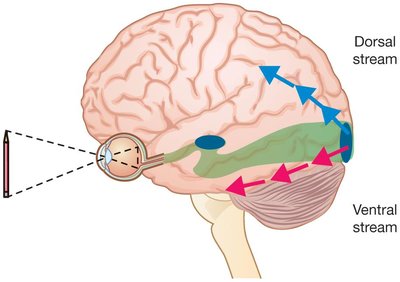
Ventral Stream: Processes object identity.
Dorsal Stream: Processes spatial location and movement.
Perceiving Faces and Objects
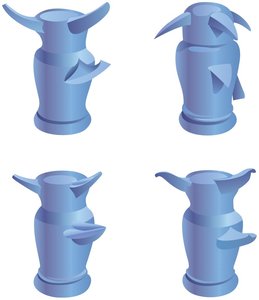
The brain has specialized regions for processing faces and objects. Expertise can develop for non-face objects, such as "Greebles," leading to increased activity in face-processing areas.

Perceptual Constancy
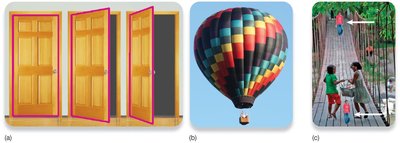
Perceptual constancy allows us to perceive objects as unchanging despite changes in sensory input.
Shape Constancy: Perceiving objects as having a constant shape.
Colour Constancy: Perceiving colours as constant under varying illumination.
Size Constancy: Perceiving objects as having a constant size.
Depth Perception
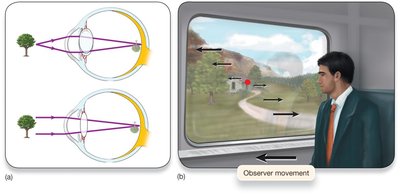
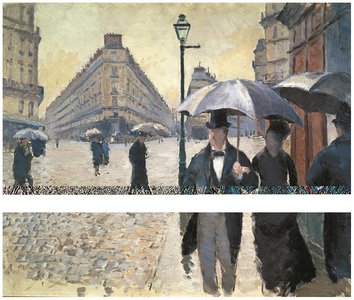
Depth perception relies on binocular and monocular cues to judge distance.
Binocular Cues: Require both eyes (e.g., convergence, retinal disparity).
Monocular Cues: Require one eye (e.g., accommodation, motion parallax).
4.3 The Auditory and Vestibular Systems
Characteristics of Sound
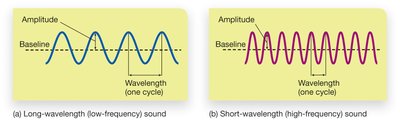
Sound is a form of energy that travels in waves. The frequency and amplitude of sound waves determine pitch and loudness.
Frequency: Number of cycles per second (Hz), determines pitch.
Amplitude: Height of the wave, determines loudness.
Hearing Ranges in Species
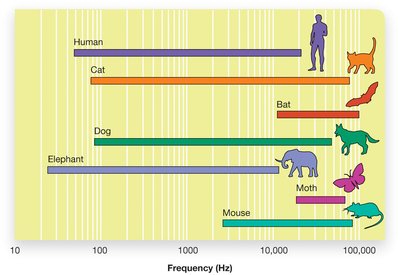
Different species have varying ranges of hearing sensitivity, measured in frequency (Hz).
The Human Ear
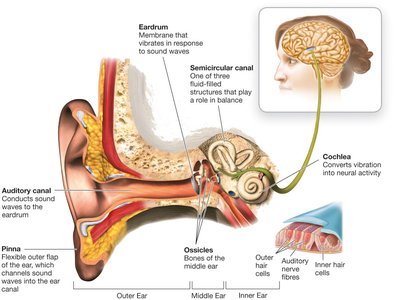
The ear is divided into three main parts: outer, middle, and inner ear. The cochlea in the inner ear is responsible for transduction of sound waves into neural impulses.
Pinna: Collects sound waves.
Eardrum: Vibrates in response to sound.
Cochlea: Contains hair cells for transduction.
Sound Localization
The brain localizes sound by comparing differences in time and loudness between the ears.
Theories of Pitch Perception
Pitch perception is explained by place theory and frequency theory.
Place Theory: Different frequencies stimulate different places on the basilar membrane.
Frequency Theory: The rate of nerve impulses matches the frequency of the sound.
Volley Principle: Neurons fire in rapid succession to encode higher frequencies.
The Vestibular System
The vestibular system helps maintain balance and spatial orientation. It consists of vestibular sacs and semicircular canals, which detect head position and movement.
4.4 Touch and the Chemical Senses
Touch Acuity
Touch acuity varies across the body, with some regions more sensitive than others. The two-point threshold device measures this sensitivity.
Kinesthesis
Kinesthesis is the sense of body movement and position, provided by receptors in muscles and joints.
Pain Perception
Pain is detected by free nerve endings near the skin's surface. The gate-control theory explains how pain signals are modulated in the spinal cord.
Gate-Control Theory: Pain signals can be blocked or allowed by neural mechanisms in the spinal cord.
The Gustatory System: Taste
Taste is detected by taste buds located on papillae on the tongue. Individual differences in taste sensitivity exist, such as "supertasters" with more taste buds.
The Olfactory System: Smell
Smell is detected by cilia lining the olfactory epithelium, which send signals to the olfactory bulb.
Multimodal Integration
Multimodal integration refers to the combination of information from different sensory modalities into a unified perception. For example, flavour is a combination of taste and smell. Phenomena such as the McGurk Effect and synesthesia illustrate this integration.
McGurk Effect: Visual and auditory information combine to alter perception of speech.
Synesthesia: Stimulation of one sensory pathway leads to automatic, involuntary experiences in a second pathway.
