 Indietro
Introduction to Criminal Justice: Media, Institutions, and Models of Social Control
Guida di studio - Note intelligenti
 Appunti personalizzati basati sui tuoi materiali, ampliati con definizioni chiave, esempi e contesto.
Crime in the United States and Media Representation
Media Portrayal of Crime
The media plays a significant role in shaping public perceptions of crime in the United States. Crime is a frequent subject in television shows, news, and entertainment, often focusing on sensational or extraordinary cases rather than the more common, everyday crimes.
Sensationalism: Media coverage tends to highlight rare, violent, or high-profile crimes, which can distort public understanding of the true nature and frequency of crime.
Public Concern: Because of this focus, crime remains a top concern for many Americans, even though the crimes most people experience or fear are often less dramatic than those depicted in the media.
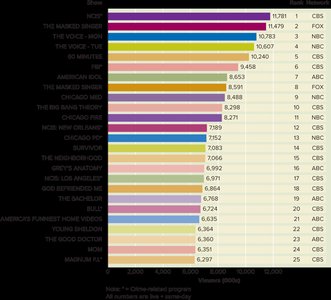
Media Consumption: Studies show that Americans spend significant time watching television, with older adults consuming more TV than younger adults.
Example: High-profile cases such as mass shootings or celebrity trials receive extensive coverage, while routine crimes receive less attention.
Reality of Crime and Police Work
Most crimes handled by police are not the sensational cases seen in the media. Routine police work involves a wide range of calls, many of which do not involve criminal activity at all.
Common Police Calls: The most frequent calls include unwanted persons, welfare checks, disturbances, and thefts.
Serious Crimes: Serious crimes such as robbery, domestic violence, and arson make up a small percentage of total police calls.
Example: In Portland, Oregon, unwanted person calls accounted for 11.6% of all police service calls, while robbery was only 0.4%.
Police Calls | Percentage |
|---|---|
Unwanted person | 11.6% |
Welfare check | 11.3% |
Disturbance | 10.6% |
Suspicious | 8.2% |
Theft | 7.4% |
Collision | 5.4% |
Alarm | 4.9% |
Stolen vehicle | 4.3% |
Area/premise check | 4.0% |
Assist | 3.9% |
Assault | 2.6% |
Threat | 2.1% |
Behavioral health | 2.0% |

Institutions of Social Control
Definition and Role
Institutions of social control are societal structures that influence individuals to conform to the dominant values and norms of society. These include the family, schools, organized religion, the media, the law, and the criminal justice system.
Subtle Means: Gossip and peer pressure.
Formal Means: Expulsion from school, incarceration, or legal penalties.
Criminal Justice: Functions as society’s “last line of defense” when other institutions fail to control deviant behavior.
The Criminal Justice System
Structure and Process
The criminal justice system in the United States is a complex network of more than 50,000 agencies at the federal, state, and local levels. It includes three main components: police, courts, and corrections.
Police: Responsible for investigating crimes, making arrests, and booking suspects.
Courts: Handle the prosecution, defense, and adjudication of criminal cases, including pretrial hearings, trials, and sentencing.
Corrections: Manage the punishment and rehabilitation of convicted offenders, including probation, imprisonment, and parole.
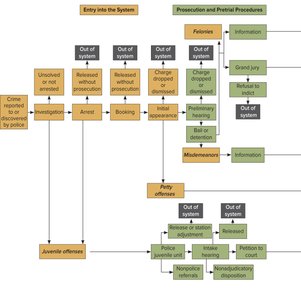
Key Stages in the Criminal Justice Process
Investigation and Arrest: Police investigate crimes and arrest suspects when there is sufficient evidence.
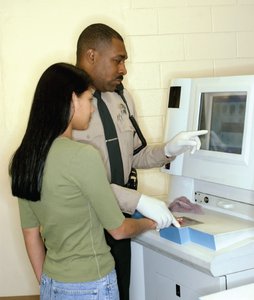
Booking: Administrative recording of the arrest, including fingerprinting and photographing the suspect.
Charging: Prosecutors decide whether to file charges based on available evidence.
Initial Appearance: The defendant is informed of the charges and rights.
Preliminary Hearing/Grand Jury: Determines if there is probable cause to proceed.
Arraignment: The defendant enters a plea.
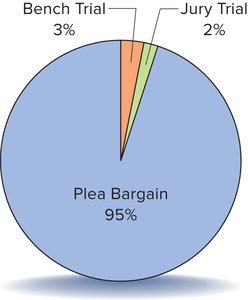
Plea Bargaining: Most cases are resolved through plea bargains rather than trials.
Trial: If the defendant pleads not guilty, the case goes to trial (jury or bench trial).
Sentencing: If found guilty, the judge imposes a sentence.
Appeals: Defendants may appeal convictions on legal or constitutional grounds.
Corrections: Offenders serve sentences, may be eligible for parole, and are eventually released.
Criminal Justice as a Nonsystem
Fragmentation and Independence
Although often referred to as a system, criminal justice in the United States is more accurately described as a "nonsystem" due to its fragmented structure and the independent operation of its many agencies.
Loose Confederation: Agencies operate independently, often with conflicting goals and procedures.
Checks and Balances: Conflicts among agencies can serve as checks and balances, ensuring adherence to constitutional principles.
Juvenile Justice: Juvenile offenders are often processed separately, with special considerations for confidentiality and rehabilitation.

Models of Criminal Justice: Crime Control vs. Due Process
Crime Control Model
The crime control model prioritizes the efficient detection and prosecution of crime, emphasizing speed, uniformity, and finality. It is associated with traditional conservative values.
Efficiency: Focus on quickly processing cases, often through plea bargaining.
Presumption of Guilt: Assumes that those arrested and charged are likely guilty.
Assembly-Line Justice: Cases are handled uniformly to maximize efficiency.

Due Process Model
The due process model emphasizes the protection of individual rights and the prevention of government abuse. It is associated with traditional liberal values.
Protection of the Innocent: Prioritizes safeguarding the rights of suspects and defendants.
Presumption of Innocence: Individuals are considered innocent until proven guilty in a fair trial.
Obstacle-Course Justice: The process is deliberately slow and careful to prevent errors and protect rights.
Legal Guilt: Requires both factual and procedural correctness for a conviction.
Costs of Criminal Justice
Expenditures and Distribution
Criminal justice is a significant but not dominant area of government spending in the United States. In 2016, $284 billion was spent on police protection, judicial/legal services, and corrections.
Police Protection: 48% of total spending, primarily at the local level.
Judicial/Legal Services: 22% of total spending, split between state and local governments.
Corrections: 30% of total spending, primarily at the state level.
Federal Role: The federal government spends strategically to influence policy and support state/local initiatives.
Individual Case Costs: Routine cases cost much less than high-profile or capital cases, with corrections often being the largest expense.

Myths About Crime and Criminal Justice
Definition and Impact
Myths are widely held but false beliefs about crime and the criminal justice system, often perpetuated by media and public discourse. These myths can lead to ineffective policies and wasted resources.
Examples: Belief in "trial by ordeal" in the Middle Ages, or the idea that most crimes are violent or sensational.
Consequences: Myths can hinder crime reduction efforts and lead to misallocation of resources.

Key Terms
Statute of Limitations: Law setting the maximum time after an event within which legal proceedings may be initiated.
Institution of Social Control: Structures that regulate individual behavior to conform to societal norms.
Jurisdiction: The official power to make legal decisions and judgments within a defined area.
Misdemeanor: A less serious crime, typically punishable by fines or short jail terms.
Felony: A serious crime, usually punishable by imprisonment for more than one year.
Arrest: The act of detaining a person suspected of a crime by legal authority.
Booking: The administrative process following an arrest.
Defendant: A person formally charged with a crime.
Initial Appearance: The first court appearance where charges are read and rights explained.
Summary Trial: An immediate trial without a jury, typically for minor offenses.
Probable Cause: Reasonable grounds for making an arrest or conducting a search.
Bail: Money or property given to the court to ensure the defendant returns for trial.
Preliminary Hearing: A hearing to determine if there is enough evidence to proceed to trial.
Grand Jury: A group of citizens who decide if there is enough evidence for a trial.
Information: A formal criminal charge made by a prosecutor without a grand jury.
Arraignment: A court proceeding where the defendant enters a plea.
Plea Bargaining: Negotiation where the defendant pleads guilty to a lesser charge to avoid trial.
Bench Trial: A trial by judge, not jury.
Probation: A sentence allowing the offender to remain in the community under supervision.
Parole: Conditional release from prison before the full sentence is served.
System: An organized set of interrelated parts.
Crime Control Model: Emphasizes efficient crime suppression.
Due Process Model: Emphasizes individual rights and legal protections.
Doctrine of Legal Guilt: Legal principle that guilt must be established through proper procedures.
Myths: Widely held but false beliefs.
