 Indietro
Regions: Types, Definitions, and Sociological Applications
Guida di studio - Note intelligenti
 Appunti personalizzati basati sui tuoi materiali, ampliati con definizioni chiave, esempi e contesto.
Regions in Sociology and Geography
Introduction to Regions
A region is an area defined by one or more distinctive traits, characteristics, or features that set it apart from surrounding areas. The concept of regions is fundamental in both sociology and geography, as it helps scholars analyze how physical and human factors shape social life and organization. Regions can be difficult to define due to overlapping characteristics and changing boundaries.
Scale: Regions exist at multiple scales, from global to local (e.g., continents, countries, states, counties, neighborhoods).
Physical and Human Characteristics: Regions may be defined by natural features (mountains, climate) or human factors (language, culture, politics).
Dynamic Boundaries: Regional boundaries are not always fixed and may change over time due to social, economic, or environmental factors.
Scales of Regions
Regions can be analyzed at various scales, each providing different insights into social and geographic organization.
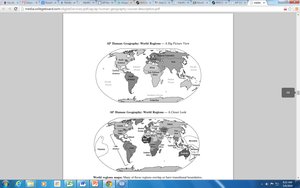
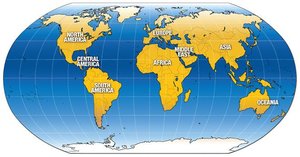
Global Scale: Continents and world regions (e.g., Asia, Africa, Europe).
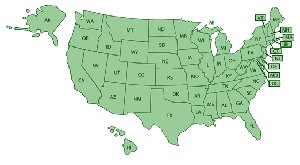
National Scale: Countries and their internal divisions (e.g., states in the USA).
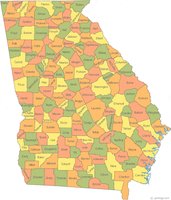
State and County Scale: Subnational divisions such as states, provinces, and counties.
Local Scale: Neighborhoods, wards, precincts, and census tracts.
Types of Regions
Formal Regions
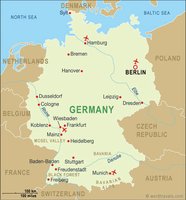
A formal region (also known as a uniform region) is defined by a common human or physical property. These regions are characterized by measurable, shared traits such as language, climate, or political identity.
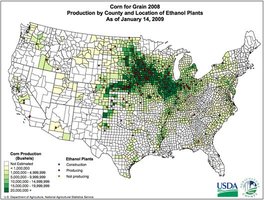
Examples: Countries, states, climate zones, economic regions (e.g., the "wheat belt" of Kansas).
Criteria: Population, income, ethnicity, crop production, industrial output, temperature, rainfall.
Functional Regions
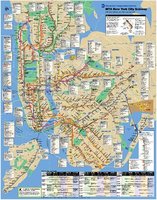
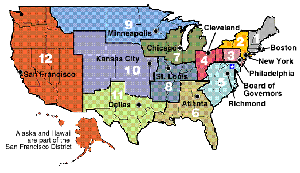
A functional region is organized around a central node or focal point, with surrounding areas linked by systems such as transportation, communication, or economic activity. These regions are defined by the interactions and connections that occur within them.
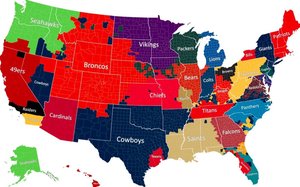
Examples: Metropolitan areas, shopping regions, areas served by a bank branch, sports team fan bases.
Criteria: Commuting patterns, trade flows, media markets, service areas.

Perceptual (Vernacular) Regions
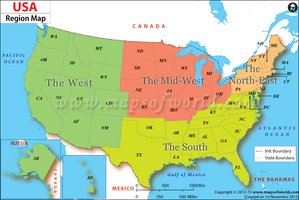
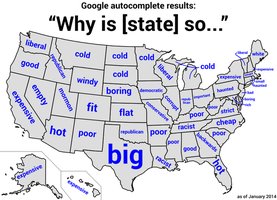
A perceptual region (also called a vernacular region) is defined by people's attitudes, feelings, and cultural identity. These regions exist in the collective imagination and may not have precise boundaries.
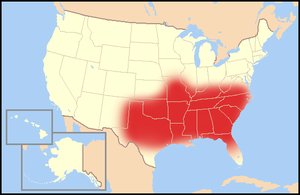
Examples: "The South" or "Dixie" in the United States, "Southern California," "the Midwest."
Characteristics: Based on stereotypes, mental maps, and shared perceptions rather than objective criteria.
Mental/Cognitive Maps
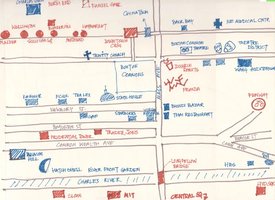
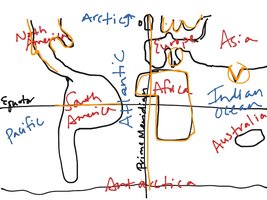
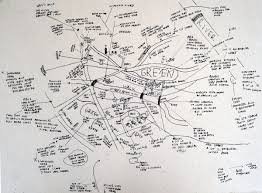
Mental maps are personal, internal representations of the spatial layout of the world or a specific area. They reflect an individual's experiences, observations, and perceptions, and are a key part of how people navigate and understand their environment.
Activity Space: The area within which a person moves during daily activities, forming their own perceptual region.
Examples: Drawing a map of your neighborhood, school, or city from memory.
Transition Zones and Regional Boundaries
Regional boundaries are often transition zones rather than sharp lines. These areas may exhibit characteristics of multiple regions and can change over time due to migration, cultural diffusion, or economic shifts.
Example: The cultural boundary between the "South" and other US regions, as seen in differences in food, language, or customs.
Application: Sociologists study transition zones to understand social change and the blending of cultures.
Summary Table: Types of Regions
Type of Region | Definition | Examples | Basis of Definition |
|---|---|---|---|
Formal | Area with one or more measurable, shared traits | Countries, states, climate zones | Physical or human characteristics |
Functional | Area organized around a central node or focal point | Metropolitan area, TV market, sports team fan base | Interactions and connections |
Perceptual | Area defined by people's attitudes and feelings | The South, Midwest, "Bible Belt" | Shared perceptions and mental maps |
Applications in Sociology
Understanding regions helps sociologists analyze patterns of social interaction, cultural identity, and economic activity.
Regional analysis is used to study social stratification, migration, urbanization, and the impact of globalization.
