 Indietro
Sociological Analysis of Landscapes: Reading Your Neighborhood
Guida di studio - Note intelligenti
 Appunti personalizzati basati sui tuoi materiali, ampliati con definizioni chiave, esempi e contesto.
Q1. How do you apply sociological lessons to analyze the landscape of your neighborhood?
Background
Topic: Sociological Analysis of Space and Place
This question is testing your ability to use sociological concepts to interpret the meaning and dynamics of physical landscapes, considering how social values, conflicts, and structures are reflected in the environment.
Key Terms and Concepts:
Landscape: The visible features of an area, including physical, social, and symbolic elements.
Sociological Lens: Viewing places in terms of social relationships, power dynamics, and cultural meanings.
Social Conflict: Tensions or disagreements between groups, often visible in how space is used or divided.
Symbolic Meaning: The values or ideas that landscapes represent to different groups.
Step-by-Step Guidance
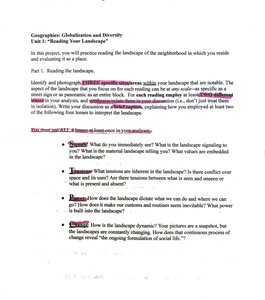
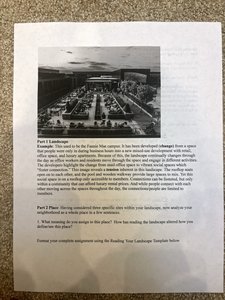
Identify and photograph three specific features of your neighborhood landscape that stand out to you. These could be buildings, parks, fences, or other visible elements.
For each feature, consider what sociological lessons or concepts are relevant. For example, think about how the feature reflects social values, power, or conflict.
Analyze how these features synthesize into a coherent understanding of the neighborhood. Ask yourself: What do these features say about who lives here, how people interact, and what is valued?
Use the guiding questions from the worksheet: What do you immediately see? What values are embedded? What conflicts or tensions are visible? How does the landscape change over time?
Organize your observations and begin to write a short argumentative claim about the meaning you assign to this place, using sociological vocabulary.
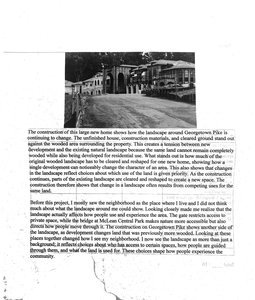
Try solving on your own before revealing the answer!
Final Answer:
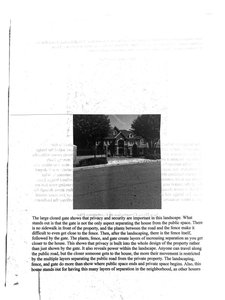
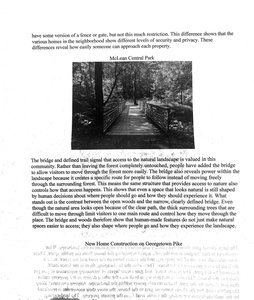
To apply sociological lessons to your neighborhood landscape, you should: (1) identify features that reflect social values, conflicts, or changes; (2) analyze how these features represent broader social dynamics (such as privacy, community, or development); and (3) synthesize your observations into a clear claim about the meaning of the place. For example, you might argue that the presence of gates and fences reflects a value on privacy and security, while parks and bridges symbolize community and access. Construction and new development can indicate ongoing social change and conflict over land use. Your final claim should connect these features to sociological concepts like social stratification, symbolic interactionism, or urbanization.
