 Indietro
Space and the Production of Everyday Life: Sociological Perspectives
Guida di studio - Note intelligenti
 Appunti personalizzati basati sui tuoi materiali, ampliati con definizioni chiave, esempi e contesto.
Space and the Production of Everyday Life
Defining Everyday Life
Everyday life refers to the routine, repetitive actions and unconscious experiences that structure an individual's daily existence. It is shaped by the intersection of social structures and individual agency, encompassing basic needs, work, rest, and social interactions.
Mundane Actions: Everyday life consists of habitual behaviors and routines.
Unconscious Experience: Many actions are performed without deliberate thought, shaped by social norms.
Intersection of Structures: Social, economic, and political structures influence daily life.
Individual Agency: People exercise choice and creativity within structural constraints.
Space is Social
Space is not a neutral or empty backdrop; it is actively produced and shaped by social relations, cultural values, and political power. The environments we inhabit both reflect and influence how we interact, organize communities, and experience daily life.
Relational Construction: Space is built through human relationships and interactions.
Cultural Reflection: Physical environments embody cultural meanings and values.
Political Power: Space can be used to project authority and control populations.
Henri Lefebvre's Spatial Triad
Overview of the Spatial Triad
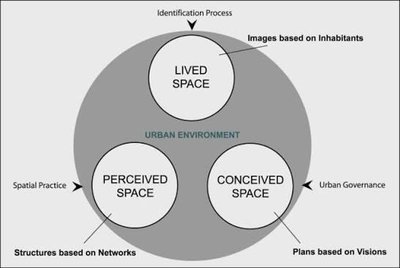
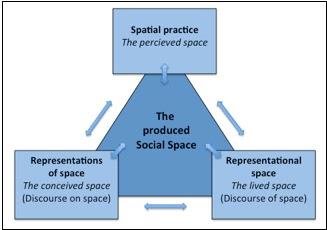
Henri Lefebvre's spatial triad is a foundational sociological framework for understanding how space is socially produced. It distinguishes between three interconnected dimensions: spatial practice (perceived space), representations of space (conceived space), and representational spaces (lived space).
Spatial Practice (Perceived Space): The routines and movements through which people use and experience space.
Representations of Space (Conceived Space): The abstract, planned, and designed aspects of space, often imposed by authorities.
Representational Spaces (Lived Space): The emotional, symbolic, and imaginative meanings attached to space by its users.
Spatial Practice Defined
Spatial practice refers to the ways people physically use, move through, and interact with their environments. It includes daily routines, infrastructure usage, and survival strategies, highlighting the reciprocal relationship between physical space and human activity.
Material Networks: Observed patterns of movement and infrastructure use.
Urban Survival: Strategies for navigating and adapting to city life.
Example: The Minibus Taxi in South Africa
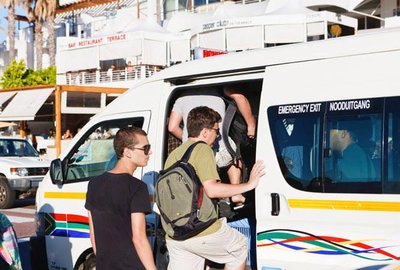
The minibus taxi system exemplifies adaptive spatial practice, as informal transport operators reshape urban space to meet commuter needs, often bypassing formal planning.
Representations of Space Defined
Representations of space are the conceived, abstract dimensions of space, such as maps, blueprints, and city plans. These are created by planners, architects, and authorities to impose order and structure on urban environments.
Conceptualization: Space as designed and regulated by experts.
Imposed Order: Use of laws and planning to control spatial organization.
Example: Apartheid Urban Planning
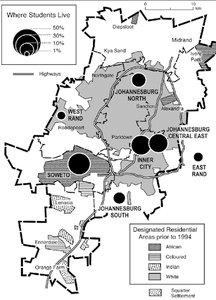
During apartheid, South African authorities used legislation like the Group Areas Act to engineer urban space for racial segregation, creating buffer zones and restricting access for marginalized groups.
Representational Spaces Defined
Representational spaces are the lived, emotional, and symbolic experiences of space. These spaces are reclaimed and reimagined by users, often subverting dominant designs and expressing community identity.
Emotional Attachment: Spaces become meaningful through memories and experiences.
Symbolic Reclamation: Communities use art and ritual to assert identity in space.
Example: Township Street Art
Murals in South African townships, such as Khayelitsha, transform sterile walls into vibrant expressions of community identity and lived experience.
Michel de Certeau’s Theory of Everyday Life
Strategies versus Tactics
Michel de Certeau distinguished between strategies (institutional control mechanisms) and tactics (creative actions by the less powerful) in the production of everyday life. Strategies are used by those in power to organize space, while tactics are employed by ordinary people to navigate and resist these structures.
Strategies: Top-down management of space by institutions (e.g., malls, checkpoints).
Tactics: Bottom-up, opportunistic actions by individuals (e.g., informal vending, creative navigation).
Example: Gated Communities and Informal Street Vendors
Gated Communities: Illustrate spatial strategies through controlled access and security.
Street Vendors: Demonstrate tactics by occupying public space and evading regulations.
Geographies of Exclusion
Boundaries and Barriers
Geographies of exclusion refer to the ways dominant groups create boundaries—physical, economic, and psychological—to restrict access to spaces for marginalized populations. This deepens urban fragmentation and social inequality.
Physical Barriers: Walls, gates, and checkpoints.
Economic Barriers: High costs excluding the poor.
Psychological Barriers: Social stigma and fear.
Example: Sea Point Promenade
The Sea Point Promenade in Cape Town is a contested public space, historically exclusive but now a site of ongoing debates about inclusion and gentrification.
Gendered Spatial Production
Space and Gender Roles
Gendered spatial production examines how environments are organized and experienced differently based on gender. This includes safety concerns, domestic labor boundaries, and vulnerabilities in public transport, reflecting broader patterns of patriarchy.
Safety Mapping: Women and men perceive and use space differently due to safety concerns.
Mobility Restrictions: Fear and risk limit access to certain spaces for women.
Example: Gender-Based Violence Risk
In South Africa, dark railway stations and informal settlement pathways pose significant risks for women, restricting their mobility and shaping their spatial practices.
Digital Production of Space
Virtual and Algorithmic Spaces
The digital production of space explores how digital platforms, apps, and networks overlay and transform physical environments. This includes gig economy labor, smart city technologies, and algorithmic management of urban movement.
Virtual Navigation: Apps and digital maps guide movement and access.
Algorithmic Control: Worker routes and tasks are managed in real time by software.
Example: Uber and Delivery Riders
Platforms like Uber and delivery apps transform city streets into managed workspaces, with workers' movements tracked and coordinated by algorithms.
Environmental Spatial Justice
Unequal Environmental Risks
Environmental spatial justice addresses disparities in access to green spaces, exposure to pollution, and vulnerability to climate change. These inequalities often reflect broader patterns of social and economic injustice.
Green Zone Disparities: Unequal distribution of parks and clean environments.
Toxic Proximity: Marginalized communities often live near hazardous sites.
Example: South Durban Basin
The South Durban Basin is a hub of industrial pollution, with residential neighborhoods suffering high rates of asthma and other health issues—a legacy of environmental racism.
Memory and Spatial Trauma
Remembering and Healing Space
Memory and spatial trauma explore how collective memory, monuments, and urban design can either erase or reclaim histories of displacement and violence. Healing can occur through community-led projects and the renaming of spaces.
Monuments: Physical markers of history and trauma.
Counter-Mapping: Community efforts to reclaim erased spaces.
Example: District Six Museum
The District Six Museum in Cape Town uses maps, memory cloths, and personal relics to help displaced residents reclaim their lost community and resist erasure.
Right to the City
Urban Democracy and Inclusion
The right to the city is a radical concept advocating for urban environments to be shaped by and for their inhabitants, prioritizing human needs over corporate interests and resisting exclusionary practices.
Inhabitant-Centered Production: Cities should serve the people who live in them.
Activism: Movements demand affordable housing and resist gentrification.
Example: Reclaim the City
Activist movements in South Africa, such as Reclaim the City, occupy buildings and demand affordable housing, challenging exclusion and advocating for urban justice.
Summary and Key Takeaways
Space shapes everyday life and social relations.
Individuals and groups resist and reshape spatial rules through daily actions.
South Africa's urban landscape retains scars of systemic inequality, but transformation is possible through collective action.
