
Ch. 1 - Introduction to Statistics
Larson - Elementary Statistics: Picturing the World 8th Edition
Larson8th EditionElementary Statistics: Picturing the WorldISBN: 9780137493470Non è quello che usi tu?Cambia libro di testo
Capitolo 1, Problema 1.3.2

What is the difference between a census and a sampling?

Guida verificata passo dopo passo
1
A census involves collecting data from every single member of a population. For example, if you want to know the income of all residents in a city, a census would require surveying every resident.
Sampling, on the other hand, involves selecting a subset of the population to collect data from. This subset, called a sample, is used to make inferences about the entire population.
The key difference is that a census gathers data from the entire population, while sampling gathers data from only a part of the population.
Censuses are typically more accurate because they include everyone, but they are also more time-consuming, expensive, and sometimes impractical for large populations.
Sampling is more efficient and cost-effective, but it requires careful design to ensure the sample is representative of the population to avoid bias in the results.

Risposta video verificata per un problema simile:

Questa soluzione video è stata consigliata dai nostri tutor come utile per risolvere questo problema.
Durata del video:
2m

Concetti chiave

Ecco i concetti essenziali che devi comprendere per rispondere correttamente alla domanda.

Census

A census is a comprehensive data collection method that aims to gather information from every individual or unit within a defined population. It is often used to obtain accurate demographic data, such as population size, age distribution, and other characteristics. While a census provides complete data, it can be time-consuming and costly, making it impractical for large populations.

Sampling

Sampling is the process of selecting a subset of individuals or units from a larger population to estimate characteristics of the whole population. This method is often used when a census is impractical due to time or cost constraints. Various sampling techniques, such as random sampling or stratified sampling, can be employed to ensure that the sample accurately represents the population.
Video consigliato:
Percorso guidato
05:11
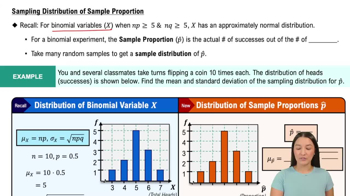
Sampling Distribution of Sample Proportion

Population vs. Sample

In statistics, the population refers to the entire group of individuals or items that are of interest, while a sample is a smaller group selected from that population. Understanding the distinction is crucial, as analyses and conclusions drawn from a sample can be generalized to the population only if the sample is representative. This concept underpins the validity of statistical inferences made from sampled data.
Video consigliato:
Percorso guidato
05:11
Sampling Distribution of Sample Proportion