 뒤로
Comprehensive Study Notes for Algebra & Trigonometry: Key Concepts, Formulas, and Applications
스터디 가이드 - 스마트 노트
 자료에 맞춘 맞춤형 노트, 핵심 정의, 예시, 맥락을 확장해 제공합니다.
Review of Fundamental Concepts
Surds
Surds are irrational numbers that can be expressed in root form. They are commonly used in algebraic manipulations.
Multiplication:
Division:
Conjugate Surds: and are conjugates; their product is rational.
Indices (Exponents)
Indices are used to represent repeated multiplication of a number.
Product Rule:
Quotient Rule:
Power Rule:
Zero Exponent:
Negative Exponent:
Fractional Exponent:
Logarithms
Logarithms are the inverse operations of exponentiation and are essential for solving exponential equations.
Product Rule:
Quotient Rule:
Power Rule:
Change of Base:
Logarithm of 1:
Logarithm of Base:
Binomial Theorem
The binomial theorem provides a method to expand expressions of the form .
General Expansion:
Term Formula:
Equations & Inequalities
Quadratic Equations
Quadratic equations are polynomials of degree two and have important properties regarding their roots.
General Form:
Nature of Roots:
If : Roots are real and distinct.
If : Roots are real and equal.
If : Roots are complex (not real).
Sum and Product of Roots:
Sum:
Product:
Forming Quadratic Equation from Roots:
Solving Quadratic Inequalities
Quadratic inequalities involve finding the range of values for which the quadratic expression satisfies a given inequality.
If and roots are :
: or
:
: or
:
Graphs & Functions
Sets, Relations, and Functions
Sets, relations, and functions are foundational concepts in algebra and are used to describe mathematical structures.
Set: A well-defined collection of objects.
Relation: A set of ordered pairs.
Function: A relation where each element in the domain has a unique image in the range.
Composite Functions: ,
Absolute Value: if , if , if
Trigonometric Functions
Basic Trigonometric Ratios
Trigonometric functions relate the angles of a triangle to the ratios of its sides.
Trigonometric Identities
Compound Angle and Double Angle Formulas
Circular Measure
Angles can be measured in radians, which are essential for calculus and trigonometry.
radians =
Arc length:
Area of sector:
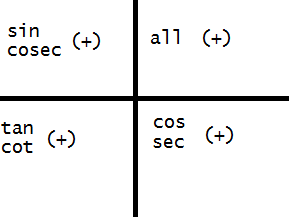
Trigonometric Quadrants and Signs
The sign of trigonometric functions depends on the quadrant in which the angle lies.
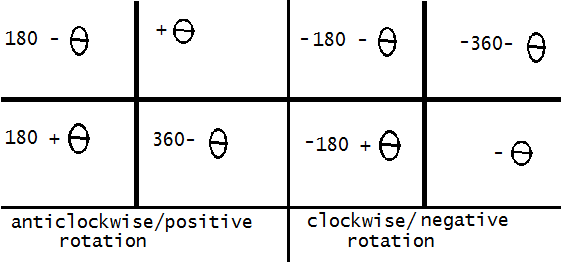
Rotation and Angle Transformation
Angles can be transformed by rotation, either clockwise or anticlockwise, affecting their trigonometric values.
Polynomial and Rational Functions
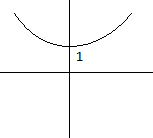
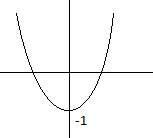
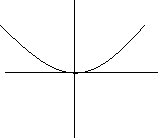
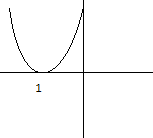
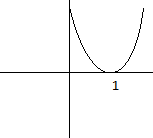
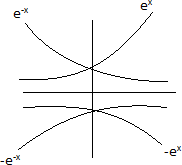
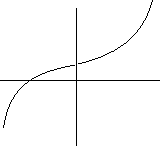
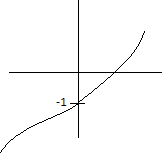
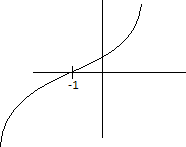
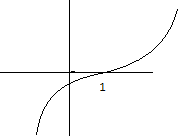
Graph Sketching
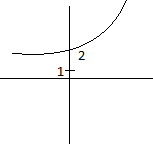
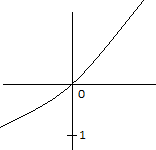
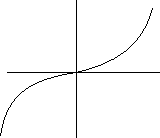
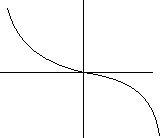
Understanding the shape and position of graphs is crucial for analyzing functions.
Linear, quadratic, cubic, exponential, and rational functions have characteristic graphs.
Shifts and transformations affect the position and shape of the graph.
Sequences, Series, and Induction
Arithmetic Progression (A.P.)
An arithmetic progression is a sequence of numbers with a constant difference between consecutive terms.
Nth term:
Sum of n terms:
Geometric Progression (G.P.)
A geometric progression is a sequence where each term is multiplied by a constant ratio.
Nth term:
Sum of n terms: for
Sum to infinity: for
Analytic Geometry
Coordinate Geometry
Coordinate geometry deals with the properties and relations of points, lines, and shapes in the Cartesian plane.
Distance between two points:
Gradient of a line:
Midpoint:
Equation of a line:
Parallel lines: Equal gradients
Perpendicular lines: Product of gradients is
Calculus: Differentiation & Integration
Differentiation
Differentiation is the process of finding the rate of change of a function.
Power Rule:
Sum Rule:
Chain Rule:
Product Rule:
Quotient Rule:
Trigonometric Derivatives:
Applications of Differentiation
Stationary Points: Occur when
Second Derivative Test:
If : Maximum point
If : Minimum point
If : Point of inflexion or further investigation needed
Curve Sketching: Identify intercepts, stationary points, and behavior at infinity.
Integration
Integration is the reverse process of differentiation and is used to find areas under curves.
Power Rule: (for )
Trigonometric Integrals:
Definite Integrals: Area under from to is
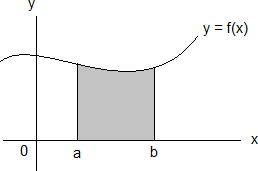
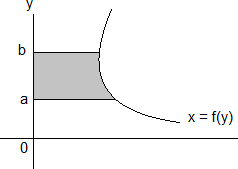
Applications of Integration
Area between curves:
Volume of revolution: (about x-axis), (about y-axis)
Motion: Integrate velocity to get displacement, integrate acceleration to get velocity.
Vectors
Vector Basics
Vectors are quantities with both magnitude and direction, used extensively in geometry and physics.
Position Vector: Represents the location of a point relative to the origin.
Vector Addition: Follows the parallelogram law.
Scalar Product:
Component Form: ,
Dot Product:
Combinatorics and Probability
Binomial Expansion and Factorials
Binomial expansion is used to expand expressions raised to a power, and factorials are used in counting and probability.
Factorial:
Binomial Coefficient:
Binomial Expansion:
Additional Info
Some formulas and examples have been expanded for clarity and completeness. The notes cover all major topics relevant to Algebra & Trigonometry, including equations, functions, trigonometric identities, calculus, vectors, and combinatorics.
