 뒤로
Chromatography: TLC & HPLC – Theory and Pharmaceutical Analysis
스터디 가이드 - 스마트 노트
 자료에 맞춘 맞춤형 노트, 핵심 정의, 예시, 맥락을 확장해 제공합니다.
Chromatography: Principles and Techniques
Introduction to Chromatography
Chromatography is a fundamental analytical technique used to separate, identify, and quantify components in a mixture. It is widely applied in pharmaceutical analysis, environmental testing, and biochemical research.
Stationary Phase: The phase that remains fixed inside the column or on a plate (solid or liquid supported on a solid).
Mobile Phase: The phase that moves through or over the stationary phase (liquid or gas).
Separation Principle: Components are separated based on their differential affinities for the stationary and mobile phases, leading to different migration rates.
At the start, the mixture is loaded onto the stationary phase. Over time, components distribute between the stationary and mobile phases according to their affinities, resulting in separation.
Classification of Chromatographic Techniques
Gas Chromatography (GC): Uses a gas as the mobile phase and a solid or liquid stationary phase.
Liquid Chromatography (LC): Uses a liquid mobile phase. Includes column and flat types:
Flat Type: Thin Layer Chromatography (TLC), Paper Chromatography
Column Type: Open Column, High Performance Liquid Chromatography (HPLC)
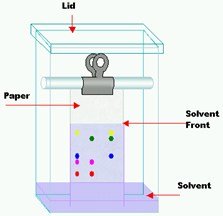
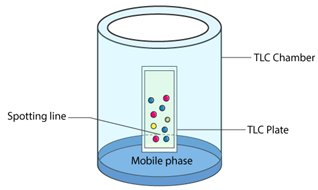
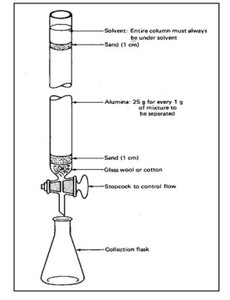
Thin Layer Chromatography (TLC)
Principles and Procedure
TLC is a simple, rapid, and cost-effective technique for separating small quantities of compounds. It is commonly used for qualitative analysis and purity checks.
Stationary Phase: Usually silica gel (a polar substance) coated on an inert support such as aluminum foil.
Mobile Phase: A single organic solvent or a mixture of miscible organic solvents (e.g., 60% dichloromethane and 40% methanol).
Sample Application: The mixture is spotted on a line near one end of the TLC plate.
Development: The plate is placed in a chamber with the mobile phase, which rises by capillary action.
Separation: Components move at different rates depending on their affinities for the stationary and mobile phases.
Visualization: Spots may be visualized directly, or by using UV light or staining reagents if colorless.
Rf Value:

High Performance Liquid Chromatography (HPLC)
Instrument Components
HPLC is a highly efficient and versatile technique for separating, identifying, and quantifying compounds in complex mixtures. It is widely used in pharmaceutical analysis due to its sensitivity and reproducibility.
Solvent Reservoirs: Hold the mobile phase solvents.
Pumps: Deliver the mobile phase at high pressure through the system.
Injector/Autosampler: Introduces the sample into the mobile phase stream.
Column: Contains the stationary phase where separation occurs.
Detector: Monitors the eluted compounds (e.g., UV-Vis detector).
Data System: Records and analyzes chromatograms.
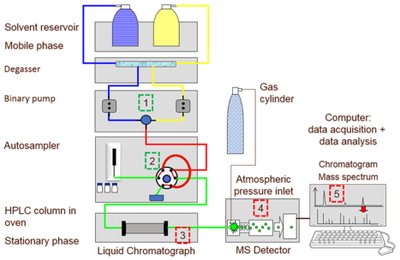
Types of HPLC
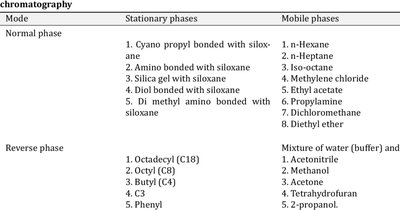
Normal Phase HPLC: Stationary phase is more polar than the mobile phase. Used for separating polar mixtures (e.g., sugars).
Reverse Phase HPLC (RP-HPLC): Stationary phase is non-polar (e.g., C18 column), mobile phase is more polar. Most common in pharmaceutical analysis for non-polar drugs.
Separation Mechanisms
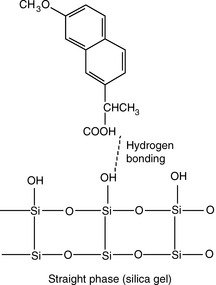
Normal Phase: Polar analytes interact strongly with the polar stationary phase (e.g., hydrogen bonding), resulting in longer retention times.
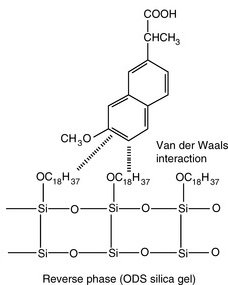
Reverse Phase: Non-polar analytes interact strongly with the non-polar stationary phase (e.g., van der Waals/hydrophobic interactions), resulting in longer retention times.
Elution Techniques: Isocratic vs Gradient
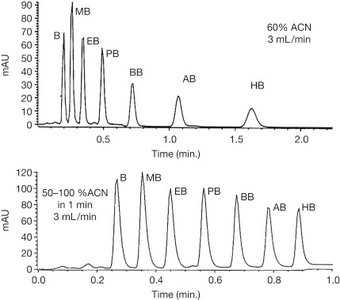
Isocratic Elution: Mobile phase composition remains constant throughout the run. Simple but may result in long analysis times and broad peaks for late-eluting compounds.
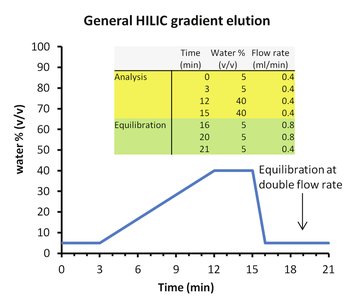
Gradient Elution: Mobile phase composition changes (e.g., increasing organic solvent content), allowing faster and sharper elution of all components.
Elution of Neutral and Ionizable Compounds
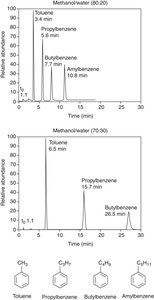
Neutral Compounds: Elution order depends on polarity and lipophilicity. In RP-HPLC, more lipophilic compounds are retained longer.
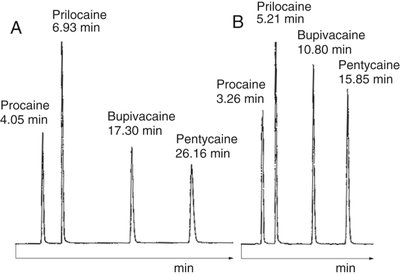
Ionizable Compounds: Retention times are influenced by the pH of the mobile phase, which affects the degree of ionization and, consequently, the interaction with the stationary phase.
Quantitative Analysis by HPLC
Identification and Quantification
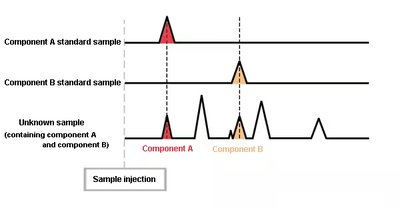
Identification: Components are identified by comparing retention times with those of known standards under identical chromatographic conditions.
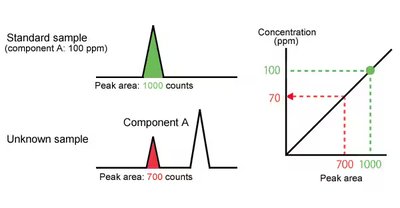
Quantification: The area under the chromatographic peak is proportional to the concentration of the analyte.
Calibration Methods
External Standard Calibration: A calibration curve is constructed using standard solutions of known concentrations. The unknown sample's concentration is determined by comparing its peak area to the curve.
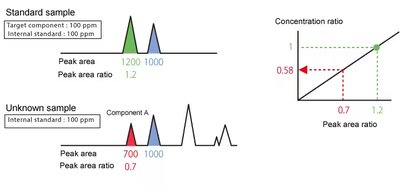
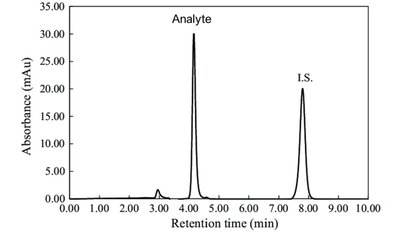
Internal Standard Calibration: A known amount of a compound (internal standard) is added to all samples and standards. The ratio of analyte to internal standard peak areas is used for quantification, compensating for sample loss and instrument variability.
Applications in Pharmaceutical and Biological Analysis
Drug Formulation Analysis: HPLC is used to determine the concentration and purity of drugs in pharmaceutical formulations.
Biological Fluid Analysis: Internal standards are crucial for accurate quantification in complex matrices like blood, compensating for extraction losses and matrix effects.
Summary Table: Chromatographic Modes, Phases, and Applications
Mode | Stationary Phases | Mobile Phases | Typical Applications |
|---|---|---|---|
Normal Phase | Silica gel, cyano, amino, diol | n-Hexane, n-Heptane, dichloromethane | Polar compounds (e.g., sugars) |
Reverse Phase | C18 (ODS), C8, C4, phenyl | Water/buffer with acetonitrile, methanol | Non-polar drugs, pharmaceuticals |
Key Equations
Rf Value (TLC):
Concentration (External Standard):
Concentration (Internal Standard):
Single Point Calibration (Pindolol Assay):
