 뒤로
뒤로Anatomy & Physiology I – Final Exam Study Guidance
스터디 가이드 - 스마트 노트
 자료에 맞춘 맞춤형 노트, 핵심 정의, 예시, 맥락을 확장해 제공합니다.
Q1. Define/Describe: Visceral Reflexes, Structure and Function of the Autonomic Nervous System (ANS), and the Structure & Function of Sympathetic and Parasympathetic Divisions.
Background
Topic: Autonomic Nervous System (ANS)
This question tests your understanding of the ANS, including its two main divisions (sympathetic and parasympathetic), their structures, and their roles in regulating involuntary body functions. It also asks about visceral reflexes, which are automatic responses involving internal organs.
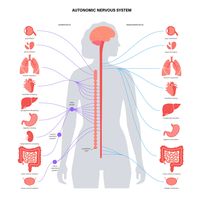
Key Terms and Concepts:
Visceral Reflexes: Involuntary responses involving smooth muscle, cardiac muscle, or glands.
Autonomic Nervous System (ANS): Part of the peripheral nervous system that controls involuntary functions.
Sympathetic Division: Prepares the body for "fight or flight" responses.
Parasympathetic Division: Promotes "rest and digest" activities.
Step-by-Step Guidance
Start by defining what a visceral reflex is and how it differs from somatic reflexes (think about the effectors involved).
Describe the general structure of the ANS, including its two-neuron chain (preganglionic and postganglionic neurons).
Explain the main functions of the ANS, focusing on involuntary control of smooth muscle, cardiac muscle, and glands.
Compare the structure and function of the sympathetic and parasympathetic divisions (consider the origin of fibers, length of pre- and postganglionic neurons, and neurotransmitters used).
List some key effects of each division on target organs (e.g., heart rate, digestion, pupil size).
Try summarizing these points in your own words before revealing the answer!
Final Answer:
Visceral reflexes are automatic, involuntary responses that control the function of internal organs, involving smooth muscle, cardiac muscle, or glands. The autonomic nervous system (ANS) is a division of the peripheral nervous system responsible for regulating involuntary body functions. It consists of two main divisions:
Sympathetic Division: Originates from the thoracolumbar region of the spinal cord, has short preganglionic and long postganglionic fibers, and is responsible for "fight or flight" responses (e.g., increasing heart rate, dilating pupils, inhibiting digestion).
Parasympathetic Division: Originates from the brainstem and sacral spinal cord, has long preganglionic and short postganglionic fibers, and is active during "rest and digest" states (e.g., decreasing heart rate, stimulating digestion, constricting pupils).
The ANS uses a two-neuron chain to reach its effectors, and the main neurotransmitters involved are acetylcholine (ACh) and norepinephrine (NE). The sympathetic division generally prepares the body for stressful situations, while the parasympathetic division conserves energy and promotes maintenance activities.
