 뒤로
뒤로Articulations & Joints: Classification, Structure, and Movements
스터디 가이드 - 스마트 노트
 자료에 맞춘 맞춤형 노트, 핵심 정의, 예시, 맥락을 확장해 제공합니다.
Articulations & Joints
Joint Classification
Joints, also known as articulations, are the connections between bones in the skeletal system. They are classified based on their structure and function:
Structural Classification: Fibrous, Cartilaginous, Synovial
Functional Classification: Synarthrotic (immovable), Amphiarthrotic (slightly movable), Diarthrotic (freely movable)
Fibrous Joints
Fibrous joints are connected by dense connective tissue and generally allow little to no movement. There are three main types:
Syndesmosis: Bones are connected through strong ligaments. Amphiarthrotic (slightly movable). Example: Tibiofibular joint.
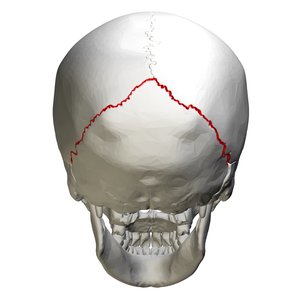
Suture: Bones are bound together by a thin layer of fibrous tissue. Synarthrotic (immovable). Example: Lambdoid suture in the skull.
Gomphosis: Insertion of a bone into a bony socket. Synarthrotic (immovable). Example: Teeth in their sockets.
Cartilaginous Joints
Cartilaginous joints are connected by cartilage and allow varying degrees of movement:
Synchondrosis: Bones are joined by hyaline cartilage. Synarthrotic (immovable). Example: Costal cartilage.
Symphysis: Bones are joined by fibrocartilage. Amphiarthrotic (slightly movable). Example: Pubic symphysis.
Synovial Joints
Synovial joints are the most movable type of joint and are found at the ends of long bones. They are characterized by:
Articular cartilage: Covers the ends of bones
Joint capsule: Surrounds the joint
Synovial membrane: Lines the capsule and produces synovial fluid
Joint cavity: Contains synovial fluid for lubrication
Types of Synovial Joints
Synovial joints are classified by the shapes of their articulating surfaces and the movements they allow:
Plane joint: Allows gliding movements (e.g., intercarpal joints)
Hinge joint: Allows flexion and extension (e.g., knee, elbow)
Condylar joint: Allows movement in two planes (e.g., radiocarpal joint)
Saddle joint: Allows movement in two planes (e.g., thumb)
Pivot joint: Allows rotation (e.g., proximal radio-ulnar joint)
Ball-and-socket joint: Allows movement in multiple axes (e.g., hip, shoulder)
Movements at Joints
Gliding Movements
Gliding occurs at plane joints, where bones slide past each other in any direction.
Angular Movements
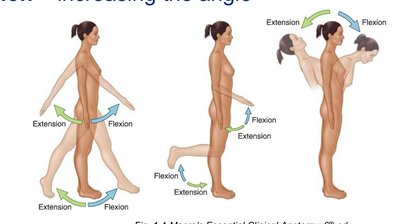
Angular movements change the angle between bones. The main types are:
Flexion: Decreasing the angle across a joint
Extension: Increasing the angle across a joint
Hyperextension: Increasing the angle past anatomical position
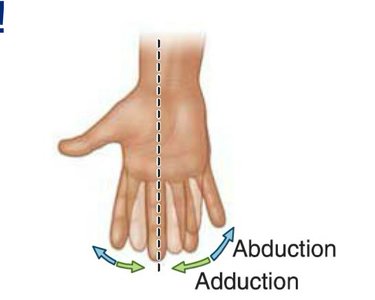
Abduction: Movement away from the midline of the body
Adduction: Movement towards the midline of the body
Circumduction: Combination of flexion, extension, abduction, and adduction to trace a conical shape
Rotational Movements
Rotational movements involve turning a bone around its longitudinal axis:
Medial rotation: Rotating towards the midline
Lateral rotation: Rotating away from the midline
Left/right rotation: Turning the head or trunk
Special Movements
Some joints allow unique movements:
Opposition: Moving the thumb towards the palm/fingers
Reposition: Returning the thumb from opposition
Supination: Rotating the forearm so the palm faces up
Pronation: Rotating the forearm so the palm faces down
Protraction: Moving a body part anteriorly
Retraction: Moving a body part posteriorly
Elevation: Moving a body part superiorly
Depression: Moving a body part inferiorly
Eversion: Turning the foot outwards
Inversion: Turning the foot inwards
Dorsiflexion: Pointing the toes up
Plantar flexion: Pointing the toes down
Summary Table: Joint Classification
Type | Structural Feature | Functional Classification | Example |
|---|---|---|---|
Fibrous | Dense connective tissue | Synarthrotic/Amphiarthrotic | Suture, Syndesmosis, Gomphosis |
Cartilaginous | Cartilage | Synarthrotic/Amphiarthrotic | Synchondrosis, Symphysis |
Synovial | Joint capsule, synovial fluid | Diarthrotic | Knee, Shoulder, Hip |
Summary Table: Types of Synovial Joints
Type | Movement | Example |
|---|---|---|
Plane | Gliding | Intercarpal joints |
Hinge | Flexion/Extension | Knee, Elbow |
Condylar | Flexion/Extension, Abduction/Adduction | Radiocarpal joint |
Saddle | Flexion/Extension, Abduction/Adduction | Thumb |
Pivot | Rotation | Proximal radio-ulnar joint |
Ball-and-socket | All movements | Hip, Shoulder |
Key Terms
Synarthrotic: Immovable joint
Amphiarthrotic: Slightly movable joint
Diarthrotic: Freely movable joint
Articular cartilage: Smooth tissue covering bone ends in synovial joints
Synovial fluid: Lubricating fluid in synovial joints
Example: Application in Clinical Practice
Understanding joint classification and movement is essential for diagnosing joint injuries, planning physical therapy, and understanding conditions such as arthritis.
Additional info: Expanded explanations and tables were added for academic completeness and clarity.
