 뒤로
Bacterial Structure, Growth, and Associated Diseases: Study Notes for Anatomy & Physiology
스터디 가이드 - 스마트 노트
 자료에 맞춘 맞춤형 노트, 핵심 정의, 예시, 맥락을 확장해 제공합니다.
Bacterial Growth and Reproduction
Binary Fission
Binary fission is the primary method of reproduction in bacteria, resulting in exponential population growth. The process is asexual and involves the division of a single cell into two genetically identical daughter cells. - Generation time: The time required for a bacterial cell to divide, which can range from 20 minutes to 20 hours depending on the species and environmental conditions. - Exponential growth: Bacterial populations double with each generation, leading to rapid increases in cell numbers. 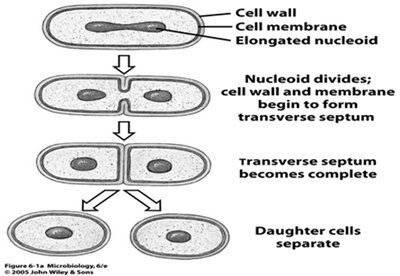
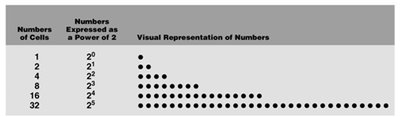 Formula for exponential growth: where is the final number of cells, is the initial number of cells, and is the number of generations.
Bacterial Morphology
Bacterial Shapes
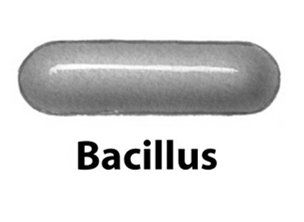
Bacteria exhibit a variety of shapes, which are important for identification and classification. - Coccus: Spherical shape. 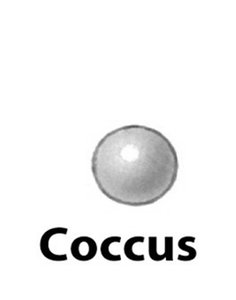 - Bacillus: Rod-shaped.
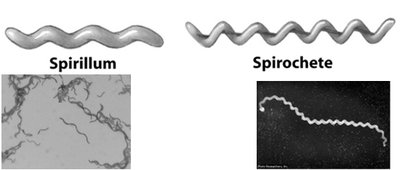
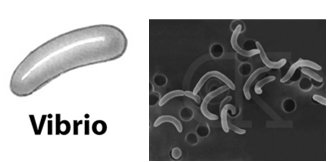
 - Spiral: Includes vibrio (curved rod), spirillum (rigid spiral), and spirochete (flexible spiral).
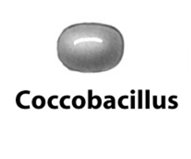
 - Coccobacillus: Short, oval rod.
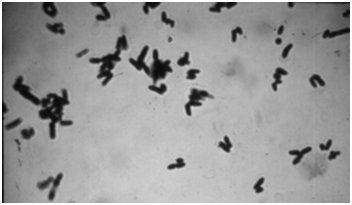
 - Pleomorphic: Variable shapes, often seen in certain bacterial species.
Bacterial Cell Arrangements
Bacterial cells can be arranged in characteristic patterns based on their division and grouping. - Diplo-: Pairs (e.g., diplococcus). - Strepto-: Chains (e.g., streptococcus, streptobacillus). 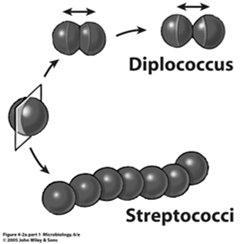 - Staphylo-: Clusters (e.g., staphylococcus).
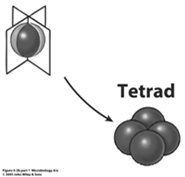
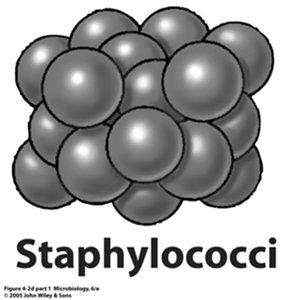 - Tetrad: Groups of four cells.
Prokaryotic Cell Structure
Overview of Bacterial Cell Components
Bacterial cells possess unique structures that distinguish them from eukaryotic cells. - Cell wall: Provides structural support and protection. - Cell membrane: Regulates transport of substances. - Cytoplasm: Contains water, enzymes, and nutrients. - Ribosomes: Sites of protein synthesis. - Nucleoid: Region containing bacterial DNA (chromosome). - Plasmids: Small, circular DNA molecules with nonessential genes. - Endospores: Highly resistant dormant structures formed by some bacteria. - Flagella: Motility structures. - Pili (fimbriae): Attachment and DNA transfer structures. - Glycocalyx: External polysaccharide layer (capsule or slime layer). 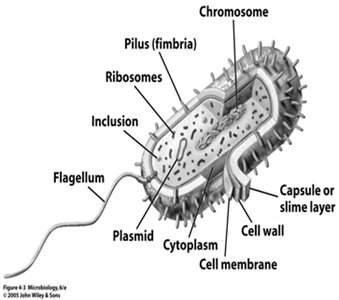
Bacterial Cell Wall Types
Peptidoglycan Structure
Peptidoglycan is a complex polymer forming the bacterial cell wall, providing rigidity and shape. 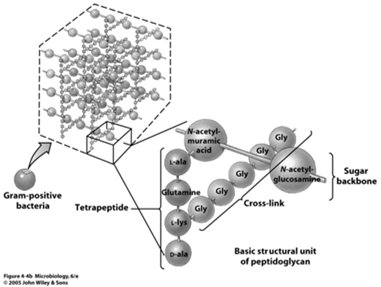
Gram-Positive Bacteria
- Thick peptidoglycan layer (up to 40 layers). - Retains stains during Gram staining (appears purple/blue). - Contains teichoic acids for structural integrity. 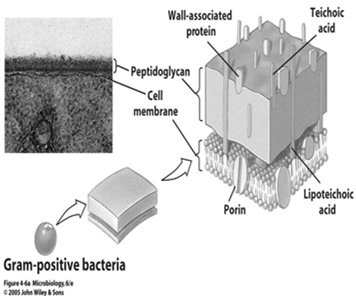
Gram-Negative Bacteria
- Thin peptidoglycan layer. - Outer membrane with lipopolysaccharides. - Does not retain stains (appears red/pink in Gram stain). 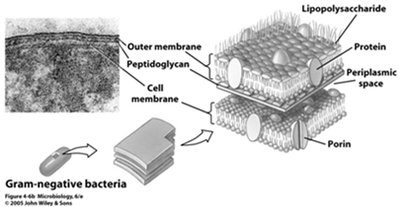
Acid-Fast Bacteria
- Less peptidoglycan. - Lipid (waxy) layer provides resistance to chemicals and slow growth. - Examples: Mycobacterium species (tuberculosis, leprosy). 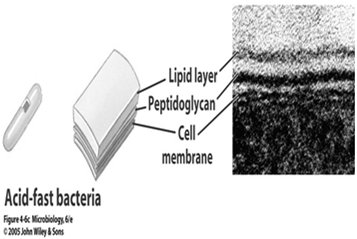
Bacteria Without Cell Walls
- Example: Mycoplasma species (causes "walking pneumonia"). 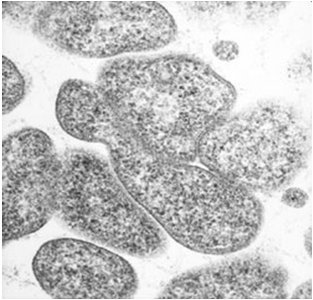
Gram Stain Technique
The Gram stain is a differential staining method used to distinguish between Gram-positive and Gram-negative bacteria. - Gram-positive: Purple or blue. - Gram-negative: Red or pink. 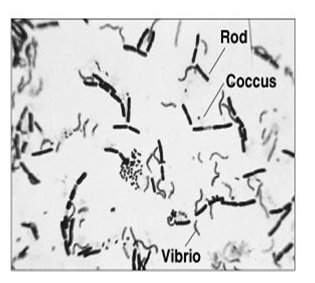
Control of Bacteria by Cell Wall Damage
- Penicillin: Inhibits peptidoglycan synthesis, effective against Gram-positive bacteria. - Lysozyme: Enzyme found in tears, sweat, and saliva; digests peptidoglycan.
Internal Cell Structures
Cytoplasm
The cytoplasm is mainly water and contains enzymes, nutrients, and cellular components. 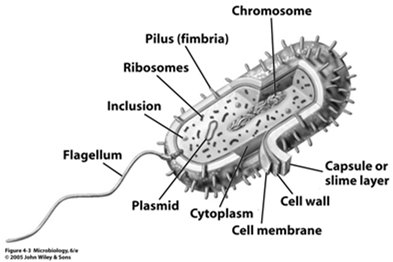
Ribosomes
Ribosomes are responsible for protein synthesis in bacteria. 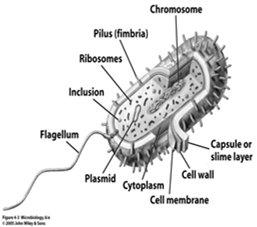
Nucleoid
The nucleoid is the region where bacterial DNA (chromosome) is located. 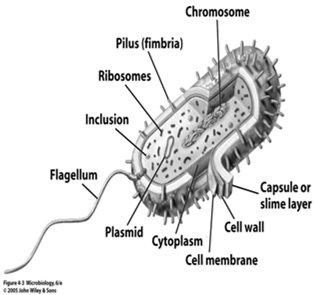
Plasmids
Plasmids are small, circular DNA molecules carrying nonessential genes, often involved in antibiotic resistance. 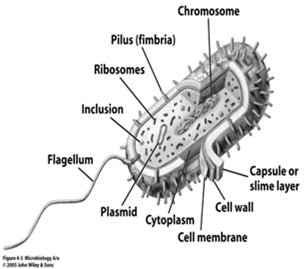
Endospores
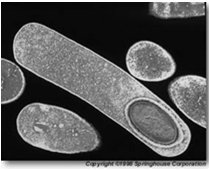
Endospores are dormant, highly resistant structures formed by some bacteria under adverse conditions. 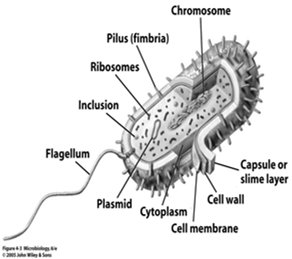
Endospore Formation and Function
Vegetative Cells vs. Endospores
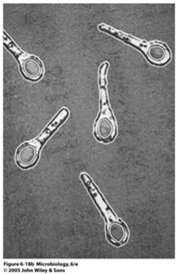
- Vegetative cells: Metabolically active and growing. 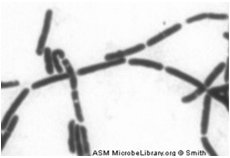 - Endospores: Dormant stage, formed within vegetative cells; survive after the vegetative cell dies.
Resistance of Endospores
Endospores are resistant to drying, heat, radiation, and chemicals, making them difficult to destroy.
Sporulation and Germination
- Sporulation: Formation of endospore within vegetative cell when conditions are poor. - Germination: Formation of vegetative cell from endospore when conditions are favorable. 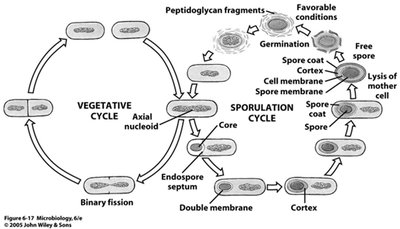
Bacterial Endospores vs. Fungal Spores
Feature | Bacterial Endospores | Fungal Spores |
|---|---|---|
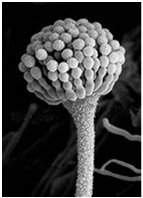
Function | Resistance | Reproduction |
Number Produced | 1 per vegetative cell | Many per mold |
Bacterial Diseases: Anthrax
Etiologic Agent
- Bacillus anthracis: Gram-positive rod, forms endospores.
Reservoir and Transmission
- Reservoir: Soil; disease of cattle. - Transmission: Zoonosis (animal disease spread to humans), occupational exposure (contact with animals, handling wool, hides, meat).
Pathogenesis
- Bacteria produce exotoxins causing edema, tissue destruction, bleeding, and killing macrophages.
Forms of Anthrax
- Cutaneous: Spores enter skin wound and germinate; 90% of human cases. - Respiratory: Inhalation of spores; bacteria enter bloodstream (septicemia). - Intestinal: Ingestion of spores (contaminated meat); damage to intestinal cells.
Symptoms and Mortality
Form | Symptoms | Mortality Rate |
|---|---|---|
Cutaneous | Localized, black scab | 10-20% (1% with treatment) |
Respiratory | Fever, cough, septicemia | ~100% |
Intestinal | Nausea, bloody diarrhea, ulcerative lesions | 50% |
Diagnosis
- Isolation of organism from clinical specimen, blood tests.
Treatment and Prevention
- Treatment: Early antibiotics (ciprofloxacin, doxycycline, amoxicillin). - Prevention: Vaccine for high-risk groups and livestock; antibiotics if exposure suspected.
External Cell Structures
Flagella
Flagella are whip-like structures used for bacterial motility.
Pili (Fimbriae)
Pili are hair-like appendages used for attachment and DNA transfer. - Attachment pili: Adhere to surfaces (e.g., Neisseria gonorrhoeae to mucous membranes).
- Conjugation pili: Join bacteria to transfer DNA (e.g., plasmids).
Glycocalyx
The glycocalyx is a polysaccharide layer external to the cell wall, which can be a slime layer (thinner) or capsule (thicker).
Functions of Glycocalyx
- Attachment: Enables bacteria to adhere to surfaces (e.g., plaque on teeth). - Prevents drying out - Protects bacterium from host defenses
Bacterial Diseases: Pneumococcal Pneumonia
Etiologic Agent
- Streptococcus pneumoniae: Gram-positive diplococcus with capsule.
Reservoir and Transmission
- Reservoir: Healthy human carriers. - Transmission: Respiratory droplets; most susceptible are elderly, infants, and immunocompromised individuals.
Pathogenesis
- Bacteria evade phagocytes due to capsule.
Symptoms
- Early: Mild respiratory symptoms. - Later: High fever, chills, chest pain, cough, bloody sputum.
Diagnosis
- Sputum sample (not saliva); Gram stain shows Gram-positive diplococci.
- Confirmatory tests.
Treatment and Prevention
- Treatment: Antibiotics; increasing drug-resistant strains. Untreated cases have 25% mortality. - Prevention: Vaccine (Pneumovax for elderly, Prevnar for children).
Distribution and Other Diseases
- 500,000 cases/year in U.S. - S. pneumoniae can cause ear infections, sinusitis, bronchitis, septicemia, and meningitis. Additional info: These notes expand on the original content with academic context, definitions, and structured explanations for college-level Anatomy & Physiology students.
