 뒤로
Chapter 21: The Immune System – Innate and Adaptive Body Defenses
스터디 가이드 - 스마트 노트
 자료에 맞춘 맞춤형 노트, 핵심 정의, 예시, 맥락을 확장해 제공합니다.
The Immune System: Overview
General Functions and Organization
The immune system provides resistance to disease-causing microorganisms such as bacteria, fungi, and viruses. It is a functional system, not an anatomical organ system, and utilizes a variety of molecules and immune cells (especially lymphocytes) that reside in lymphoid tissues and circulate in body fluids. The immune system is often compared to a medieval castle, with multiple lines of defense acting both independently and cooperatively to resist invasion.
Three lines of defense:
Surface barriers (first line): Intact skin and mucosae act as structural barriers to keep invaders out.
Innate internal defenses (second line): Includes inflammation, antimicrobial proteins, and phagocytes.
Adaptive (specific) defense system (third line): Targets identified enemies with specialized responses.
Integration: Innate and adaptive defenses are integrated, releasing and recognizing many of the same defensive molecules.
Innate Defenses
Surface Barriers: First Line of Defense
Surface barriers include the skin and mucous membranes, along with their secretions. These barriers are in place at birth and provide mechanical and chemical protection against pathogens.
Keratinized epidermis: Highly effective for most microbes; keratin resists acids, bases, enzymes, and toxins.
Mucosae: Provide similar mechanical barriers within the body.
Protective chemicals:
Acid mantle: Acidity of skin, vaginal, and stomach secretions inhibits bacterial growth.
Enzymes: Lysozyme in saliva, mucus, and tears kills microbes; stomach enzymes digest pathogens.
Mucin: Sticky mucus traps microbes in digestive and respiratory tracts.
Defensins: Antimicrobial peptides secreted in response to barrier breach.
Other chemicals: Lipids in sebum and dermcidin in sweat are toxic to bacteria.
Respiratory tract: Mucus-coated hairs and cilia trap and sweep out pathogens.
Innate Internal Defenses: Second Line of Defense
If surface barriers are breached, innate internal defenses are activated. These include nonspecific cellular and chemical means to protect the body.
Phagocytes: White blood cells that ingest and digest foreign invaders and debris.
Natural Killer (NK) cells: Large granular lymphocytes that kill cancer and virus-infected cells by inducing apoptosis.
Antimicrobial proteins: Interferons and complement proteins attack microbes or hinder their reproduction.
Inflammation: Nonspecific response to tissue injury, preventing spread of pathogens and setting the stage for repair.
Fever: Systemic response to infection, raising body temperature to enhance immune function and suppress bacterial growth.
Phagocytosis: Mechanism and Steps
Phagocytosis is the process by which phagocytes ingest and destroy pathogens. The steps include:
Phagocyte adheres to pathogen or debris.
Phagocyte forms pseudopods that engulf the particles, forming a phagosome.
Phagosome fuses with a lysosome, forming a phagolysosome.
Toxic compounds and lysosomal enzymes destroy the pathogens.
Exocytosis of the vesicle removes indigestible material.
Inflammation: Tissue Response to Injury
Inflammation is a nonspecific response to tissue injury, characterized by redness, heat, swelling, pain, and sometimes impaired function. It involves the release of inflammatory chemicals, vasodilation, increased vascular permeability, and phagocyte mobilization.
Benefits: Prevents spread of pathogens, disposes of debris, alerts adaptive immunity, and sets stage for repair.
Phagocyte mobilization: Steps include leukocytosis, margination, diapedesis, and chemotaxis.
Antimicrobial Proteins
Antimicrobial proteins enhance innate defenses by attacking microbes directly or hindering their ability to reproduce.
Interferons (IFNs): Proteins produced by virus-infected cells that interfere with viral replication in neighboring cells and activate NK cells and macrophages.
Complement system: A group of plasma proteins that amplify inflammation and lyse certain bacteria and cells. Activated via classical, lectin, or alternative pathways.
Adaptive Defenses
General Features
The adaptive immune system is a specific defensive system that targets and eliminates almost any pathogen that invades the body. It consists of two overlapping arms:
Humoral immunity: Antibody-mediated, targets extracellular pathogens.
Cellular immunity: Cell-mediated, targets infected, cancerous, or foreign cells.
Antigens
Antigens are substances that trigger the body's adaptive defenses. They are usually large, complex molecules that are foreign to the body.
Complete antigens: Have immunogenicity and reactivity.
Haptens: Incomplete antigens that become immunogenic when attached to protein carriers.
Antigenic determinants: Parts of antigen that antibodies or lymphocyte receptors bind to; most antigens have several.
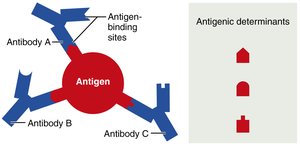
Self-Antigens: MHC Proteins
Self-antigens are proteins on body cell surfaces that are not antigenic to self but are antigenic to others. MHC proteins are glycoproteins coded by the major histocompatibility complex and are unique to each individual. They display peptides for T lymphocytes to recognize.
B and T Lymphocytes and Antigen-Presenting Cells
The adaptive immune system involves three crucial types of cells:
B lymphocytes (B cells): Provide humoral immunity.
T lymphocytes (T cells): Provide cellular immunity.
Antigen-presenting cells (APCs): Present antigens to T cells.
Humoral Immunity: Antibody Production
When a B cell encounters its antigen, it triggers a humoral immune response, leading to the production of antibodies specific for that antigen.
Clonal selection: Activated B cell proliferates and differentiates into plasma cells (antibody-secreting) and memory cells.
Immunological memory: Primary response is slower; secondary response is faster and more effective due to memory cells.
Active and Passive Humoral Immunity
Humoral immunity can be acquired actively or passively, either naturally or artificially.
Active immunity: B cells produce antibodies after encountering antigens (infection or vaccination).
Passive immunity: Antibodies are introduced into the body (maternal transfer or injection), providing immediate but temporary protection.
Antibodies: Structure and Classes
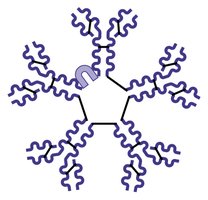
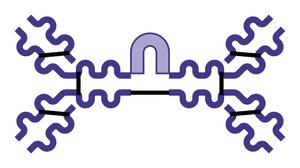
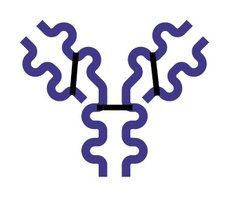
Antibodies (immunoglobulins, Ig) are proteins secreted by plasma cells that bind specifically with antigens. They are grouped into five classes: IgG, IgA, IgM, IgE, and IgD.
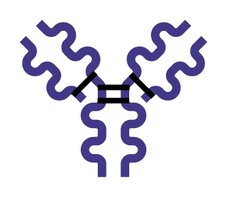
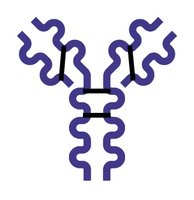
Basic structure: Four polypeptide chains (two heavy, two light) form a T or Y-shaped monomer. Variable regions form antigen-binding sites; constant regions determine class and function.
Classes:
IgG: Main antibody of secondary responses; crosses placenta.
IgA: Found in secretions; prevents pathogen entry.
IgM: First antibody released; potent agglutinating agent.
IgE: Binds to mast cells/basophils; involved in allergies.
IgD: Functions as B cell receptor.
Class | Structure | Main Function | Location |
|---|---|---|---|
IgG | Monomer | Main antibody in secondary response; crosses placenta | Blood, ISF |
IgA | Dimer/Monomer | Prevents pathogen entry | Secretions (saliva, tears, mucus) |
IgM | Pentamer | First antibody released; agglutination | Plasma |
IgE | Monomer | Allergic reactions; binds mast cells | Skin, mucosae |
IgD | Monomer | B cell receptor | B cell surface |
Antibody Functions
Antibodies inactivate and tag antigens for destruction by forming antigen-antibody complexes. Defensive mechanisms include:
Neutralization: Block dangerous parts of pathogens.
Agglutination: Clump antigens together.
Precipitation: Cross-link soluble antigens into complexes.
Complement activation: Trigger cell lysis and enhance inflammation.
Cellular Immunity
T Lymphocytes: Types and Functions
T cells provoke a cellular immune response when presented with antigens. Major types include:
Helper T cells (CD4): Activate B cells, other T cells, and macrophages; direct adaptive response.
Cytotoxic T cells (CD8): Destroy infected, abnormal, or foreign cells.
Regulatory T cells: Moderate immune response and prevent autoimmunity.
Memory T cells: Provide rapid response upon re-exposure.
MHC Proteins and Antigen Presentation
T cells respond only to processed fragments of antigens displayed on cell surfaces by MHC proteins. MHC restriction ensures CD4 and CD8 cells bind antigens only on specific MHC classes.
Activation and Differentiation of T Cells
T cell activation requires antigen binding and co-stimulation by APCs. Activated T cells proliferate and differentiate into effector and memory cells. Cytokines regulate and amplify immune responses.
Helper T Cells: Central Role
Helper T cells mobilize both humoral and cellular immunity by activating B cells, CD8 cells, and macrophages. Subsets of helper T cells mediate different aspects of immunity and inflammation.
Cytotoxic T Cells: Mechanisms of Action
Cytotoxic T cells directly attack and kill infected or cancerous cells by releasing perforins and granzymes, inducing apoptosis. They also participate in immune surveillance.
Immune System Disorders
Immunodeficiencies
Immunodeficiency is a condition that impairs immune cell function or production. Examples include severe combined immunodeficiency (SCID), Hodgkin's lymphoma, and AIDS (caused by HIV).
Autoimmune Diseases
Autoimmune diseases occur when the immune system fails to distinguish self from foreign antigens, leading to destruction of self tissues. Examples include rheumatoid arthritis, type 1 diabetes, and lupus.
Disease | Target | Effect |
|---|---|---|
Rheumatoid arthritis | Joints | Destruction of joint tissue |
Type 1 diabetes | Pancreatic beta cells | Loss of insulin production |
Multiple sclerosis | Myelin in CNS | Impaired nerve function |
Lupus | Multiple organs | Systemic inflammation |
Hypersensitivities
Hypersensitivities are immune responses to perceived threats that cause tissue damage. Types include:
Immediate (acute) hypersensitivity: Allergies mediated by IgE, causing rapid symptoms.
Subacute hypersensitivity: Mediated by IgM and IgG, slower onset and longer duration.
Delayed hypersensitivity: Mediated by T cells, takes 1–3 days to appear.
Summary Table: Immune System Lines of Defense
Line of Defense | Components | Function |
|---|---|---|
First (Surface Barriers) | Skin, mucous membranes, secretions | Prevent entry of pathogens |
Second (Innate Internal) | Phagocytes, NK cells, inflammation, antimicrobial proteins, fever | Inhibit spread of invaders |
Third (Adaptive) | B and T lymphocytes, antibodies | Target and eliminate specific pathogens |
