 뒤로
Digestive and Urinary Systems: Anatomy, Physiology, and Metabolism Study Guide
스터디 가이드 - 스마트 노트
 자료에 맞춘 맞춤형 노트, 핵심 정의, 예시, 맥락을 확장해 제공합니다.
Digestive System Anatomy and Functions
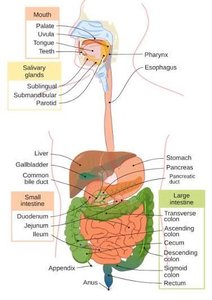
Overview of Digestive Structures
The digestive system is responsible for breaking down food, absorbing nutrients, and eliminating waste. It consists of a series of organs forming the gastrointestinal (GI) tract, as well as accessory organs that aid in digestion.
Mouth: Begins mechanical and chemical digestion; includes palate, uvula, tongue, and teeth.
Pharynx and Esophagus: Transport food from mouth to stomach.
• Upper Esophageal Sphincter—Junction of the pharynx and esophagus; Control passage of the bolus into the esophagus
• Gastroesophageal (Lower Esophageal) Sphincter— Junction of the esophagus and stomach; Controls passage of bolus into the stomach and prevents stomach contents entering the esophagus
Stomach: Mixes and digests food with gastric juices.
Small Intestine: Main site for nutrient absorption; includes duodenum, jejunum, and ileum.
Large Intestine: Absorbs water and forms feces; includes cecum, colon (ascending, transverse, descending, sigmoid), and rectum.
Accessory Organs: Liver, gallbladder, pancreas, and salivary glands contribute enzymes and other substances for digestion.
Functions of Digestive System
Ingestion: Intake of food.
Digestion: Mechanical and chemical breakdown of food.
Absorption: Uptake of nutrients into blood or lymph.
Excretion: Removal of indigestible substances as feces.
Accessory Organs, Cells, and Secretions
Accessory Organs and Their Functions
Liver: Produces bile for fat emulsification.
Gallbladder: Stores and releases bile.
Pancreas: Secretes digestive enzymes and bicarbonate.
Salivary Glands: Produce saliva containing amylase for starch digestion.
Cell Types and Secretions
Hepatocytes (Liver): Produce bile, process nutrients.
Acinar Cells (Pancreas): Secrete digestive enzymes.
Chief Cells (Stomach): Secrete pepsinogen.
Parietal Cells (Stomach): Secrete hydrochloric acid.
Hormones of the Digestive System
Key Digestive Hormones
Digestive hormones regulate the activity of the GI tract and accessory organs.
Gastrin: Stimulates gastric acid secretion.
Secretin: Stimulates bicarbonate release from pancreas.
Cholecystokinin (CCK): Stimulates bile release and pancreatic enzyme secretion.
Gastric Inhibitory Peptide (GIP): Inhibits gastric motility and acid secretion.
Metabolism: Carbohydrates, Proteins, and Fatty Acids
Overview of Metabolic Pathways
Metabolism refers to all chemical reactions involved in maintaining the living state of cells. It includes catabolism (breakdown) and anabolism (synthesis).
Carbohydrate Metabolism: Glycolysis, Krebs cycle, and electron transport chain produce ATP.
Protein Metabolism: Amino acids are used for energy or to build proteins.
Fatty Acid Metabolism: Beta-oxidation breaks down fatty acids for energy.
Glycolysis Pathway in ATP Production
Steps of Glycolysis
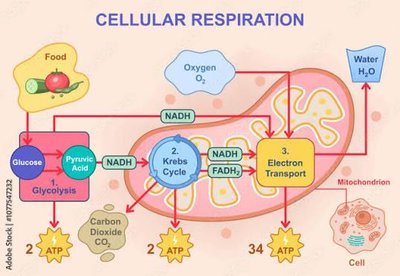
Glycolysis is the first step in cellular respiration, converting glucose into pyruvate and generating ATP.
Location: Cytoplasm of the cell.
Key Steps: Glucose is split into two molecules of pyruvate.
ATP Yield: Net gain of 2 ATP per glucose molecule.
Byproducts: NADH and pyruvate.
Mitochondrial Role in ATP Production
Cellular Respiration in Mitochondria
The mitochondrion is the site of aerobic respiration, where most ATP is produced.
Krebs Cycle: Occurs in mitochondrial matrix; produces NADH, FADH2, CO2, and 2 ATP.
Electron Transport Chain: Located in inner mitochondrial membrane; uses NADH and FADH2 to generate ATP.
Byproducts: Water and carbon dioxide.
Electron Transport Chain and Chemiosmosis
Steps and Enzymes Involved
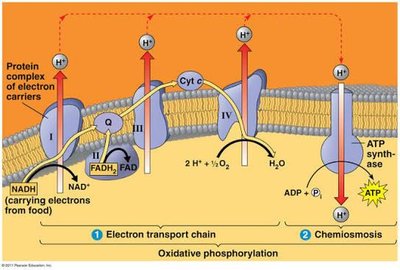
The electron transport chain (ETC) is a series of protein complexes that transfer electrons and pump protons to create a gradient used for ATP synthesis.
Complexes I-IV: Transfer electrons from NADH and FADH2 to oxygen.
ATP Synthase: Enzyme that uses proton gradient to synthesize ATP from ADP and Pi.
Chemiosmosis: Movement of protons through ATP synthase drives ATP production.
Macronutrients, Micronutrients, and Vitamins
Classification and Functions
Macronutrients: Carbohydrates, proteins, and fats; provide energy and structural components.
Micronutrients: Vitamins and minerals; required in small amounts for metabolic processes.
Vitamins: Organic compounds essential for enzyme function and health.
Anabolism: Storage of Molecules
Overview of Anabolic Processes
Anabolism involves the synthesis and storage of molecules such as glycogen, proteins, and lipids.
Glycogenesis: Formation of glycogen from glucose.
Lipogenesis: Formation of fat from acetyl-CoA.
Protein Synthesis: Assembly of amino acids into proteins.
Kidney Anatomy and Physiology
Structure of the Kidneys
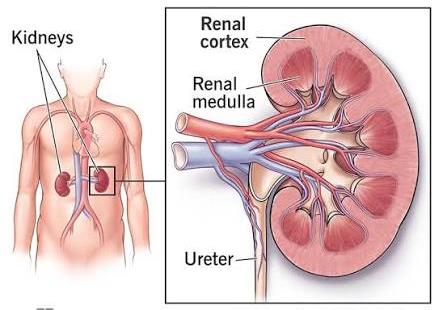
The kidneys are bean-shaped organs responsible for filtering blood and producing urine.
Renal Cortex: Outer region; contains nephrons.
Renal Medulla: Inner region; contains renal pyramids.
Ureter: Tube that carries urine to the bladder.
Physiology of the Kidneys
Filtration: Removal of waste and excess substances from blood.
Reabsorption: Return of essential substances to blood.
Secretion: Addition of waste products to urine.
Nephron Functions
Role of the Nephron
The nephron is the functional unit of the kidney, responsible for urine formation.
Glomerular Filtration: Blood is filtered in the glomerulus.
Tubular Reabsorption: Useful substances are reabsorbed into blood.
Tubular Secretion: Additional wastes are secreted into the tubule.
Filtration Mechanisms
How Filtration Occurs
Filtration in the kidney occurs through a pressure-driven process in the glomerulus.
Hydrostatic Pressure: Forces water and solutes out of blood.
Selective Permeability: Allows passage of small molecules, blocks large proteins and cells.
Physiology of Urine Formation
Steps in Urine Formation
Filtration: Formation of filtrate in glomerulus.
Reabsorption: Recovery of water, glucose, and ions.
Secretion: Addition of waste and excess ions.
Excretion: Removal of urine from body.
Hormones Involved in Kidney Function
Key Renal Hormones
Aldosterone: Increases sodium reabsorption.
Antidiuretic Hormone (ADH): Promotes water reabsorption.
Atrial Natriuretic Peptide (ANP): Reduces sodium reabsorption.
Renin: Regulates blood pressure.
Summary Table: Digestive and Urinary System Functions
System | Main Functions | Key Structures | Important Hormones |
|---|---|---|---|
Digestive | Digestion, absorption, excretion | Mouth, stomach, intestines, liver, pancreas | Gastrin, CCK, Secretin |
Urinary | Filtration, reabsorption, secretion, excretion | Kidneys, nephrons, ureter | Aldosterone, ADH, ANP, Renin |
Key Equations
ATP Production in Cellular Respiration
Glycolysis:
Krebs Cycle:
Electron Transport Chain:
Filtration Equation in Kidneys
Glomerular Filtration Rate (GFR): where is filtration coefficient, is glomerular capillary pressure, is Bowman’s space pressure, and is oncotic pressure.
