 뒤로
Epidemiology and Control of Infectious Diseases: Herd Immunity, Transmission, and Nosocomial Infections
스터디 가이드 - 스마트 노트
 자료에 맞춘 맞춤형 노트, 핵심 정의, 예시, 맥락을 확장해 제공합니다.
Epidemiology and Herd Immunity
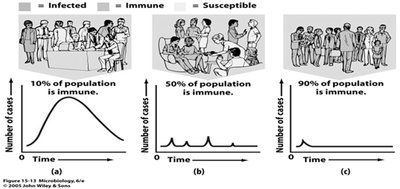
Herd Immunity: Definition and Importance
Herd immunity refers to the proportion of individuals in a population who are immune to a contagious disease, either through vaccination or recovery from illness. This collective immunity helps protect those who are not immune by reducing the spread of the disease.
Key Point 1: Herd immunity is only applicable to contagious diseases (e.g., not tetanus).
Key Point 2: High levels of herd immunity can lead to the elimination of diseases, as seen with smallpox and the near-eradication of polio.
Example: When a significant portion of the population is immune, outbreaks are less likely to occur, protecting vulnerable individuals.
Global Progress in Disease Elimination
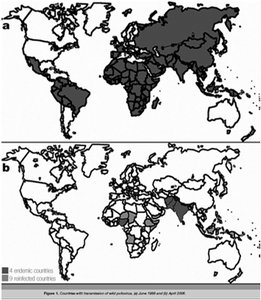
Efforts to eliminate diseases such as polio have significantly reduced the number of endemic countries worldwide. Vaccination campaigns and herd immunity are central to these achievements.
Key Point 1: In 1988, polio was endemic in 125 countries; by 2014, only 3 countries remained endemic.
Key Point 2: Disease can be reintroduced to previously polio-free countries if herd immunity drops.
Controlling Transmission of Infectious Diseases
Isolation and Quarantine
Controlling the transmission of infectious diseases involves several strategies, including isolation and quarantine. Isolation separates infected patients from the general population, while quarantine separates healthy but exposed individuals during the incubation period.
Key Point 1: Isolation is critical in both clinical and laboratory settings to prevent disease spread.
Key Point 2: Quarantine is less common today but was effective during outbreaks such as SARS in 2003.
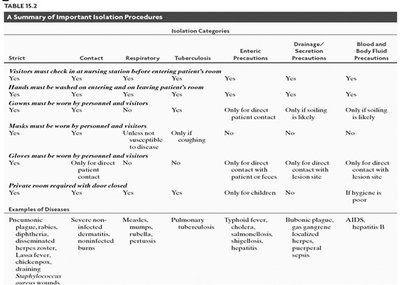
Summary of Important Isolation Procedures
Isolation procedures vary depending on the type of infection and transmission risk. Strict protocols are followed to minimize exposure and protect both patients and healthcare workers.
Isolation Category | Strict | Contact | Respiratory | Tuberculosis | Enteric Precautions | Drainage/Secretion Precautions | Blood and Body Fluid Precautions |
|---|---|---|---|---|---|---|---|
Visitors must check in at nursing station | Yes | No | No | No | No | No | No |
Hand washing before entering/leaving | Yes | Yes | Yes | Yes | Yes | Yes | Yes |
Masks must be worn by personnel and visitors | Yes | No | Yes | Only if coughing | No | Only if soiling is likely | Only if soiling is likely |
Gloves must be worn by personnel and visitors | Yes | Only for direct patient contact | No | No | Only for direct patient contact | Only for children | Only if soiling is likely |
Examples of Diseases | Chickenpox, diphtheria, Staphylococcus aureus | MRSA, VRE | Pneumonia, tuberculosis | Pulmonary tuberculosis | Typhoid fever, cholera, hepatitis | Bubonic plague, draining abscesses, sepsis | AIDS, hepatitis B |
Biosafety Levels in Laboratories
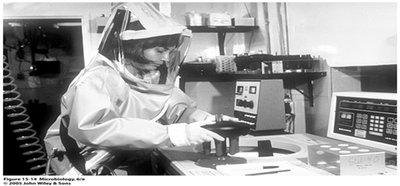
Biosafety levels (BSL) are classifications for laboratory safety based on the risk posed by the microorganisms handled. Each level has specific requirements for containment and personal protective equipment.
BSL-1: Nonpathogenic organisms; standard microbiological practices; open bench tops.
BSL-2: Pathogenic to humans; open benchtops; specific training required.
BSL-3: Serious disease by inhalation; biological safety cabinets or personal protective equipment.
BSL-4: Dangerous/exotic agents; life-threatening diseases; separate building or controlled area; suits with life support systems.

Nosocomial (Health-Care Associated) Infections
Definition and Sources
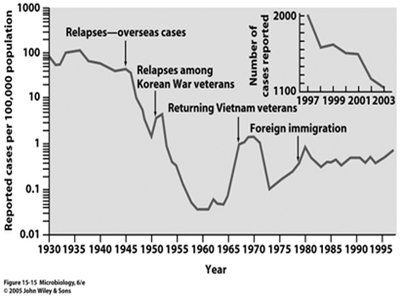
Nosocomial infections, also known as health-care associated infections (HAI), are acquired in hospitals or healthcare settings. They can originate from exogenous (external) or endogenous (internal) sources.
Key Point 1: Approximately 10% of hospitalized patients acquire nosocomial infections, resulting in significant morbidity and mortality.
Key Point 2: Sources include bacteria from other patients, equipment, hospital personnel, and visitors.
Susceptibility and Transmission
Patients are more susceptible to nosocomial infections due to compromised immune systems, breaks in skin or mucous membranes, and debilitation. Transmission varies and can occur through direct contact, contaminated equipment, or airborne routes.
Universal Precautions
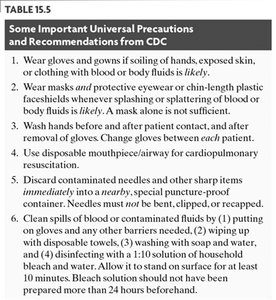
Universal precautions are guidelines designed to prevent transmission of infections in healthcare settings, especially when dealing with body fluids.
Key Point 1: Precautions include wearing gloves, masks, and protective eyewear, handwashing, and proper disposal of contaminated items.
Key Point 2: These measures are essential for preventing the spread of bloodborne and other infectious agents.
Common Pathogens and Sites of Infection
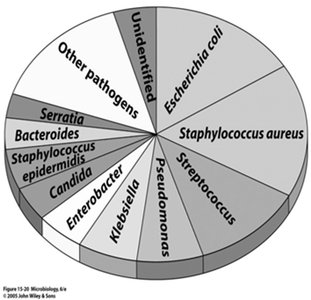
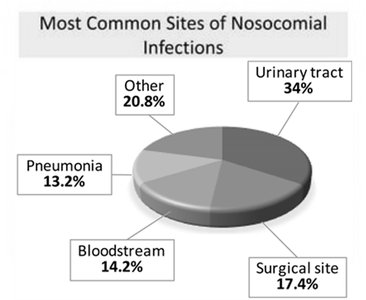
Nosocomial infections are most commonly caused by bacteria, often normal flora or opportunistic pathogens. The most frequent sites of infection include the urinary tract, surgical sites, bloodstream, and respiratory tract.
Key Point 1: Common pathogens include Escherichia coli, Staphylococcus aureus, Pseudomonas aeruginosa, and Clostridium difficile.
Key Point 2: Urinary tract infections are the most common nosocomial infection site.
Prevention and Control
Preventing and controlling nosocomial infections involves infection-control specialists, handwashing, sterile equipment, gloves, and insect control. The most effective measure is proper hand hygiene.
Case Study: Nosocomial Infection
Clinical Presentation and Diagnosis
A 53-year-old man with Guillain-Barré syndrome, hospitalized for two months, developed a nosocomial infection. He had a bedsore with blue-green pus, shortness of breath, chest pain, shock, and fever. Blood cultures confirmed Pseudomonas aeruginosa, a gram-negative rod often resistant to antibiotics and producing a blue-green pigment.
Key Point 1: Pseudomonas aeruginosa is commonly found in water and soil and is a frequent cause of infections in burns, sepsis, and cystic fibrosis.
Key Point 2: Immediate intravenous antibiotics are required for septic shock caused by gram-negative bacteremia.
Bioweapons and Bioterrorism
Historical and Modern Context
Bioweapons have been used historically and are now regulated by international conventions. The Geneva Protocol and Biological and Toxins Weapons Convention prohibit the development, production, and use of biological weapons.
Bioterrorism Agents and Categories
The CDC classifies bioterrorism agents into three categories based on their ease of spread, morbidity, and mortality rates:
Category A: High-priority agents (e.g., anthrax, smallpox, Ebola) with high mortality and potential for public panic.
Category B: Moderately easy to spread, moderate morbidity, low mortality (e.g., food and water safety threats, toxins).
Category C: Emerging infectious diseases that may be engineered for mass spread (e.g., Nipah virus, hantavirus).
Healthcare workers must be trained and protected against bioterrorism threats, including vaccines and medicines.
Summary
Understanding epidemiology, herd immunity, transmission control, and nosocomial infections is essential for preventing and managing infectious diseases. Proper isolation procedures, biosafety levels, universal precautions, and awareness of bioterrorism agents are critical components of public health and clinical practice.
